Top 10 Types of Control Valves for Industrial Use
A control valve may look like a compact body, actuator, and positioner, yet it can shape an entire process. In a plant, the wrong choice may show up as a hunting pressure trend, a noisy pipe, or a temperature that drifts past its target. The right choice depends on more than line size. Fluid properties, pressure drop, required range, control response, and maintenance access all matter.
Béla G. Lipták, editor of the Instrument Engineers’ Handbook, is a recognized authority in process control. A practical lesson reflected in his instrumentation work is simple: “Select the valve as part of the complete control loop, not in isolation.” That is a guiding principle, not a substitute for checking the actual service conditions. Even experienced teams can overlook details, such as flashing liquid or an actuator with too little thrust.
This guide introduces ten common types of control valve used in industrial service, from globe and butterfly valves to ball, diaphragm, and pinch designs. Each type brings trade-offs in shutoff, capacity, controllability, cost, and upkeep. Some choices are less obvious than they first appear. The goal is not to name one universal winner, but to explain where each design fits—and what engineers should verify before specifying it.
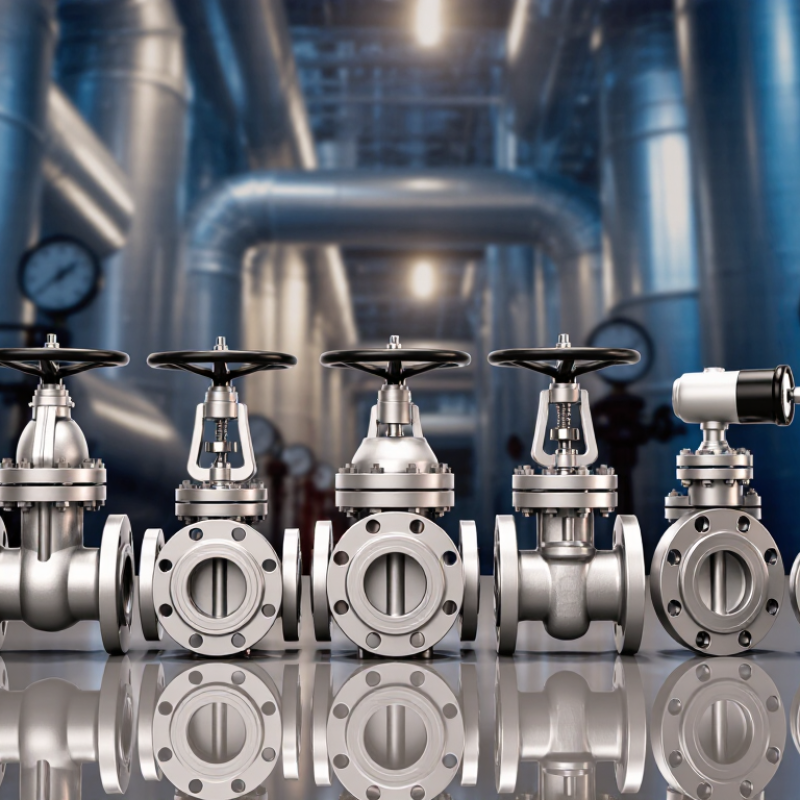
What Industrial Control Valves Do in Process Systems
Industrial control valves regulate the movement of liquids, gases, and steam through process systems. They respond to signals from a control system, adjusting flow to help maintain pressure, temperature, or vessel level. In a steam line, for example, a valve may open slightly when pressure drops. Small adjustments matter.
The valve is one part of a larger control loop. A sensor measures a process condition, and a controller compares that reading with its target. An actuator then moves the valve stem or disc. Pneumatic actuators are common where compressed air is available; electric actuators suit installations that need precise positioning without an air supply. A positioner can help match valve movement to the control signal, though poor setup may still cause unstable operation.
Different designs behave differently. Globe valves offer precise throttling, while ball and butterfly valves often provide high flow with compact bodies. Diaphragm valves can suit corrosive or sanitary services, depending on materials and conditions. The best choice depends on pressure drop, fluid properties, temperature, and how often the valve must move. It is not always obvious. A valve that works well on clean water may wear quickly with abrasive slurry. Engineers also consider noise, leakage, maintenance access, and what happens if power or air fails.
How Control Valves Are Built and Operated
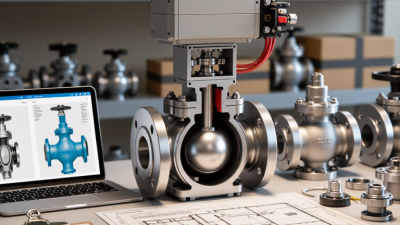
A control valve turns a signal into a physical change in flow. Inside, the trim—plug, seat, and sometimes cage—shapes the passage. A globe valve moves its plug linearly; a butterfly valve turns a disc across the pipe. The body contains pressure, while the actuator supplies movement. Pneumatic, electric, and hydraulic actuators are common. Small movements matter. A positioner compares the controller’s command with stem feedback, then adjusts actuator pressure or motor position. Spring-return actuators can move toward a selected safe position when power or air fails.
Valve selection begins with the fluid, pressure drop, required capacity, and operating range—not pipe diameter alone. Undersized trim may restrict flow; oversized trim can make stable control difficult. The U.S. Department of Energy’s 2012 Improving Steam System Performance sourcebook notes that steam supplies roughly 30% of energy used in industrial applications. That makes steam-valve performance consequential, though the figure does not describe every plant or valve. Engineers also check temperature, erosion, leakage, and cavitation risk. A calculation is only a starting point. Real operating data can expose assumptions that looked sound on paper. Regular inspection of packing, actuator response, and positioner feedback helps catch drift before it becomes a process problem.
Ten Common Types of Industrial Control Valves
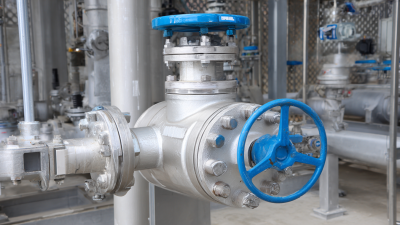
Globe valves are widely used for precise throttling, especially when operators need stable flow adjustment. Their curved flow path can create a noticeable pressure drop. Ball valves respond quickly and suit on-off service, while characterized designs can also regulate flow. Butterfly valves are compact and lightweight, making them useful on large pipes. Plug valves use a rotating tapered or cylindrical plug. They handle some dirty fluids, though wear can affect shutoff.
Diaphragm valves isolate the working fluid from moving parts, which helps with corrosive or sanitary processes. Pinch valves squeeze a flexible sleeve and are often chosen for slurries. Needle valves offer fine adjustment at low flow rates. Angle valves turn flow through 90 degrees and can simplify piping around tight spaces. Three-way valves direct or mix flow between connected lines. Eccentric rotary valves use an offset disc or plug to reduce friction during movement.
Selection depends on pressure, temperature, fluid properties, required accuracy, and maintenance access. A valve that works well with clean water may struggle with abrasive slurry. Check the actuator and control signal too. Small details matter. No type is perfect; even a well-sized valve may perform poorly if installation or tuning is neglected.
Key Factors for Selecting a Control Valve
Choosing among globe, ball, butterfly, and other control valves starts with the process, not the valve shape.
Record the fluid, operating temperature, flow range, and minimum and maximum pressure drop. Then calculate the required flow coefficient, or Cv, across normal and peak conditions. An oversized valve may operate nearly closed, making control unstable; an undersized one can restrict capacity.
Small details matter.
Check whether the fluid carries solids, flashes, or cavitates, since each can affect trim choice, noise, and service life. Specify body and trim materials for the actual fluid and temperature, not just the pipe material.
Look beyond purchase price.
The U.S. Department of Energy’s Improving Pumping System Performance sourcebook reports that pumping systems use nearly 20% of the world’s electricity, with substantial energy use in some industrial operations. A valve that creates unnecessary pressure loss can add to that burden, so assess valve sizing alongside pump operation. The International Energy Agency’s Energy Efficiency 2023 report estimates that industry represented about 37% of global final energy demand in 2022. That context makes operating efficiency worth measuring.
Also define the required shutoff performance, actuator response, and fail position for loss of power or instrument air. I’ve seen selection sheets that look complete but omit actual minimum flow. That omission deserves a second look: real process conditions rarely match a single design point.
Industrial Applications and Maintenance of Control Valves
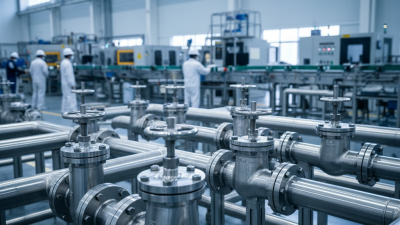
Industrial control valves regulate flow, pressure, and temperature across water systems, steam lines, chemical processes, and power plants. A globe valve can provide precise throttling, while ball and butterfly valves suit many duties requiring compact flow control. Diaphragm valves may be selected for fluids that could damage exposed moving parts, provided their materials match the process. The right choice depends on fluid properties, pressure, temperature, and how often the valve moves. Small clues matter. A faint hiss near the packing, a sluggish actuator, or a stem that moves unevenly may signal trouble before production is affected.
Maintenance should follow the valve’s service conditions, not just a calendar. During planned inspections, technicians can check for leaks, corrosion, loose connections, worn trim, and changes in actuator response. Positioner calibration and fail-safe action should be verified against process requirements. Where cavitation or abrasive solids are present, inspect internal surfaces for pitting or erosion. Record readings and repairs; those records help reveal recurring problems. A maintenance plan can still miss an issue between inspections, so operators’ observations matter too. Avoid tightening packing blindly, since excessive force can increase friction or damage components. Use approved isolation and depressurization procedures before inspection, and involve qualified personnel when the valve’s design or process hazards are uncertain.
Top 10 Types of Control Valves for Industrial Use
Indicative suitability for modulating flow control, based on typical valve characteristics.
Scores use a qualitative 1–5 scale, where 5 indicates strong typical suitability for throttling and precise flow adjustment. Actual performance depends on valve design, sizing, operating conditions, and maintenance; these scores are comparative guidance, not standardized ratings.