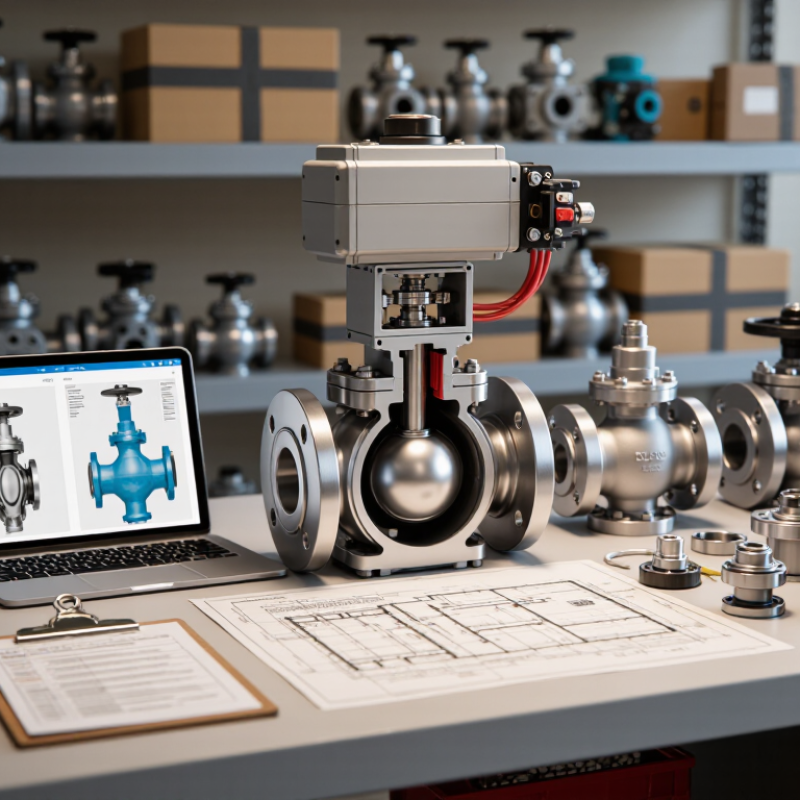
Choosing an electric ball valve for global sourcing is not a simple catalog exercise. The correct model must match the medium, pressure, temperature, voltage, cycle frequency, and installation environment. A valve handling clean water may fail quickly with abrasive slurry or corrosive chemicals.
Philip L. Skousen, author of Valve Handbook, offers a practical reminder: “Select the valve for the service, not merely the pipe size.” That principle remains important. A compact DN25 body may fit the pipeline, yet its actuator could lack enough torque during cold starts. Check the valve’s full operating torque, not only its nominal size.
An experienced sourcing team should verify body material, seat composition, thread or flange standards, IP rating, duty cycle, and fail-safe position. Confirm whether the electric ball valve supports the buyer’s power supply, such as 24 VDC, 110 VAC, or 220 VAC. Ask for pressure-test records, material certificates, wiring diagrams, and traceable quality documents.
Supplier evaluation also matters. Review production capacity, actuator assembly controls, spare-part availability, and response times. Request samples before placing a large order. Test them under realistic conditions, including repeated switching and voltage variation.
Small details matter.
Packaging deserves attention too. Moisture, impact, and poor labeling can damage apparently compliant products during long-distance transport. A spreadsheet may look complete and still hide one serious mismatch. That is the part many buyers overlook. Global sourcing becomes more reliable when technical verification, supplier evidence, and field practicality guide every electric ball valve decision.
How to Choose an Electric Ball Valve for Global Sourcing?
Define the application before comparing electric ball valves. Identify the fluid, pressure, temperature, pipe size, and required flow rate. Water, oil, compressed air, and corrosive chemicals place different demands on valve materials. Check whether the fluid contains particles that could damage the sealing surfaces. A clean process is not always guaranteed. Plan for that possibility.
Review the operating cycle carefully. Will the valve open occasionally, or operate hundreds of times each day? Frequent cycling may require a stronger actuator and better heat management. Confirm the available power supply, control signal, enclosure rating, and installation position. Outdoor equipment may face rain, dust, freezing temperatures, or intense sunlight. Measure twice. Guessing here can create expensive delays.
Consider failure behavior as part of the application requirement. Decide whether the valve should remain open, remain closed, or stop safely during power loss. Check response time, manual override access, and maintenance space around the actuator. I have seen specifications overlook cable entry direction, making installation awkward in crowded panels. That detail seems minor. It is not. Request test records for pressure performance, electrical safety, material compatibility, and operating endurance. Compare these records with recognized technical standards and your project documentation. Leave room for uncertainty, because real operating conditions often differ from laboratory assumptions.
Define the application requirements and operating conditions before comparing electric ball valve options. The chart shows representative engineering design inputs for common fluid-service applications.
Typical design inputs: operating pressure is shown in bar(g), operating temperature in °C, and required flow rate in m³/h. Confirm actual media compatibility, pressure-temperature ratings, valve size, actuator torque, enclosure protection, duty cycle, and applicable local standards before purchase.
How to Choose an Electric Ball Valve for Global Sourcing?
Compare valve design before comparing prices. Floating ball valves suit smaller lines and moderate pressure. Trunnion-mounted valves handle larger diameters with lower operating torque. Two-way models isolate flow. Three-way models divert or mix it. Full-bore designs reduce pressure loss, while reduced-bore designs can lower purchase costs.
Materials must match the fluid, temperature, and installation environment. Stainless steel resists many corrosive media. Brass fits clean-water and general service applications. PVC is lightweight, but high temperatures can limit its use. Seat materials also matter. PTFE offers broad chemical resistance, while reinforced materials may perform better under repeated cycling. The 2024 U.S. Department of Energy pumping guidance notes that pumping systems can consume about 20–25% of industrial electricity. A poorly sized valve can increase system losses. That cost is easy to underestimate.
Tips: Choose quarter-turn electric actuation for simple on/off control. Select modulating control when flow must be adjusted precisely. Specify manual override, position feedback, ingress protection, and voltage compatibility. For power interruptions, evaluate spring-return or battery-backed fail-safe options. Check IEC 60529 enclosure ratings and local wiring requirements. I would not choose an actuator by torque alone. Add a practical safety margin, but excessive oversizing can cause slow movement and poor control. Verify cycle frequency with real operating data. Supplier datasheets often show ideal conditions, not field reality.
Verify pressure, temperature, flow, and electrical specifications before comparing suppliers. Start with the medium, line pressure, differential pressure, and required shutoff class. ASME B16.34 provides pressure-temperature ratings for valve materials and pressure classes. Ask for test certificates, not only catalog values. Do not guess. A valve rated at room temperature may lose capacity at higher temperatures.
Temperature includes the fluid, ambient air, and heat transferred through the pipe. Confirm body, seat, seal, and actuator limits separately. IEC 60529 defines protection levels such as IP65 and IP67, but an IP rating does not prove chemical resistance. Check enclosure protection for washdown areas and outdoor installations. I have seen projects specify IP67, then ignore cable glands. That small gap can invite water.
Flow sizing requires more than matching pipe diameter. Calculate the required Cv or Kv using pressure drop, density, viscosity, and operating flow. IEC 60534-2-1 provides recognized control-valve sizing methods. Oversizing can cause unstable movement and poor control. Undersizing wastes pressure. Electrical details also matter: voltage, frequency, running current, torque, duty cycle, fail position, and signal type. The U.S. Department of Energy’s 2023 motor-systems assessment reports that motor-driven equipment uses about 68% of industrial electricity. Efficient selection matters. Yet a spreadsheet can still mislead when starting torque, cycling frequency, or ambient temperature changes. Ask for real test conditions.
When sourcing an electric ball valve globally, supplier quality deserves more than a polished catalog. Ask for evidence. Request material certificates, pressure-test records, torque curves, and serial-number traceability. A production sample should match the approved drawing, including actuator voltage, body alloy, seal material, and connection standard. ISO 9001 helps assess process control, but certification alone proves little about valve performance. The ISO Survey 2022 recorded 1,265,216 ISO 9001 certificates worldwide, making independent audits and factory records essential.
Certifications must fit the destination market and installation environment. Check ISO 5211 actuator mounting, IEC 60529 ingress protection, electrical safety requirements, and applicable pressure-equipment rules. Ask whether certificates cover the exact model, not merely the factory. That detail is often missed. The World Bank’s 2023 Logistics Performance Index evaluates customs, tracking, infrastructure, and timeliness separately. Use those factors when comparing suppliers from different regions. A supplier with fast replies may still lack reliable export coordination.
Compare landed cost, not unit price. Include actuator options, inspection fees, packaging, freight, duties, spare parts, and commissioning support. Then verify lead times in writing. Separate component procurement, assembly, testing, and shipment dates. A quoted 20-day lead time may exclude motor availability or final inspection. I have seen attractive quotations become expensive after repeated engineering changes. Build a small buffer. It feels inefficient, but production stoppages cost more. Use milestone payments tied to documented tests, and review one pilot batch before placing a larger order.
Choosing an electric ball valve for global sourcing starts with the service, not the catalog. Define media, pressure, temperature, pipe size, voltage, cycle frequency, and fail position. Ask for torque data at actual pressure, not only nominal actuator output. Request material certificates, wiring diagrams, enclosure ratings, and tested cycle records. Verify certificates against applicable product and electrical requirements in the destination market. A valve that fits the pipe may still fail in a humid control cabinet. Keep this detail visible.
Build a supplier comparison sheet with identical technical questions and revision dates. Check factory capability through sample records, calibration reports, and process photographs. Before shipment, inspect body material, flange dimensions, leakage performance, actuator travel, manual override, and electrical insulation. Use a witness inspection when the order is critical. A practical mistake is trusting a clean sample too quickly; production batches can vary. Independent inspection adds cost, but overseas rework costs more.
Plan shipping around packaging, customs documents, spare parts, and local installation conditions. Use moisture barriers, shock indicators, and clear serial-number tracking for long routes. Confirm whether the destination team needs metric tools, wiring support, or language-specific instructions. After-sales support should include response times, troubleshooting videos, replacement seals, and actuator diagnostics. Record every failure with photos, operating conditions, and measured voltage. Do not assume the first troubleshooting guide is complete. Field feedback often exposes overlooked wiring or sizing issues.
| Evaluation Dimension | Recommended Specification or Decision Point | Practical Data and Selection Guidance | Inspection Evidence Before Shipment |
|---|---|---|---|
| Application and Media | Define the fluid, temperature, pressure, flow direction, and installation environment. | Confirm compatibility with water, air, inert gas, oil, chemicals, or other media. Consider suspended particles, viscosity, corrosion risk, and whether the valve will be installed indoors, outdoors, or in a hazardous area. | Approved application data sheet, material compatibility review, operating temperature record, and signed technical specification. |
| Valve Configuration | Select two-way or three-way construction, port design, connection type, and flow pattern. |
2-way
3-way L-port
3-way T-port Choose full-port construction when lower pressure loss is important. Threaded, flanged, sanitary, and welded ends should match the piping system and applicable standards. |
Dimensional drawing, port and flow-pattern verification, connection gauge check, and visual inspection of casting or machining quality. |
| Nominal Size and Pressure Rating | Match the valve size and pressure class to the line design rather than selecting only by pipe diameter. | Common nominal sizes include DN15 to DN100 for many industrial and building-service applications. Pressure ratings may be specified by PN16, PN25, Class 150, or another applicable rating; the actual allowable pressure depends on temperature, body material, seat material, and design standard. | Pressure-rating document, body marking check, dimensional inspection, and pressure-test report at the specified temperature and test pressure. |
| Body and Internal Materials | Choose materials based on corrosion resistance, temperature, pressure, and media compatibility. | Typical options include brass, stainless steel, carbon steel, and engineered plastics for selected low-pressure services. Common seat materials include PTFE, reinforced PTFE, and elastomers; seat selection must reflect temperature and chemical exposure. | Material certificates where required, positive material identification for critical projects, surface-finish check, and certificate traceability to the purchase order. |
| Actuator Torque and Safety Margin | Size the actuator from the valve breakaway torque, running torque, differential pressure, and service conditions. | Use the valve supplier's tested torque curve and select an actuator with a documented margin, commonly about 25–30% above the maximum calculated operating torque unless the project specification requires another value. High-cycle, cold-temperature, dirty-media, and infrequent-operation services may require additional margin. | Torque calculation, actuator output-torque curve, open/close functional test, and confirmation that the valve reaches both end positions without stalling. |
| Power Supply and Control | Specify voltage, frequency, control signal, wiring, and failure position. | Common power options are 24 V AC/DC, 110–120 V AC, and 220–240 V AC at 50/60 Hz. Control may be two-point open/close, floating three-point, or proportional, such as 0–10 V or 4–20 mA. Define fail-open, fail-closed, or fail-in-place requirements where applicable. | Voltage and current measurement, wiring-terminal inspection, open/close timing test, signal-response test, and power-loss behavior verification. |
| Ingress Protection and Environment | Specify enclosure protection, ambient temperature, corrosion exposure, and hazardous-area requirements. | IP65 protects against dust ingress and water jets; IP66 provides protection against powerful water jets. The required rating should be confirmed against IEC 60529 and the installation environment. Hazardous locations require the appropriate certified actuator and installation method. | Enclosure marking, gasket and cable-entry inspection, certificate review where required, and visual verification of sealing and grounding provisions. |
| Performance and Leakage | Define shutoff class, allowable leakage, operating time, and cycle life. | Specify the applicable leakage standard, such as ISO 5208 or API 598, together with the test medium and acceptance limit. Electric actuator operating time commonly ranges from approximately 5 to 60 seconds, depending on valve size, torque, and actuator design. | Hydrostatic shell test, seat-leakage test, operating-time record, cycle test for project samples, and calibrated test-equipment records. |
| Manual Override and Position Feedback | Decide whether local manual operation, visual position indication, auxiliary contacts, or position feedback is required. | Manual override is useful during commissioning or power interruption. Auxiliary limit switches can provide open/closed status; proportional applications may require a position signal or integrated positioner. | Manual override operation, position-indicator alignment, auxiliary-contact continuity test, and feedback-signal verification. |
| Applicable Standards | List the standards that govern the valve, actuator, electrical safety, and testing requirements. | Depending on the market and application, requirements may reference ISO 5211 for actuator mounting, IEC 60529 for enclosure protection, ISO 5208 or API 598 for valve testing, and applicable electrical-safety and electromagnetic-compatibility rules. | Standards declaration, test reports, drawings, marking photographs, and certificates matching the exact model and configuration ordered. |
| Supplier Qualification | Evaluate production capability, quality controls, export experience, and technical communication. | Review factory process controls, incoming-material inspection, machining and assembly records, calibration management, corrective-action capability, production capacity, and experience with the destination market. Avoid approving a supplier solely on price. | Factory audit checklist, sample approval record, process-flow review, quality-system documents, calibration list, and signed technical clarification log. |
| Pre-Production Approval | Freeze the technical configuration before mass production. | Approve a drawing and specification covering size, port, materials, pressure rating, voltage, control mode, enclosure rating, cable entry, accessories, markings, packaging, and required documents. | Golden sample or first-article inspection, approved drawing, bill of materials, nameplate proof, and change-control record. |
| Pre-Shipment Inspection | Use a risk-based inspection plan covering quantity, appearance, dimensions, operation, and documentation. | For a typical inspection plan, verify product quantity and labeling, perform visual and dimensional checks, sample functional tests, confirm electrical ratings, and witness pressure or leakage tests when required by the purchase order. | Inspection report with sampling level, defects, photographs, serial or batch traceability, test results, and clear pass/fail status before release. |
| Packaging and Shipping | Plan protection against moisture, impact, contamination, and incorrect handling during international transport. | Use capped ports, protected actuators, moisture-resistant inner packaging, shock-resistant outer cartons or crates, and clear orientation and lifting marks. Confirm carton dimensions, gross weight, palletization, spare-parts packing, and destination import requirements. | Packing-list verification, carton-marking inspection, package-drop or compression review where appropriate, loading photographs, and container or pallet seal record. |
| Trade and Delivery Terms | Define the delivery term, named place, export responsibility, insurance responsibility, and transfer of risk. | Use a current Incoterms rule and state the named place precisely. FCA, FOB, CIF, and DAP allocate transport, export, insurance, and import responsibilities differently; customs classification and duties should be confirmed with the importer or customs broker. | Commercial invoice, packing list, transport document, certificate of origin when required, insurance document when applicable, and consistency between shipping documents and purchase-order data. |
| Documentation Package | Specify documents required for installation, customs clearance, maintenance, and acceptance. | Typical documents include approved drawings, operating instructions, wiring diagram, material information, pressure-test report, certificate of conformity, spare-parts list, and maintenance recommendations. Document language should match the destination market and project requirements. | Document completeness check, model and serial-number consistency review, revision-control check, and electronic archive of the final approved package. |
| After-Sales Support | Agree on warranty scope, response time, spare parts, troubleshooting, and replacement procedures before purchase. | Define warranty duration and exclusions in writing. Keep recommended spare actuators, seals, seat kits, fuses, connectors, and mounting hardware according to service criticality. Require remote troubleshooting support and a defined process for failure analysis and corrective action. | Warranty terms, spare-parts list, troubleshooting guide, service-contact procedure, replacement-parts lead time, and nonconformance-report process. |
| Total Cost of Ownership | Compare the complete delivered and operating cost, not only the unit purchase price. | Include valve and actuator price, tooling, inspection, packaging, freight, insurance, duties, installation, energy consumption, spare parts, maintenance, downtime risk, and expected service life. A lower initial price may create higher costs if documentation, compatibility, or support is inadequate. | Land-cost worksheet, approved quotation comparison, lifecycle-cost assumptions, spare-parts pricing, and documented commercial approval. |