What Are the Top Types of EV Charging Stations?
Electric vehicle charging is no longer limited to a single plug beside a garage. Drivers now encounter home outlets, wall-mounted units, workplace chargers, public AC posts, and high-powered DC systems. Each Charging Station serves a different purpose, depending on driving distance, available electricity, vehicle compatibility, and waiting time.
A basic Level 1 charger can use a household socket, but it may add only a few miles of range per hour. Level 2 equipment works faster and suits homes, offices, apartments, and shopping centers. DC fast chargers can restore substantial range during a short stop, although they usually cost more and may reduce speed as the battery fills. Some networks also offer ultra-fast stations, but their performance depends on the vehicle, cable, temperature, and local grid capacity.
Labels can mislead.
This guide compares the top types of EV charging stations through practical use, technical capability, installation demands, and everyday reliability. It considers what a homeowner sees in a driveway, what a fleet manager measures at a depot, and what a traveler experiences beside a highway. Charging speed alone does not determine the best choice. A cheaper charger may be more useful when it operates overnight, while a powerful unit may disappoint if the site has limited electrical capacity. The discussion also recognizes an uncomfortable reality: charging standards and network features continue to change. Some details may become outdated. Checking the vehicle manual, certified installation guidance, and current provider information remains essential before making a purchase or site decision.
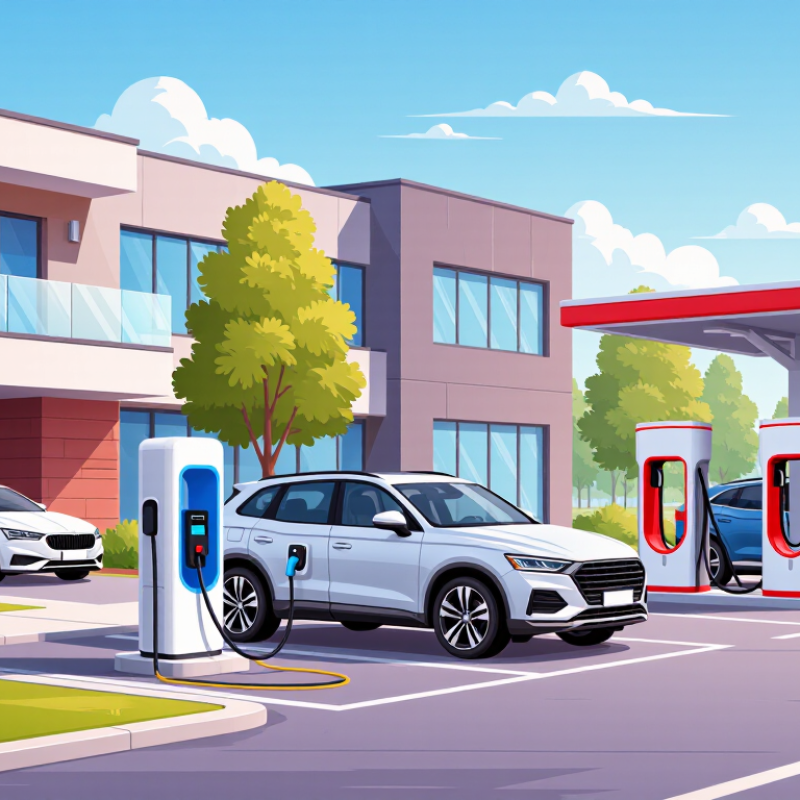
EV Charging Station Basics and Core Classification Criteria
What Are the Top Types of EV Charging Stations?
EV charging stations are mainly classified by current type, power output, charging speed, and installation location. These criteria matter more than appearance. An AC charger sends alternating current to the vehicle’s onboard charger. A DC charger converts power before it reaches the battery, allowing faster charging.
Common residential charging includes basic AC charging and higher-power AC charging. Basic units can use a standard household circuit, but charging may take many hours. Higher-power home units need suitable wiring and professional installation. Workplace and destination chargers usually provide moderate AC power. They suit vehicles parked for several hours. DC fast chargers deliver much more power and are designed for shorter stops. Actual speed still depends on battery temperature, vehicle limits, and the station’s available capacity.
Connector type is another core classification criterion. Compatibility must be checked before installation or travel. Power rating alone can be misleading. A station may advertise high output, yet the vehicle may accept less. Location also shapes the best choice: homes need convenience, highways need rapid turnover, and apartment sites may require shared load management. Safety protection, weather resistance, metering accuracy, and network reliability deserve equal attention. In practical use, a charger that works consistently is often more valuable than the fastest model. The categories are useful, but not perfect. Real charging performance changes with the cable, software, temperature, and site electricity supply.
Level 1, Level 2, and DC Fast Charging Stations Explained
What Are the Top Types of EV Charging Stations?
Level 1, Level 2, and DC Fast Charging Stations Explained
Level 1 charging uses a standard household outlet. The U.S. Department of Energy’s Alternative Fuels Data Center reports roughly 2–5 miles of range per charging hour. It suits overnight charging, apartment parking, and low-mileage drivers. It is slow. That can be perfectly practical.
Level 2 equipment typically uses 208- or 240-volt power. The same source estimates about 10–30 miles of range per hour. It is common at workplaces, homes, public car parks, and retail locations. Installation quality matters greatly. A long cable, shared circuit, or cold battery can reduce real-world speed. Many owners expect the maximum figure, but daily results are less tidy.
DC fast charging sends direct current to the battery, avoiding the vehicle’s onboard AC converter. Charging can add substantial range within minutes, although speed often falls after the battery reaches a high state of charge. The International Energy Agency reported more than 4 million public charging points worldwide at the end of 2023, with over 1.3 million added that year. Its Global EV Outlook 2024 also highlights rapid expansion of fast-charging networks. Still, connector access, queueing, and grid capacity remain practical concerns. The three-level model helps, but it simplifies a complicated experience. U.S. DOE Alternative Fuels Data Center; International Energy Agency, Global EV Outlook 2024.
How to Choose an EV Charging Station for Different Use Cases
Choosing an EV charging station starts with the vehicle’s parking time, not the charger’s maximum power.
Level 1 uses a standard household outlet and suits overnight charging for low-mileage drivers. Level 2, usually operating at 208–240 volts, fits homes, offices, apartments, and retail parking. The U.S. Department of Energy’s Alternative Fuels Data Center identifies Level 2 as a practical daily-charging option, while DC fast charging is designed for rapid energy recovery during longer trips.
Use DC fast charging when drivers cannot wait.
A motorway site, taxi hub, or delivery depot may need outputs from 50 kW upward, depending on vehicle compatibility and grid capacity. However, higher power can increase installation costs, demand charges, and cooling requirements.
The International Energy Agency reported that global public charging points grew by about 40% in 2023, reaching nearly four million. More stations are appearing, but availability does not guarantee a suitable connector or dependable uptime.
For a house, calculate nightly mileage and available electrical capacity before choosing hardware. For apartments, load management and shared access may matter more than peak speed. Workplaces often benefit from several Level 2 ports, because cars remain parked for hours.
Public sites need lighting, weather protection, clear payment procedures, and maintenance plans. A perfect choice rarely exists. In practice, owners sometimes overestimate charging speed and underestimate parking behavior. That mistake deserves another review.
According to the IEA’s Global EV Outlook 2024, expanding charging access remains essential for wider electric vehicle adoption, but local demand should guide each installation.