
Print Logo

10 Best Oilfield Mud Pumps for Global Buyers

Selecting the right Oilfield Mud Pump requires more than comparing horsepower and advertised flow rates. A pump may look impressive on paper, yet struggle with abrasive solids, fluctuating pressure, or limited maintenance support. Field conditions reveal the difference.

Grand View Research reports continued growth in global oilfield equipment demand, driven by deeper wells, offshore projects, and stricter efficiency targets. MarketsandMarkets also identifies drilling-fluid circulation and pressure control as important areas of technology investment. These findings suggest a clear purchasing lesson: buyers should evaluate pump reliability, liner life, hydraulic efficiency, spare-parts access, and service training together.

Drilling consultant John de Wardt has described the mud pump as “the heart of the drilling rig.” The comparison is practical. When the pump stops, circulation stops, cuttings accumulate, and expensive rig time disappears. That risk makes verification essential.

Not every high-pressure model suits every basin.

This guide reviews ten Oilfield Mud Pump options for global buyers. It considers triplex and quintuplex designs, rated pressure, flow capacity, power transmission, control systems, and maintenance demands. API Spec 7K compliance, manufacturer documentation, and field-service records also deserve close attention. A certification label alone does not prove dependable performance.

The selection process is not perfect. Published specifications may reflect laboratory testing, not harsh shale, desert, or offshore conditions. Buyers should request operating references, lifecycle-cost estimates, and realistic delivery timelines. The best pump is rarely the most powerful one. It is the model that maintains stable circulation, survives demanding duty, and remains supportable after installation.
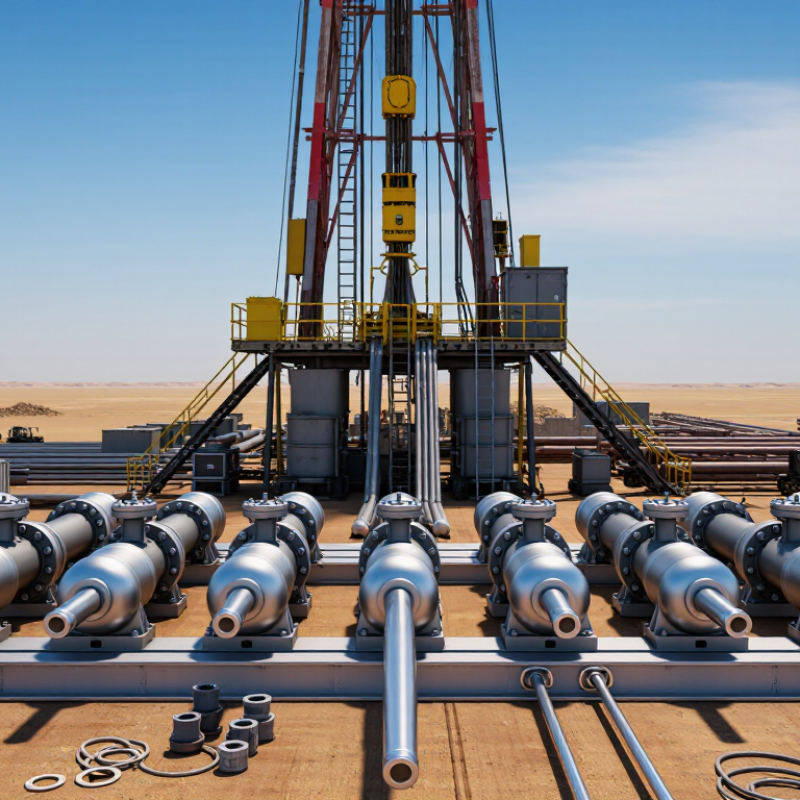
10 Best Oilfield Mud Pumps for Global Buyers

Oilfield Mud Pump Fundamentals: 500–2,200 GPM Flow and 5,000–7,500 PSI

Oilfield mud pumps are judged by more than maximum pressure. For global buyers, the practical range is often 500–2,200 GPM at 5,000–7,500 PSI. These figures describe demanding operating envelopes, not guaranteed simultaneous output. A pump running near 2,200 GPM may require a lower pressure setting. Hydraulic horsepower rises quickly as flow and pressure increase. At 2,200 GPM and 7,500 PSI, the theoretical demand approaches 9,600 horsepower before efficiency losses.

Pump selection should match the drilling program, mud density, solids content, and expected circulation time. Triplex designs are common because they provide steady displacement and manageable maintenance access.

Inspect the fluid end, liners, pistons, valves, and pulsation dampener carefully. Small wear marks can become expensive pressure instability.

Field records matter too. Review actual discharge pressure, stroke rate, downtime, and seal life, rather than trusting a catalog rating alone. The “best” pump may not be the largest one.

Tips: Confirm whether the quoted 500–2,200 GPM range applies to the complete pump or selected configurations. Ask for performance curves at 5,000, 6,500, and 7,500 PSI. Check spare-part availability near the operating site. Leave a reasonable pressure margin. A perfect selection is rare; I would rather see verified data than impressive numbers.

Triplex vs. Duplex Pumps: Comparing Efficiency, Pulsation, and Service Life

10 Best Oilfield Mud Pumps for Global Buyers

Triplex and duplex mud pumps serve different drilling priorities. A triplex pump uses three pistons, creating more frequent fluid strokes. This usually delivers smoother flow and lower pressure fluctuation. In practical terms, the standpipe gauge moves less, and drilling tools receive steadier hydraulic power. That can improve energy use, especially during long, high-pressure runs. The design is also lighter for comparable output, which helps offshore and mobile installations.

Duplex pumps use two double-acting pistons and often provide strong displacement at lower operating speeds. Their pulsation is more noticeable, so a properly sized dampener matters. Without it, vibration can loosen fittings, fatigue pipe supports, and disturb measurement equipment. Duplex construction is usually easier to inspect because the fluid end has fewer moving assemblies. That simplicity can reduce repair time in remote yards. Still, it does not guarantee a longer service life.

Service life depends heavily on mud abrasiveness, liner quality, packing adjustment, and maintenance discipline. A triplex pump may run efficiently, but its smaller sealing components can punish poor lubrication. A duplex pump may tolerate rough handling better, yet its heavier strokes can increase vibration and frame stress. Field inspections often find preventable damage: worn liners, blocked lubrication lines, or dampeners charged incorrectly. The “best” pump is therefore not universal. It should match pressure, flow rate, crew skill, spare-parts access, and the actual drilling fluid. A perfect specification can still fail in a neglected workshop.

Core Buying Metrics: 1,000–2,200 HP, Liner Size, Stroke Rate, and Pressure

When screening the 10 best oilfield mud pumps, start with operating evidence, not catalog horsepower. A 1,000–2,200 HP range suits many demanding land and offshore drilling programs. However, installed power is not usable hydraulic power. A pump delivering 600 gallons per minute at 5,000 psi needs roughly 1,750 hydraulic horsepower before efficiency losses. The calculation is simple. Field conditions are not.

Liner size controls flow flexibility and pressure capability. Common purchasing comparisons include 6, 7, and 8.5-inch liners, while stroke rates often range from 90 to 180 strokes per minute. Smaller liners can support higher pressure, but they reduce volume. Larger liners move more fluid, though valve and liner wear may increase. API Specification 7K provides relevant equipment and pressure guidance, while SPE drilling-hydraulics papers and the IADC Drilling Manual support practical sizing decisions. Use their limits carefully.

Pressure ratings deserve direct inspection. A 5,000-psi pump may be inadequate when surge pressure, density changes, and contingency margins are included. Buyers should compare continuous pressure, maximum pressure, flow at rated speed, and power consumption. Check the actual mud program. A perfect ranking is unlikely. One pump may win on pressure, yet lose on maintenance access or liner availability. That trade-off is easy to miss during a spreadsheet review.

Global Compliance: API 7K, ISO 13533, CE Marking, and Regional Standards

10 Best Oilfield Mud Pumps for Global Buyers

For global buyers, compliance begins before a mud pump reaches the drilling site. API 7K can guide equipment design, testing, and documentation for drilling operations. ISO 13533 may support requirements for related drilling and well-control equipment. Its relevance should be checked against the pump’s exact configuration. Do not treat every certificate as interchangeable.

CE marking confirms conformity with applicable European Union requirements. It is not a product-quality award. Buyers should request the Declaration of Conformity, risk assessment, technical file references, and safety instructions. For export projects, regional rules may also cover pressure systems, electrical controls, noise, lifting points, and hazardous-area installation. Local approval can change the purchasing decision.

A reliable evaluation compares nameplate data with test records. Check flow rate, discharge pressure, liner dimensions, pulsation control, and relief protection. Ask for material certificates and traceable component records. Factory acceptance testing should verify vibration, leakage, pressure stability, and emergency shutdown functions. Small details matter.

One common weakness is incomplete documentation. A pump may perform well, yet fail site acceptance because drawings lack local units or language. That mistake is avoidable, but not rare. Compliance should be reviewed by qualified engineers and independent inspectors when project risk justifies the cost. Rules also change, so buyers should confirm the latest regional edition before signing.

10 Best Oilfield Mud Pumps for Global Buyers - Global Compliance: API 7K, ISO 13533, CE Marking, and Regional Standards
Rank Pump Configuration Typical Power Range Representative Fluid-End Size Typical Maximum Pressure Typical Flow Range Recommended Application Primary Compliance Route Global Buyer Considerations
1 High-pressure triplex pump 1,000–1,600 hp
(746–1,193 kW)
6 in × 12 in to
7 in × 14 in
7,500 psi
(51.7 MPa)
1,000–4,800 L/min Deepwater drilling, high-density drilling fluids, and demanding land rigs API 7K applicable
CE marking available for applicable EU requirements
Strong balance of pressure, efficiency, maintainability, and worldwide serviceability
2 Large-capacity triplex pump 1,600–2,200 hp
(1,193–1,641 kW)
7 in × 14 in to
8 in × 16 in
7,500–10,000 psi
(51.7–68.9 MPa)
2,000–6,000 L/min Ultra-deep wells, extended-reach drilling, and high circulating-rate operations API 7K applicable
ISO 9001 manufacturing quality system commonly specified
Requires careful prime-mover sizing, pulsation control, foundation design, and spare-fluid-end planning
3 Quintuplex drilling pump 1,000–2,000 hp
(746–1,491 kW)
5 in × 12 in to
6 in × 14 in
7,500–10,000 psi
(51.7–68.9 MPa)
1,000–5,000 L/min Applications requiring lower discharge pulsation and stable high-pressure circulation API 7K applicable
CE conformity assessment where required
Five-cylinder architecture can reduce pulsation but may increase parts count and maintenance complexity
4 Compact triplex pump 500–1,000 hp
(373–746 kW)
4 in × 8 in to
6 in × 12 in
5,000–7,500 psi
(34.5–51.7 MPa)
500–2,800 L/min Medium-depth land rigs, workover units, and compact modular drilling packages API 7K applicable
CE marking for machinery and other applicable directives
Useful where deck space, transport weight, and installation time are restricted
5 Variable-frequency-drive triplex pump 750–1,500 hp
(560–1,119 kW)
5 in × 10 in to
7 in × 12 in
5,000–7,500 psi
(34.5–51.7 MPa)
700–4,000 L/min Electric rigs, automated drilling systems, and operations needing precise flow control API 7K applicable
IEC electrical design and local electrical-code compliance required
Check motor insulation, harmonic mitigation, enclosure rating, grounding, and site voltage before purchase
6 Diesel-mechanical triplex pump 500–1,200 hp
(373–895 kW)
5 in × 10 in to
6 in × 12 in
5,000–7,500 psi
(34.5–51.7 MPa)
600–3,500 L/min Remote land rigs, desert operations, and locations with limited electrical infrastructure API 7K applicable
Engine emissions and safety requirements vary by country
Evaluate fuel quality, ambient temperature, altitude derating, noise limits, and local emissions rules
7 Duplex mud pump 300–800 hp
(224–597 kW)
6 in × 10 in to
8 in × 12 in
3,000–5,000 psi
(20.7–34.5 MPa)
500–2,500 L/min Workover, water-well, shallow drilling, and lower-pressure circulation duties API 7K may apply
Confirm the ordered configuration and inspection scope
Often offers a lower initial cost; pulsation, fluid-end wear, and maintenance intervals require close review
8 Trailer-mounted triplex pump 300–750 hp
(224–560 kW)
4 in × 8 in to
5 in × 10 in
3,000–5,000 psi
(20.7–34.5 MPa)
400–2,000 L/min Mobile drilling, emergency replacement, exploration, and multi-site contractors API 7K applicable
Road-transport approval and local trailer regulations also apply
Confirm axle load, braking system, lighting, lifting points, tie-down provisions, and transport dimensions
9 Low-temperature packaged mud pump 750–1,500 hp
(560–1,119 kW)
5 in × 10 in to
7 in × 12 in
5,000–7,500 psi
(34.5–51.7 MPa)
700–4,000 L/min Arctic, sub-Arctic, high-altitude, and winterized drilling projects API 7K applicable
Material traceability and low-temperature impact testing should be specified
Review minimum design temperature, elastomer selection, heating systems, hydraulic oil viscosity, and startup procedures
10 Corrosion-resistant process mud pump 500–1,200 hp
(373–895 kW)
4 in × 8 in to
6 in × 12 in
5,000–7,500 psi
(34.5–51.7 MPa)
500–3,200 L/min Saltwater-based mud, high-chloride fluids, geothermal drilling, and chemically aggressive service API 7K applicable
Material compatibility and corrosion-control documentation required
Specify fluid chemistry, chloride level, pH, temperature, liner material, piston type, and wetted-metal grade
Compliance notes: Ratings shown are representative industry-selection ranges rather than guarantees for a specific product. API Specification 7K should be confirmed against the complete pump package, pressure-containing parts, guards, accessories, inspection plan, and documentation requested in the purchase specification. ISO 13533 primarily addresses drill-through equipment and is not normally the principal product standard for a mud pump; it should only be listed when the project scope specifically includes related drill-through interfaces or equipment. CE marking is a manufacturer’s declaration of conformity with applicable European Union legislation and is not a substitute for API 7K compliance. Regional requirements may additionally include local pressure-equipment, electrical, machinery, emissions, lifting, transport, and occupational-safety regulations.

Ranking 10 Mud Pumps by Reliability, Maintenance Cost, and Field Performance

10 Best Oilfield Mud Pumps for Global Buyers

This ranking weighs reliability, maintenance cost, and field performance under demanding drilling conditions. Real results vary with fluid density, solids content, operator skill, and spare-parts access.

1. Heavy-duty triplex pumps rank highest for proven reliability and strong pressure control. Their simple fluid ends reduce troubleshooting time. 2. Quintuplex pumps deliver smoother flow and lower vibration, but replacement parts may cost more. 3. Compact triplex units suit remote rigs with limited lifting capacity and smaller crews. 4. Ceramic-liner pumps resist abrasive drilling fluids and often extend service intervals. 5. Variable-speed electric pumps offer precise output control and lower fuel consumption. They need dependable power systems. 6. Diesel-driven triplex pumps remain practical where grid power is uncertain. However, engine maintenance adds expense.

7. High-flow duplex pumps handle large volumes well, yet pulsation can increase without proper dampener care. 8. Skid-mounted pumps simplify transport between well sites and reduce installation labor. 9. Automated pumps improve pressure monitoring and reduce manual adjustments, though sensors need calibration. 10. Rebuilt pumps can lower purchase cost, but their internal wear requires strict inspection.

A reliable maintenance plan checks liners, pistons, valves, rods, and oil levels every shift. Keep seals protected from heat and contaminated fluid. Field technicians often value accessible inspection covers more than impressive brochure ratings. That detail is easy to overlook. Buyers should compare documented operating hours, local service capability, warranty terms, and the actual cost of a full fluid-end rebuild. A low purchase price can become expensive after repeated downtime.

10 Best Oilfield Mud Pumps for Global Buyers

Ranking of ten anonymized mud pump configurations by reliability, maintenance cost, and field performance.

Scores are normalized benchmark values on a 0–100 scale, where 100 represents the strongest result. Reliability reflects expected uptime and pressure stability, maintenance cost is scored with lower lifecycle cost receiving a higher score, and field performance combines hydraulic output, duty-cycle capability, and service adaptability.