
Print Logo

What Are the Top Garage Storage Racks?

Choosing the best Garage Storage Racks is rarely about finding the largest or cheapest unit. It is about matching storage design to your garage’s walls, ceiling height, floor space, and daily habits.

A strong rack should support real equipment, not just display tidy product photos. Look for clear weight ratings, reinforced steel, adjustable shelves, and corrosion-resistant finishes. Wall-mounted racks need secure attachment to studs or suitable masonry anchors. Freestanding models require stable feet and enough clearance for vehicles, doors, and walking paths. Ceiling racks can recover unused overhead space, but they need careful installation and safe access.

Professional organizer Andrew Mellen often teaches, “One home for everything, and like with like.” That principle applies well here. Store drills near workbenches, seasonal boxes above head level, and heavy tools below waist height. Small details matter. A shelf placed too high may become forgotten storage. A deep rack may block a car door. A narrow frame may wobble when loaded unevenly.

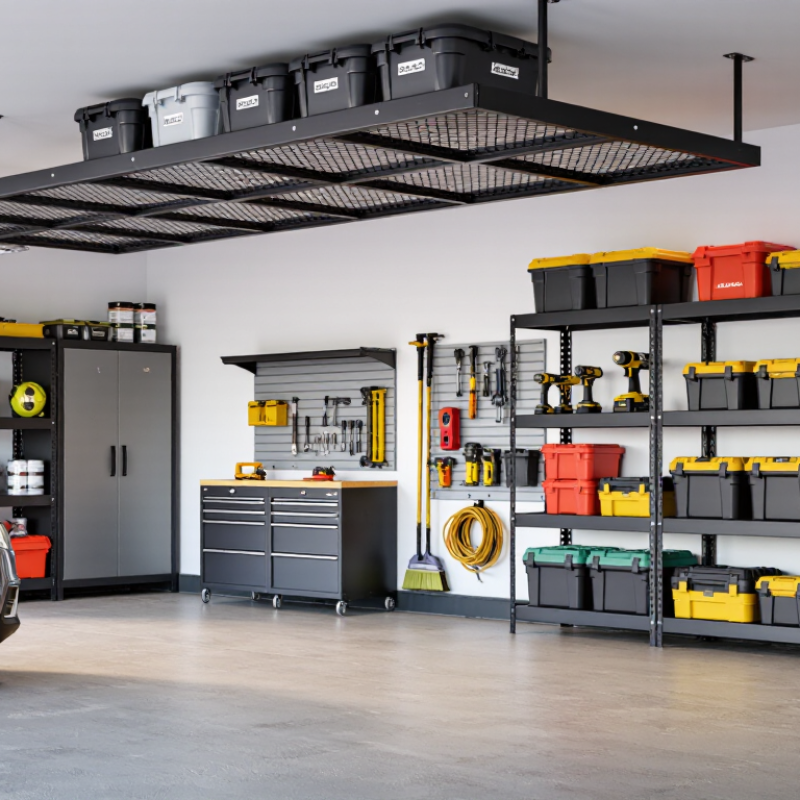
The top options usually include wall-mounted racks, freestanding shelving, ceiling platforms, and modular systems. Each solves a different problem. None is perfect. A budget rack might meet basic needs but disappoint under long-term use. An expensive system may offer excellent strength while wasting valuable space. This guide compares practical capacity, installation demands, accessibility, durability, and overall value, helping you choose a rack that works in your actual garage—not an imaginary one.
What Are the Top Garage Storage Racks?

What Defines a High-Quality Garage Storage Rack?

What Are the Top Garage Storage Racks?

A high-quality garage storage rack begins with verified load capacity, not a polished product photo. ANSI/RMI MH16.1-2023 emphasizes that rack capacity depends on beam spacing, shelf levels, frame design, and load distribution. A rack rated for 800 pounds per shelf may support 3,200 pounds across four levels. That assumes even loading and correct assembly. Real garages rarely stay perfect.

Material choice also matters. Powder-coated steel resists ordinary humidity, while galvanized components suit damp spaces better. The 2024 U.S. Census American Housing Survey reported that many American homes include garages or carports, making storage safety a widespread household concern. Yet a garage rack faces dust, temperature changes, moving tools, and accidental impacts. Thin uprights can bend after one careless collision.

Stability deserves close attention. OSHA’s storage guidance stresses secure stacking, visible capacity information, and protection from impact. Look for adjustable feet, wall anchoring points, braced corners, and shelves that remain level under weight. The shelf should not wobble when a loaded box is removed. That simple test reveals a lot.

Check the details. Fasteners should fit tightly without stripping. Edges should feel smooth, not sharp. A four-tier rack may appear spacious, but bulky containers can waste its vertical clearance. I would measure the tallest box first. I may be overly cautious, but unclear instructions and missing load labels are serious warning signs. Quality is not only strength; it is predictable performance, transparent specifications, and safe everyday handling.

What Defines a High-Quality Garage Storage Rack?

A high-quality garage storage rack combines strong load capacity, durable steel construction, adjustable shelving, stable support, and efficient use of vertical space. The chart uses a practical 1–5 benchmark score for comparing the most important quality criteria.

Which Types of Garage Storage Racks Best Suit Different Needs?

Garage storage is not one problem. The National Association of Home Builders’ 2024 buyer survey found that 81% of buyers considered garage storage desirable. That figure reflects a practical need, not just showroom appeal. Rack selection should match weight, access, ceiling height, and daily habits.

Wall-mounted racks suit hand tools, helmets, and frequently used equipment. They keep the floor open and make small garages feel less crowded. Adjustable freestanding shelving works better for renters or families with changing storage needs. Choose it for labeled bins, paint supplies, or camping equipment. Overhead racks are useful for seasonal items, such as holiday boxes and spare luggage. They save valuable floor space, but poor installation can make retrieval awkward. Tires and dense containers need heavy-duty steel shelving with evenly distributed loads.

In my experience, people often buy the largest rack available. That is rarely the smartest choice. A narrow unit beside the workbench may outperform a deeper unit that blocks movement. Check the stated load per shelf, not only the total capacity. ANSI MH16.1-2023 covers industrial steel storage racks, but household systems may follow different specifications. Anchor wall units into structural framing, and keep doors, vehicles, and electrical panels clear. The U.S. Consumer Product Safety Commission repeatedly warns that unstable storage furniture can tip, so “it feels solid” is not enough. Reconsider the layout after one week. Real use exposes mistakes.

What Are the Top Garage Storage Racks? - Which Types of Garage Storage Racks Best Suit Different Needs?

A practical comparison of common garage rack types by storage capacity, installation requirements, accessibility, and intended use.

Rack Type Best Suited For Typical Load Capacity Space Requirement Accessibility Main Advantages Potential Limitations
Freestanding Shelving Rack General-purpose storage, bins, tools, paint supplies, and household items Approximately 150–1,000 lb per shelf, depending on construction and model Uses floor space; available in narrow, standard, and heavy-duty widths Very easy to reach from all sides when positioned away from walls Flexible placement, simple assembly, adjustable shelf heights, and no wall installation required Can reduce parking or walking space and may require anchoring for added stability
Wall-Mounted Shelving Rack Garages with limited floor space and frequently used storage containers Commonly 50–300 lb per shelf when properly attached to suitable wall framing Uses vertical wall space and leaves the floor clear Good front access; placement height affects convenience Preserves floor area, keeps items organized, and can be installed above workbenches Requires secure mounting and suitable wall structure; not ideal for every wall type
Overhead Ceiling Rack Seasonal decorations, camping equipment, luggage, and rarely used items Often approximately 200–600 lb per platform when properly installed Uses unused ceiling space above vehicles or open floor areas Less convenient; requires a step ladder or lift for loading and unloading Maximizes storage volume without occupying walls or floors Needs careful clearance planning and secure ceiling attachment; unsuitable for daily-use items
Heavy-Duty Steel Rack Power tools, automotive parts, machinery, tires, and dense materials Approximately 500–2,000 lb per shelf, depending on frame, decking, and load distribution Requires a stable, level floor and sufficient aisle clearance Good access, especially with open wire or adjustable shelving High strength, durability, and strong resistance to wear in demanding environments Heavier, more expensive, and often less portable than light-duty shelving
Corner Storage Rack Small garages and unused corners that cannot accommodate full-width shelving Typically approximately 100–500 lb per shelf Designed to fit into corners with a compact footprint Moderate access; the rear corner may be harder to reach Makes efficient use of awkward spaces and improves corner organization Usually offers less usable shelf area than straight shelving units
Rolling Storage Rack Workshops, changing layouts, mobile tools, and flexible project areas Commonly approximately 200–800 lb per unit, including the frame and casters Requires floor space and additional clearance for movement Highly accessible and easy to reposition Mobility, flexible organization, and convenient access near a work area Usually supports less weight than comparable stationary racks; wheels should be locked when loaded
Tire Storage Rack Storing seasonal vehicle tires vertically and keeping them off the floor Often approximately 300–800 lb per level, depending on rack size and design Uses a narrow vertical footprint but needs enough depth for tire width Good access when tires are arranged in individual rows Protects tires from floor moisture, improves organization, and uses vertical space efficiently Primarily designed for tires and may not be suitable for general-purpose storage
Adjustable Modular Rack Changing storage needs, mixed-size containers, and growing tool collections Approximately 200–1,000 lb per shelf, depending on the configuration Can be configured for different widths, heights, and shelf spacing Good access when shelves are arranged according to item frequency Adaptable design, expandable layout, and efficient use of vertical space Configuration may take longer to plan, and some systems need additional bracing

Note: Load capacities are typical ranges for comparable rack categories, not guaranteed ratings. Always follow the manufacturer's published capacity, distribute weight evenly, and anchor racks when recommended.

How Do the Leading Garage Rack Materials and Designs Compare?

What Are the Top Garage Storage Racks?

Garage rack performance depends on material, structure, and installation quality. Powder-coated steel usually handles heavy tools, storage bins, and seasonal equipment. It feels stable when loaded correctly. However, cheap coatings may scratch and expose metal to moisture. Aluminum resists rust and weighs less, making it practical for humid garages. It may bend under concentrated loads, though. Resin racks tolerate damp conditions and simple cleaning, but they often flex with heavier containers. I have found that material choice matters less than the stated load rating and support design.

Design changes everyday usability. Freestanding racks offer flexibility and can move during garage reorganizing. Wall-mounted systems save floor space and reduce accidental bumps near vehicles. Ceiling racks create valuable overhead storage, but they need secure joists and careful lifting. Adjustable shelves fit changing items better than fixed shelves. Deep shelves hold large boxes, while narrow shelves keep tools visible. Poor spacing can make a strong rack frustrating.

Tips: Check each shelf’s working load, not only the maximum claim. Measure the garage door, vehicle path, and available wall depth. Use heavier items on lower levels. Inspect bolts after installation and watch for leaning, rust, or bent supports. Leave clearance around sprinklers, electrical panels, and vehicle doors. A rack may look efficient in an empty garage, yet daily access can reveal flaws.

What Features Should You Evaluate Before Choosing a Rack?

What Are the Top Garage Storage Racks?

Before choosing a garage storage rack, measure the wall, floor space, and ceiling height. Measure twice. A rack that fits online may block a vehicle door in real life. Check the published weight capacity for each shelf, not only the total capacity. Heavy tools need strong support and evenly distributed weight.

Look for adjustable shelves, especially if storage bins have different heights. Steel frames usually provide reliable strength, while a corrosion-resistant finish helps in damp garages. Inspect the joints, cross-braces, and feet. Stability matters. Leveling feet can help on uneven concrete, but they cannot fix a poorly assembled frame. If the rack is tall, confirm that it supports wall anchoring. Follow the installation instructions carefully.

Access is another practical feature. Shelves placed too high may waste space because you will avoid using them. Leave enough clearance for handles, lids, and frequently used equipment. Rounded edges can reduce painful bumps, although they do not replace careful placement. I once chose a deep rack for extra capacity, then discovered that small boxes disappeared at the back. That mistake changed my preference for shallower shelves and clear labels. Check whether the rack can be repaired or expanded later. Product descriptions sometimes sound precise, yet real garage conditions are less predictable. Consider the floor, humidity, lighting, and your actual storage habits before trusting a specification sheet.

How Can You Select and Organize the Right Rack for Your Garage?

Selecting a garage rack starts with the space, not the product label. The NAHB’s 2021 What Home Buyers Really Want report found that 83% of buyers considered a two-car garage essential or desirable. That demand makes vertical storage valuable, especially when floor space is limited. Measure wall width, ceiling height, door movement, and vehicle clearance before shopping. Measure twice.

Choose shelves for the load you actually own. Heavy bins, tools, and spare parts need steel frames, reinforced joints, and a clearly stated weight rating. ANSI/RMI MH16.1 guidance emphasizes rated capacity, stable installation, and proper load placement for storage racks. Keep heavier containers low and lighter items above shoulder height. Leave clearance. I once placed seasonal boxes too high, creating an awkward lifting angle that looked tidy but felt unsafe. That mistake changed my layout.

Organize by frequency and function. Keep daily tools near the entry, cleaning supplies together, and holiday items farther from the work zone. Use transparent containers and simple labels, but avoid filling every shelf. A 10–15% empty capacity buffer helps absorb new purchases and reduces unstable stacking. Anchor the rack when the installation surface and manufacturer instructions allow it, then inspect bolts, feet, and shelves every few months. A neat wall can still be a poor design.