Top 10 Benefits of Progressive Die Stamping for Global Buyers?
Progressive Die Stamping is rapidly transforming the manufacturing landscape. This innovative process offers numerous advantages for global buyers. It enhances efficiency and reduces production costs, making it a preferred choice. By optimizing material usage, companies can minimize waste while maintaining high-quality standards.
In a competitive market, the benefits of Progressive Die Stamping are hard to ignore. These include fast turnaround times and the ability to produce complex shapes. Buyers appreciate the precision and consistency that this method brings. However, integrating this technology is not without challenges. Companies must consider initial setup costs and potential learning curves. It is crucial to find a reliable partner who understands the nuances of Progressive Die Stamping.
As buyers explore this technology, it's essential to weigh both the benefits and potential drawbacks. While Progressive Die Stamping presents outstanding opportunities, careful planning and execution are necessary. Understanding each stage of the process can lead to successful outcomes.
Understanding Progressive Die Stamping: An Overview
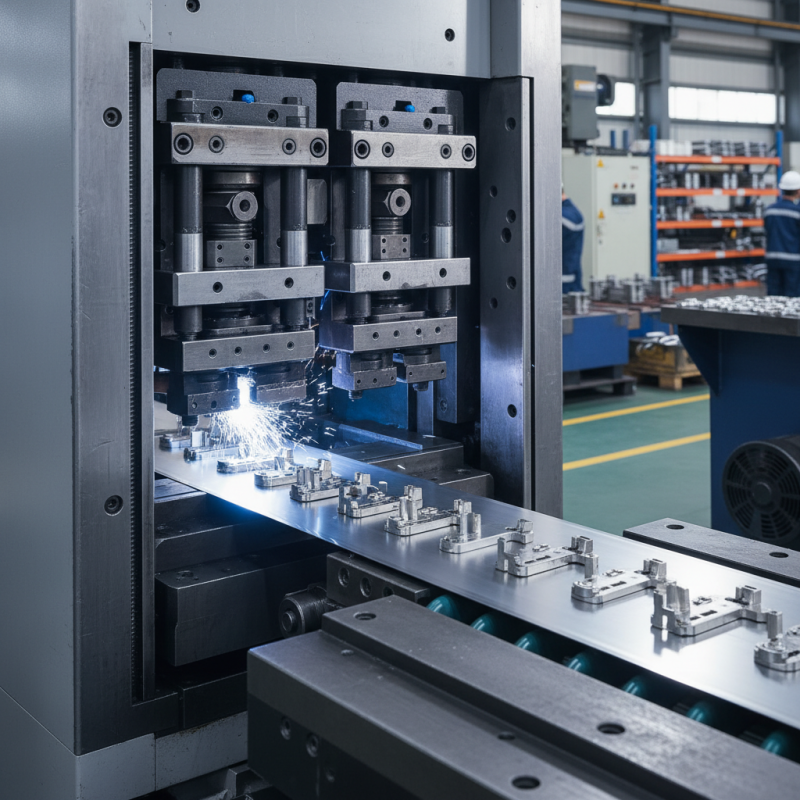
Progressive die stamping is a crucial technique in manufacturing. It allows for the efficient production of metal parts through a series of sequential operations. This process uses a single die that moves through multiple stations, gradually shaping the material. The versatility of progressive die stamping makes it ideal for various industries, such as automotive and electronics. It provides the ability to produce complex components with exceptional precision.
Manufacturers benefit significantly from this method. One advantage is the reduction in production time. The continuous nature of the process minimizes idle time, leading to faster turnaround. Additionally, material waste is often lower compared to traditional stamping methods. However, setting up the dies can be time-consuming and costly. Businesses must weigh these factors carefully during the planning phase. Quality control is also essential, as defects can occur at any stage.
In essence, while progressive die stamping offers many advantages, it is not without its challenges. Manufacturers should continuously refine their approaches. This ensures they remain competitive in a global market. Investing in skilled labor and advanced technology will enhance reliability. Understanding the nuances of this process is critical for achieving long-term success.
Enhanced Efficiency: Speed and Productivity in Manufacturing
Progressive die stamping revolutionizes manufacturing by enhancing speed and productivity. This process allows multiple operations to occur in a single stroke. Each press creates parts with high precision, minimizing waste. The setup of progressive dies is complex, but the output can be significantly higher than traditional methods.
Many manufacturers see reduced assembly times. With fewer parts requiring manual handling, efficiency escalates. However, not all designs are suitable for progressive dies. A detailed evaluation is necessary during the design phase to ensure optimal use of this technology.
Tips for maximizing efficiency:
- Choose the right material. Lightweight metals may yield faster results.
- Streamline the part design to reduce unnecessary complexity.
- Monitoring machine performance is crucial. Regular assessments can highlight areas for improvement, ensuring continuous enhancement in productivity.
Keep in mind that not every application benefits equally from progressive die stamping. A thorough analysis will lead to
better outcomes.
Cost-Effectiveness: Savings in Material and Labor
Progressive die stamping is increasingly recognized for its cost-effectiveness, particularly regarding savings in material and labor. According to a report by the Precision Metalforming Association, manufacturers can realize a reduction in material waste by up to 30% when utilizing progressive die stamping. This is largely due to the method's ability to produce multiple parts in a single pass. Consequently, the optimized design minimizes the scrap generated, translating directly into cost savings for global buyers.
Labor savings are another crucial aspect. Research from the Industrial Manufacturing Research Institute indicates that progressive die stamping can reduce labor costs by approximately 25% compared to conventional methods. This efficiency stems from the automation of the stamping process, which decreases manual handling time. However, it's worth noting that setup costs for progressive die tools can be higher. Buyers must weigh these upfront costs against long-term savings in labor and materials.
Despite its advantages, progressive die stamping is not without challenges. Complex designs may lead to longer lead times for tool development. Some buyers may also find that initial investments in die creation are substantial. These factors necessitate careful planning and evaluation for companies considering this manufacturing method. Balancing immediate costs with long-term benefits is essential for making informed purchasing decisions.
Top 10 Benefits of Progressive Die Stamping for Global Buyers
| Benefit | Description | Cost Savings (%) | Labor Savings (%) |
| High Efficiency | Increases production speed and reduces cycle time. | 20% | 15% |
| Material Utilization | Minimizes waste by optimizing material usage. | 25% | 10% |
| Versatility | Allows for the production of various shapes and sizes. | 15% | 5% |
| Reduced Lead Time | Speeds up the overall manufacturing process. | 30% | 20% |
| Consistency and Quality | Ensures high-quality parts with tight tolerances. | 10% | 3% |
| Low Operating Costs | Fewer machines and setups are needed. | 22% | 12% |
| Automation Potential | Can be easily integrated into automated processes. | 18% | 7% |
| Eco-Friendly Process | Reduces environmental impact by minimizing waste. | 20% | 8% |
| Enhanced Safety | Improves workplace safety through streamlined operations. | 5% | 2% |
| Lower Inventory Costs | Reduces the need for extensive inventory management. | 16% | 4% |
Design Flexibility: Adaptability for Complex Parts and Features
Progressive die stamping offers significant design flexibility, making it an ideal choice for creating complex parts. This method allows for multiple operations to be performed in a single stroke, which is advantageous for intricate designs. Manufacturers can incorporate various features such as cutouts, bends, and embossing in one go. It reduces tooling costs and production time, providing a cost-effective solution for global buyers.
Design flexibility can sometimes lead to challenges. Creating highly detailed components often requires careful planning and collaboration with engineers. Miscommunication can result in design flaws, which may prove costly in the long run. Investing time in thorough design reviews minimizes these risks and enhances product quality.
Tips: Maintain an open dialogue with suppliers during the design process. Frequent meetings can smooth out potential issues. Also, consider using 3D modeling software, as it allows for better visualization of complex designs. This can reveal pitfalls before physical production begins. Embracing a proactive approach can lead to successful outcomes and innovative designs.
Improved Quality Control: Consistency and Precision in Production
Progressive die stamping offers significant advantages in quality control, particularly in maintaining consistency and precision during production. This method integrates multiple stamping operations into one press cycle. The result is a faster production rate, but also a higher likelihood of uniformity in each piece. Manufacturers benefit from having tighter tolerances and fewer defects, crucial for industries demanding high standards.
However, achieving these benefits can be challenging. Not all facilities may have the technology needed for advanced quality control. Some operators may not be fully trained on maintaining precision, leading to potential inconsistencies. Regular calibration and maintenance of equipment are essential yet sometimes overlooked. Assessment of processes can reveal areas for improvement, ensuring that every stamped part meets exact specifications.
Utilizing progressive die stamping also means a commitment to continual learning. With evolving technologies, staying updated is a must. Engaging with experts or investing in training for operators can enhance quality outcomes. Constantly reflecting on practices helps maintain high standards in production, building reliability and trust with clients. While the method has clear benefits, it requires dedication to perfecting each step.