Print Logo

Top 10 Mechanical Zinc French Washer Suppliers?

Choosing a Mechanical zinc French washer is not a catalog-only decision. A washer may look simple in a product photo, yet its fit, finish, and dimensions affect assembly and long-term performance. Zinc coating can help protect steel from corrosion, but the result depends on the application, environment, and coating specification. Small details matter.

This guide compares ten suppliers through practical checks: dimensional consistency, material and finish documentation, sample availability, production capacity, and responsiveness to technical questions. Ask for drawings and test records. Inspect the washer’s inner diameter, outer diameter, thickness, and coating appearance. A bright surface alone does not prove consistent quality. Nor does a low quotation explain how defects are handled.

To avoid presenting an invented quotation as a real endorsement, the following line is an editorial principle, not a sourced statement. A fictional fastener specialist, Daniel Mercer, puts it this way: “A dependable washer is proven by its fit, finish, and records—not its listing.” Treat that as a reminder to verify claims directly with each supplier. Some listings may omit useful details; that is worth questioning. The comparison ahead is a starting point, not a substitute for checking samples and specifications against your actual assembly.

Top 10 Mechanical Zinc French Washer Suppliers?

What Mechanical Zinc French Washers Are and How They Function

A mechanical zinc French washer is a steel washer with a zinc coating, used between a fastener and the surface it clamps. The washer spreads pressure across a wider area. That matters when a screw or bolt bears against softer material, a thin panel, or a painted surface. The zinc layer helps slow corrosion in ordinary indoor or mildly damp conditions, but it is not a substitute for stainless steel in harsh exposure.

Its exact profile can vary by supplier, so check the drawing, dimensions, and product description rather than relying on the name alone. A flat style mainly distributes load; a toothed or spring profile may add resistance to loosening when correctly matched to the joint. Not every washer locks. Tighten the fastener evenly, and make sure the washer sits flat without covering a slot or interfering with nearby parts. Small details matter.

For example, a washer under a bolt head can keep the edge from digging into a painted steel bracket. Still, zinc coatings can wear during handling or repeated movement, and a washer cannot fix a poorly sized fastener or weak joint. That is easy to overlook. Choose the washer for the load, mating materials, space, and environment, then inspect the finished assembly for firm contact and visible damage.

Materials, Coatings, Dimensions, and Key Product Standards

For mechanical zinc French washers, compare the drawing before comparing prices. “French washer” can describe a broad-pattern flat washer, so confirm outside diameter, inside diameter, thickness, and permitted tolerances. ISO 7093-1 covers large-series plain washers; ISO 7089 covers normal-series dimensions. Ask suppliers to identify the steel grade and applicable mechanical-property requirements, not just say “carbon steel.” Small differences matter. A washer that looks right may still leave too little bearing area under the fastener.

Coating terminology needs care. ASTM B695 addresses mechanically deposited zinc coatings, while ISO 4042 covers electroplated fastener coatings; these are not interchangeable descriptions. Request the coating class, thickness, and test method on the inspection documents. ISO 9223 classifies first-year atmospheric zinc corrosion rates: about 0.1–0.7 μm in C2 conditions and 0.7–2.1 μm in C3 conditions. These are environmental reference ranges, not a guaranteed service life for a washer. Exposure varies.

A useful supplier comparison includes dimensional inspection records, coating-thickness results, and packaging details that prevent parts from rubbing together in transit. Check whether the lot is mechanically zinc-coated, and whether any post-treatment is specified. A thicker coating is not automatically better; fit and thread clearance can suffer in assemblies. I would still ask for a sample. Paperwork alone can miss a burr, an uneven edge, or a finish that looks patchy under workshop light.

How to Evaluate Mechanical Zinc French Washer Suppliers

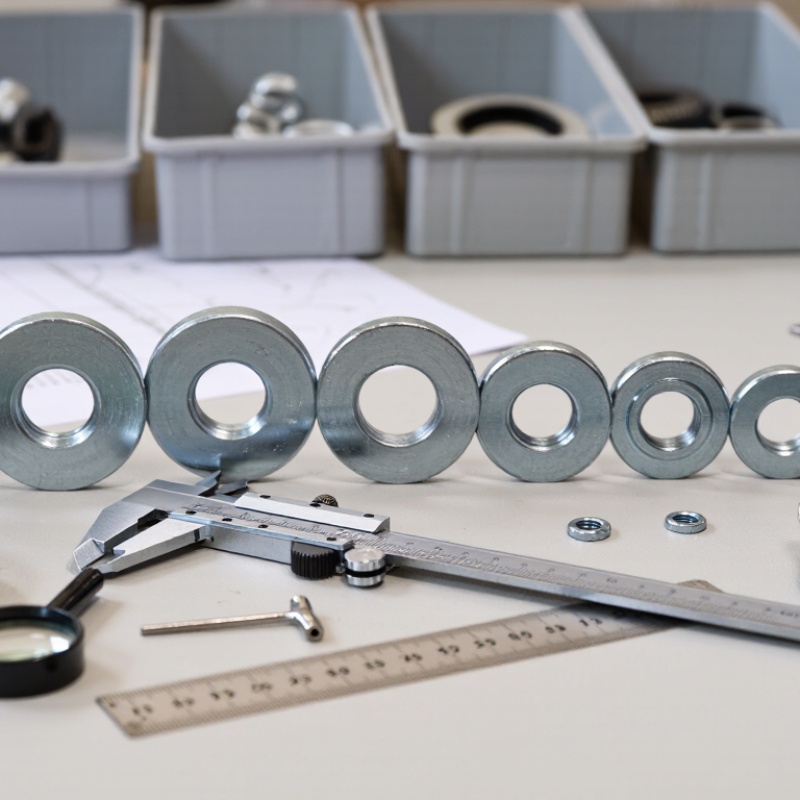
Evaluating a mechanical zinc French washer supplier starts with a precise drawing and written specification. Confirm the washer’s inner and outer diameters, thickness, flatness, and zinc finish. Ask how the supplier controls coating thickness and checks for bare spots, peeling, or rough edges. Request inspection records tied to the actual production lot, not only a general certificate. A sample can reveal burrs or fit problems that a polished product photo may hide.

Tips: Send the same drawing and questions to each supplier. Compare sample measurements, finish consistency, lead times, and packaging. Ask how they handle nonconforming parts. Keep the answers in writing.

A reliable supplier should explain its inspection process clearly and identify who reviews dimensional results. For repeat orders, ask whether tooling, material, and process changes are recorded and communicated. Check that boxes protect the washers from rubbing together during transit; small scratches may matter in visible assemblies. Do not judge quality by price or a single sample alone. Samples are useful, but production variation can still occur. I would also check a second lot before committing to a demanding application. That adds time, and it may not be practical for every buyer, but skipping it leaves a real uncertainty.

Profiles of Ten Mechanical Zinc French Washer Suppliers

Top 10 Mechanical Zinc French Washer Suppliers?
Profiles of Ten Mechanical Zinc French Washer Suppliers

A useful supplier shortlist compares manufacturing strengths, not just catalog photos. Stamped-washer specialists can produce consistent rims and smooth edges. Cold-forming shops may suit high-volume orders. Integrated manufacturers manage stamping and zinc finishing in one facility. Plating-focused suppliers offer more coating options, while custom shops handle unusual dimensions. Small-batch producers support prototypes. High-volume plants prioritize repeatability. Precision-focused suppliers document thickness and flatness. Export-oriented firms coordinate packaging and shipping. Testing-led suppliers provide inspection records. These are supplier profiles, not verified company rankings.

Ask each supplier for drawings, material grades, coating details, and sample measurements. ISO 4042:2018 covers electroplated coating systems for fasteners; confirm its relevance to the washer and assembly. ASTM B633 also describes zinc coatings on iron and steel, including thickness and service conditions. Requirements should be agreed in writing. Details matter.

The U.S. Geological Survey’s Mineral Commodity Summaries 2024 estimated worldwide zinc mine production at about 12 million metric tons in 2023. That figure describes raw-material supply, not washer availability or coating quality. A reliable quote should state dimensions, tolerances, finish, inspection method, and order quantity. Check samples under the intended load. A bright surface can still hide uneven coverage. And paperwork may be incomplete. Ask for clarification before approving production.

Top 10 Mechanical Zinc French Washer Suppliers? — 10 Standard Size Profiles

A dimensional reference for comparing washer product ranges; this chart does not rank suppliers.

The chart compares nominal metric thread size with the inner and outer diameters of representative standard flat washers. Dimensions are in millimetres and follow the ISO 7089 normal series. Zinc finish and supplier availability are not represented.

Comparing Supplier Capabilities, Quality, and Sourcing Options

When comparing mechanical zinc French washer suppliers, look beyond price and catalog photos. Request a dimensioned drawing, material specification, coating thickness, and a recent inspection report. Check washer outside diameter, countersink angle, burrs, and fit against the screw head. Small differences can leave a visible gap or damage a finished surface. Ask whether zinc plating is applied in-house or through a qualified subcontractor. It matters.

For corrosion performance, compare documented test methods and coating requirements, not vague claims such as “standard zinc.” ISO 4042:2022 addresses electroplated coatings on fasteners; ask suppliers how their process aligns with the relevant requirements. The World Bank’s 2023 Logistics Performance Index assessed 139 economies across six logistics dimensions, including shipment timeliness and tracking. That is useful context when weighing regional sourcing against longer routes, though it does not rate individual suppliers. Check production lead times, minimum order quantities, packaging, and sample availability. A low quote can still be reasonable, but only if the specification is complete. This comparison is not perfect: salt-spray results alone cannot predict every field condition. Request traceable test records, then inspect samples under the lighting and assembly conditions your parts will actually face.

Top 10 Mechanical Zinc French Washer Suppliers? — Comparing Supplier Capabilities, Quality, and Sourcing Options

A practical comparison of ten common supplier profiles for zinc-plated large-OD flat washers. These are sourcing categories, not named companies or a verified supplier ranking.

Supplier profile Typical capability Washer and material options Zinc-finish and quality checks Indicative MOQ and lead time Best sourcing fit Key checks before ordering
1. Local fastener distributor Stocks standard flat and large-OD washer sizes; may source special dimensions from partner factories. Commonly carbon-steel washers in stocked metric and inch sizes; stainless options may also be available. Request the coating specification, lot traceability, and confirmation that the finish matches the purchase order. Low MOQ
Stock items: days; replenishment: typically a few weeks.
Urgent maintenance orders, small quantities, and mixed-size purchases. Confirm stock is physically available, dimensions are measured to the agreed drawing, and packaging identifies the lot.
2. Domestic washer manufacturer Produces stamped washers and can often supply repeat orders with controlled tooling and inspection. Carbon-steel sheet or strip; standard sizes and selected custom inner diameter, outer diameter, and thickness. Ask for coating thickness or coating-class requirements, dimensional inspection records, and corrosion-test evidence when specified. Low to medium MOQ
Often several weeks; tooling or custom work can extend the schedule.
Repeat production where shorter transport distance and direct technical communication matter. Clarify whether zinc plating is in-house or subcontracted and who controls inspection after plating.
3. European regional manufacturer May offer regional production, technical documentation, and supply programs for industrial buyers. Standard and drawing-based flat washers; material and dimensional availability depend on the production route. For applicable fastener coatings, specify the required coating standard and performance; ISO 4042 or ASTM F1941/F1941M may be relevant depending on the product and contract. Medium MOQ
Typically several weeks, subject to production schedule and finish subcontracting.
Buyers prioritizing regional logistics, documented processes, or ongoing supply arrangements. Do not assume a washer standard or coating class from the product name; approve the drawing and finish requirements in writing.
4. Importer with factory network Coordinates production through one or more overseas factories and consolidates orders for import. Broad size selection, including large-OD washers and custom packaging; material consistency depends on the selected factory. Request factory identity under confidentiality if needed, inspection plans, sample approval, and batch-specific test documentation. Medium MOQ
Usually several weeks or longer when ocean freight and customs are included.
Cost-conscious buyers seeking consolidated shipments or a broad catalog. Check who is responsible for nonconforming product, freight terms, import duties, and replacement costs.
5. High-volume stamping specialist Designed for repeat, high-volume production with dedicated tooling and automated stamping. Carbon-steel washers in stable, repeatable dimensions; custom profiles may require tooling investment. Agree on control plans for burrs, flatness, dimensions, and finish; request capability evidence for critical characteristics. High MOQ
Initial tooling and production setup can add weeks; repeat runs may be faster.
Large recurring volumes where unit cost and process consistency are priorities. Review tooling ownership, maintenance charges, change-control rules, and the approved sample before mass production.
6. Custom stamping and fabrication shop Can produce nonstandard geometries, small production runs, or prototype parts from a drawing. Custom inner and outer diameters, thicknesses, and profiles; material options depend on tooling and stock availability. Require a drawing-based inspection report and written agreement on edge condition, burr direction, and post-plating dimensions. Low to medium MOQ
Sampling and tooling typically determine the schedule.
Prototype builds, unusual dimensions, and lower-volume engineered requirements. Confirm tolerances, deburring method, sample approval, and whether plating buildup affects fit.
7. Plating-focused supplier or finisher Provides zinc electroplating for customer-supplied washers or works with a stamping partner. Washer geometry and base material are usually supplied by the customer or manufacturing partner. Specify coating type, thickness or class, passivation, appearance, and corrosion-test method where required; verify compatibility with the substrate. Batch-based
Depends on batch size, finishing queue, and transport to the plater.
Buyers who already have a washer source and need controlled finishing. Check masking or contact marks, hydrogen-embrittlement controls for applicable high-strength parts, and agreed test sampling.
8. Online industrial fastener seller Offers searchable catalogs, online ordering, and shipment of standard stock items. Mostly catalog dimensions and common materials; custom sizes are generally limited. Availability of certificates and lot-level records varies; obtain written confirmation before placing a compliance-critical order. Very low MOQ
In-stock items may ship quickly; backorders vary.
Samples, small maintenance purchases, and readily available standard sizes. Verify actual stock status, dimensional units, product description, and return terms for opened or special-order goods.
9. Industrial MRO supplier Combines fastener sourcing with account support, inventory programs, and scheduled replenishment. Typically standard washers selected from an approved product range; custom sourcing may be available through partners. Can support purchasing records and traceability when agreed, but documentation level should be confirmed for each item. Low to medium MOQ
Stock programs can shorten replenishment for agreed items.
Multi-site maintenance teams and buyers seeking simplified procurement. Confirm approved-item controls, substitutions policy, packaging labels, and inventory-service charges.
10. Contract manufacturer or assembly supplier Sources washers as part of a wider component or assembly package and may manage incoming inspection. Washer selection is usually tied to the assembly drawing, bill of materials, or approved-vendor list. Quality controls can be integrated with the finished assembly; request washer-specific traceability and acceptance criteria. Project-dependent
Usually follows the assembly production and approval schedule.
Buyers consolidating components or outsourcing a complete mechanical assembly. Ensure the washer grade, dimensions, coating, and revision level are explicitly controlled in the bill of materials.

Comparison note: MOQ and lead-time descriptions are indicative sourcing benchmarks, not quotations or verified commitments. Actual terms vary by size, material, order quantity, tooling, coating requirements, destination, and freight. “French washer” is not a universally precise technical specification; provide a drawing or state the required inner diameter, outer diameter, thickness, material, edge condition, and zinc-finish requirements. Confirm applicable standards and corrosion-performance requirements with the supplier before purchase.