
Print Logo

What Is a Metal Sanding Machine and How Does It Work?

A Metal Sanding Machine removes burrs, scratches, scale, and uneven edges from metal surfaces. It uses an abrasive belt, disc, or wheel to cut microscopic peaks from the workpiece. A motor drives the abrasive at controlled speed. Pressure and contact time determine the final finish.

The process looks simple. It is not always forgiving. A technician may feed a steel plate too quickly and create visible heat marks. Too much pressure can round an edge or overload the motor. Modern machines often combine adjustable speed, pressure control, work supports, and dust extraction. These features improve consistency, yet setup still matters. Operators must match abrasive grit, belt speed, and material hardness. Stainless steel needs different handling from mild steel or aluminum.

Industry research supports this growing focus on surface preparation. Grand View Research’s metal finishing market analysis identifies automation and repeatable surface quality as important manufacturing trends. MarketsandMarkets’ abrasive materials research also connects abrasive demand with automotive, aerospace, fabrication, and machinery production. These reports describe market direction, not a guarantee of performance from every machine. That distinction matters.

Safety remains central. OSHA guidance addresses machine guarding, airborne particles, noise, and workplace exposure. ISO 12100 provides a recognized framework for machinery risk assessment. In practice, trained operators inspect belts, guards, extraction hoses, and emergency stops before use. Small faults can become expensive failures. A Metal Sanding Machine is therefore more than a powered abrasive tool. It is a controlled system requiring correct settings, maintenance, and human judgment. The machine helps. The operator decides.
What Is a Metal Sanding Machine and How Does It Work?

Definition and Purpose of a Metal Sanding Machine

A metal sanding machine is a workshop tool designed to smooth, clean, or prepare metal surfaces. It uses an abrasive belt, disc, or wheel to remove rough edges, weld marks, rust, and minor surface defects. Its main purpose is controlled material removal. Unlike hand sanding, the machine applies steady pressure and maintains a more consistent finish across larger areas.

During operation, a motor drives the abrasive surface at a selected speed. The operator guides the metal against it, allowing friction to reshape or refine the surface. Coarse abrasives remove visible marks quickly, while finer grades create a smoother finish before painting, welding, or assembly. Some machines include adjustable tables, dust collection, or water cooling. These features improve control, although they do not replace careful handling. Results can vary when pressure is uneven, and even experienced users sometimes remove more material than intended.

Tips: Choose the abrasive grade according to the metal and desired finish. Keep the workpiece firmly supported, but avoid forcing it into the abrasive. Inspect the belt or disc before use. A worn abrasive may generate excess heat and leave uneven marks. Wear suitable eye and hearing protection, and keep loose clothing away from moving parts. Test a small area first. That step prevents expensive mistakes.

Main Components and Their Functions

What Is a Metal Sanding Machine and How Does It Work?

Main Components and Their Functions

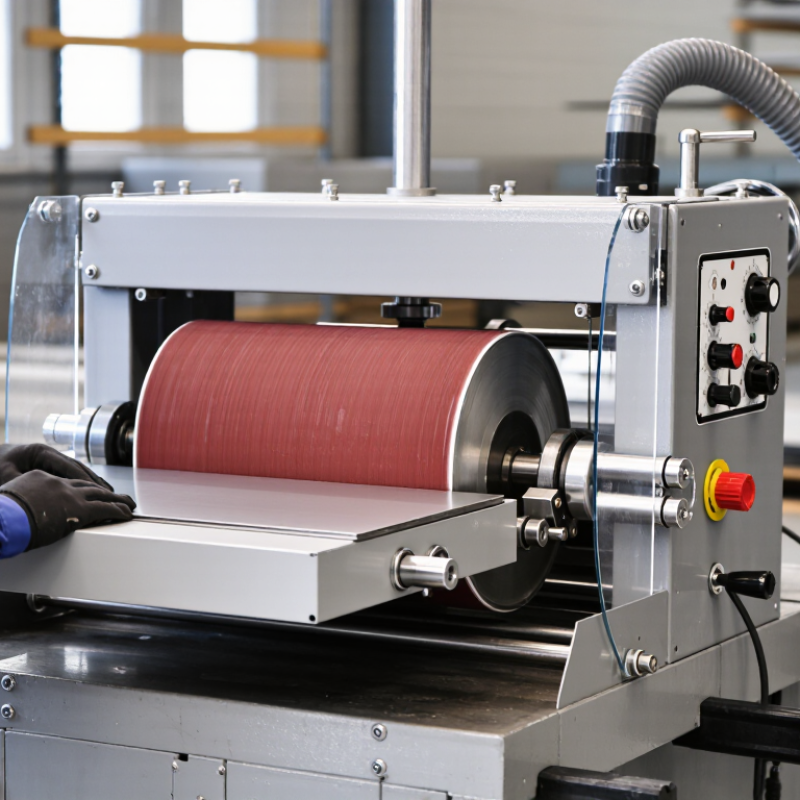
A metal sanding machine removes burrs, scratches, weld marks, and uneven edges from metal surfaces. Its main structure includes a rigid frame, drive motor, sanding belt or abrasive disc, rollers, worktable, and dust-control system. The frame keeps the machine stable during operation. The motor supplies rotational power. Rollers guide the abrasive belt and maintain steady contact with the workpiece.

The abrasive belt performs the cutting action. Its grit size affects the finish and material removal rate. Coarse grit removes heavy scale quickly, while finer grit produces a smoother surface. The worktable supports sheets or parts and helps maintain a consistent sanding angle. Some machines include adjustable pressure rollers for controlled feeding. A dust-collection unit captures fine particles near the sanding zone. It improves visibility and reduces airborne debris, though it cannot replace suitable protective equipment.

In practical workshop use, alignment matters as much as motor power. A tracking error can wear the belt unevenly or damage an edge. Operators should inspect belts, rollers, guards, and electrical connections before use. I have found that rushing this check often creates avoidable rework. Small defects become obvious under bright side lighting. Heat buildup also deserves attention, especially on thin metal. Excessive pressure may discolor the surface or remove more material than intended. No machine removes judgment. The operator still controls feed speed, pressure, and the final surface quality.

How the Metal Sanding Process Works

A metal sanding machine removes material through controlled abrasion. Its motor drives a belt, disc, or wheel across the workpiece. Coarse abrasive grains cut deep scratches first. Finer grains then reduce those marks and improve the surface texture.

The process depends on grit size, contact pressure, belt speed, and feed rate. Excessive pressure creates heat, discoloration, and uneven edges. Light pressure may leave burrs behind. In shop practice, operators often check the surface under angled light after each pass. It is not perfectly repeatable. Alloy hardness and operator movement can change the result.

Dust extraction and noise control matter during sanding. NIOSH recommends limiting occupational noise exposure to 85 dBA over eight hours in its noise exposure criteria report. OSHA sets a higher permissible limit of 90 dBA for an eight-hour shift. Sanding coated or contaminated metal can also release hazardous particles, so the coating must be identified before processing. OSHA’s respirable crystalline silica standard sets a 50 microgram-per-cubic-meter, eight-hour limit when silica exposure applies. A machine can produce a clean finish, but poor extraction still leaves fine dust around the operator.

What Is a Metal Sanding Machine and How Does It Work? - How the Metal Sanding Process Works

Typical metal sanding process parameters and operating results

Process Dimension Typical Value or Range How It Works Typical Result or Application
Machine type Belt, wide-belt, disc, or centerless sanding machine An abrasive belt or disc rotates while the workpiece is supported, guided, or fed through the machine. Deburring, stock removal, blending, and surface finishing of metal parts.
Common workpiece metals Carbon steel, stainless steel, aluminum, and cast iron The abrasive cuts microscopic chips from the surface; the required abrasive type and pressure depend on the metal. Consistent edges and improved surface uniformity when the parameters match the material.
Abrasive grit selection Coarse: P24–P60; medium: P80–P120; fine: P150–P320 Lower grit numbers have larger abrasive particles for faster cutting; higher grit numbers produce finer scratches. Coarse grits remove welds and scale; fine grits prepare surfaces for polishing or coating.
Abrasive material Aluminum oxide, zirconia alumina, ceramic abrasive, or silicon carbide Abrasive grains fracture or wear during cutting, exposing new cutting points and controlling cutting performance. Aluminum oxide suits general steel work; zirconia and ceramic support heavier stock removal; silicon carbide is often used for nonferrous metals and fine finishing.
Belt speed Approximately 15–35 m/s for many metal sanding operations The motor drives the abrasive belt at a controlled linear speed across the workpiece surface. Higher speeds can increase cutting action, but excessive speed may cause heat, discoloration, or premature abrasive wear.
Contact pressure Light pressure for finishing; moderate to firm pressure for stock removal Pressure pushes the abrasive grains into the surface and determines how deeply they cut. Proper pressure balances cutting rate, surface quality, heat generation, and abrasive life.
Feed rate Varies by material, grit, machine width, and desired finish; commonly adjusted from slow to several metres per minute The workpiece moves across the abrasive surface at a controlled rate. Slower feed generally increases contact time and material removal; faster feed reduces heat and produces lighter cutting.
Material removal Light stock removal to several millimetres, depending on machine capacity and workpiece geometry Multiple abrasive grains shear, fracture, and wear the surface instead of using a single cutting edge. Removal of weld spatter, burrs, mill scale, oxidation, paint, and uneven surface material.
Surface roughness Often approximately Ra 0.8–6.3 µm, depending on grit, pressure, speed, and material Each abrasive grain leaves a small scratch; finer grits and finishing passes create smaller, more uniform scratches. A more uniform surface suitable for painting, plating, welding preparation, or decorative finishing.
Heat control Air cooling, intermittent passes, reduced pressure, or wet grinding where suitable Cooling removes heat generated by friction and limits thermal damage to the workpiece and abrasive. Reduced risk of burn marks, warping, temper discoloration, and loss of material properties.
Dust and particle control Local exhaust ventilation with suitable filtration An extraction system captures airborne metal particles and abrasive dust near the sanding zone. Cleaner work areas, better visibility, reduced inhalation exposure, and lower contamination risk.
Typical process sequence Inspect → secure → coarse sand → intermediate sand → fine finish → clean and inspect Operators progressively reduce abrasive grit and adjust pressure and speed as the surface improves. Controlled material removal with fewer deep scratches and a predictable final finish.

Note: Values are typical operating guidelines rather than universal settings. Final parameters should be selected according to the machine, abrasive specification, workpiece material, geometry, and required surface finish.

Common Types of Metal Sanding Machines

A metal sanding machine removes burrs, scratches, oxidation, and uneven edges with an abrasive surface. It usually uses a motor, a drive system, and controlled pressure. The machine’s design determines how quickly and evenly it works. In metalworking, the wrong abrasive can overheat the part or create deeper marks.

Belt sanding machines are common for flat plates, weld seams, and long edges. An endless abrasive belt moves over rollers and gives steady material removal. Disc sanding machines use a rotating disc for smaller parts, curved edges, and detailed shaping. They offer good control, but the contact area can become hot quickly. Wide-belt sanding machines process larger sheets with consistent pressure. They suit repeated production work and help maintain uniform thickness. Drum sanding machines use a cylindrical abrasive surface. They are useful for controlled finishing, although they may need careful alignment.

Centerless sanding machines support round bars and tubes without clamping each workpiece. They can produce smooth, consistent surfaces at high speed. However, setup errors may cause tapering or uneven contact. A skilled operator checks belt condition, abrasive grit, pressure, and heat during operation. Simple observation matters. A blue discoloration often signals excessive heat. Choosing only by motor power is an imperfect decision. Surface shape, material hardness, required finish, and production volume deserve equal attention. Even experienced users should test a small area before full processing.

Applications, Benefits, and Safety Considerations

A metal sanding machine uses an abrasive belt, disc, or wheel to remove burrs, rust, weld marks, and surface irregularities. The workpiece meets the moving abrasive under controlled pressure. Speed, grit size, and feed rate shape the final finish. In fabrication shops, it supports edge preparation, weld blending, sheet-metal finishing, and cosmetic polishing. Automated feed systems can improve repeatability, especially on repeated parts. However, results still depend on operator judgment.

Its main benefits are faster material removal, consistent surfaces, and less physical strain than hand sanding. A wider abrasive belt can process large panels evenly, while a narrow contact wheel reaches curved edges. The machine may also reduce rework. That benefit is easy to overstate. Poor setup can create heat discoloration, uneven edges, or hidden stress in thin metal.

Safety requires more than wearing gloves. NIOSH estimates that about 22 million U.S. workers face potentially damaging workplace noise each year. OSHA uses 85 dBA over eight hours as a hearing-conservation action level, so noise measurements should guide hearing protection. Metal dust also needs serious control. The U.S. Chemical Safety Board recorded 281 combustible-dust incidents, causing 119 deaths and 718 injuries from 1980 to 2005. Use local exhaust ventilation, suitable dust collection, guards, eye protection, and respiratory controls where assessment requires them. Keep sparks away from accumulated dust. Never assume a clean-looking floor is safe.