Top 10 Sodium Hypochlorite Generator Manufacturers Worldwide
A Sodium Hypochlorite Generator makes disinfectant on site from salt, water, and electricity. For utilities, hospitals, and industrial plants, that can mean fewer deliveries and a steadier supply. But performance depends on more than output figures. Cell design, brine quality, controls, ventilation, and operator training all matter. Small details matter, too: a hard-to-clean electrode or unclear alarm can complicate an ordinary shift.
This guide introduces ten manufacturers serving markets worldwide. It compares their product focus, capacity ranges, automation, materials, service support, and published technical information. A large nameplate capacity is not automatically the best fit. A plant with variable demand may value turndown and simple maintenance more. Prospective buyers should confirm local service coverage and review current specifications directly with each manufacturer.
Water-safety expert Dr. Jamie Bartram’s work supports a practical takeaway: reliable disinfection depends on sound management as well as suitable technology. This is a paraphrase, not a verbatim quotation. It is a useful lens for comparing equipment. Look closely at operating instructions, monitoring features, and the support available after installation. Rankings can simplify a crowded market, but they cannot replace site-specific engineering. No shortlist is perfect. The comparison that follows is a starting point, not a purchasing verdict.
Sodium Hypochlorite Generators: Technology and Core Components
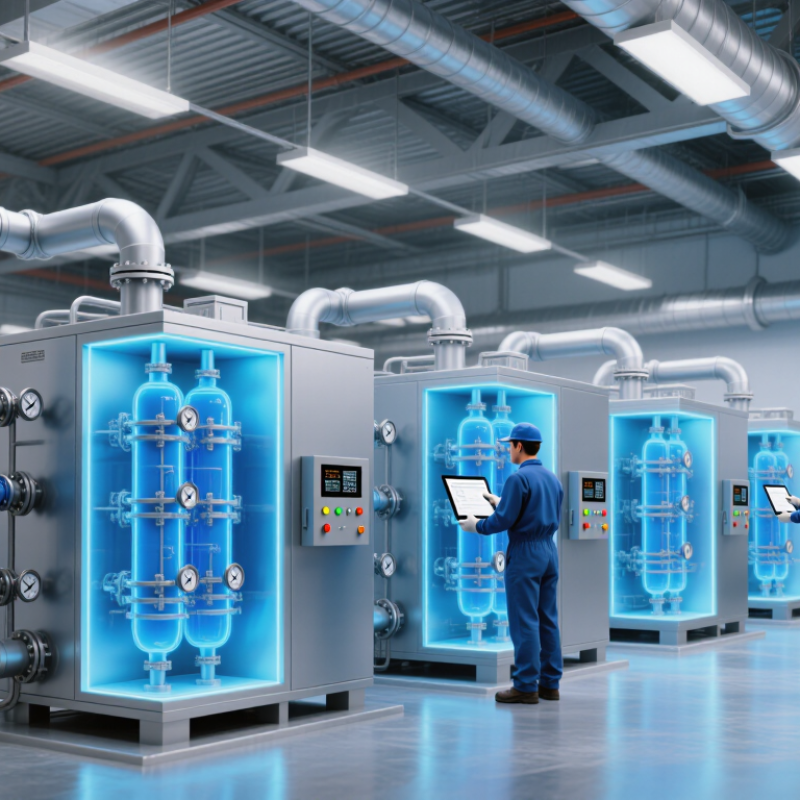
A sodium hypochlorite generator converts salt, water, and electricity into a dilute disinfectant solution on site. Its core components are straightforward: a brine preparation unit, a power supply, an electrolytic cell, a storage tank, and controls for flow and concentration. In the cell, electrodes drive electrolysis; the resulting solution is then stored for dosing. Small details matter. Hard water can cause scale, while warm storage and sunlight can accelerate solution decay.
The WHO/UNICEF Joint Monitoring Programme’s 2023 report estimates that 2.2 billion people lacked safely managed drinking water in 2022. That service gap helps explain the value of locally produced disinfectant, especially where deliveries are unreliable.
But output alone is not a quality measure. Operators need routine checks of salt purity, cell condition, solution strength, and residual chlorine at the point of use. Ventilation also matters because hydrogen forms during electrolysis.
One weakness is easy to overlook: generator performance depends on the whole installation, not just the cell. Poor water softening, inconsistent brine, or a neglected electrode can reduce output and increase maintenance. The U.S. EPA’s drinking-water treatment guidance stresses monitoring and operational control across disinfection systems. A practical specification should therefore cover production rate, materials compatibility, cleaning access, alarms, and service support—not merely the advertised capacity.
Global Market Scope and Manufacturer Selection Criteria
The global sodium hypochlorite generator market spans municipal water treatment, industrial cooling, food processing, and marine applications. Manufacturer capabilities vary by plant size, local service coverage, and required output. A system designed for a small facility may not suit a large waterworks. The “top 10” should therefore be treated as a comparison starting point, not a universal ranking.
Assess manufacturers against measurable needs. Check chlorine output, product concentration, salt and power consumption, and performance under changing demand. Review wetted materials, cell design, ventilation requirements, and safeguards against leaks or electrical faults. Ask for operating references from facilities with similar water quality and duty cycles. Clear commissioning plans, spare-parts availability, and responsive technical support matter over years of use. Request maintenance intervals and realistic service costs, not just purchase price. A polished specification sheet is useful, but it cannot replace site-specific verification; I would not assume every stated efficiency figure reflects daily operation.
Tips: Share your flow rate, water chemistry, and operating schedule before requesting quotations. Compare proposals using the same assumptions. Ask what measurements are taken during acceptance testing, and document any limits or uncertainties.
Comparing Manufacturer Capabilities, Products, and Applications
Comparing sodium hypochlorite generator manufacturers requires more than checking hourly output. Buyers should examine chlorine production rate, solution strength, salt and water requirements, power use, controls, and maintenance access. The U.S. EPA’s Alternative Disinfectants and Oxidants Guidance Manual describes onsite hypochlorite generation as an option for water treatment, while emphasizing that system design and operating conditions matter. A compact unit may suit a small facility; a municipal plant may need redundant cells, automated dosing, and clear alarm records.
Applications set the real performance test. WHO’s Guidelines for Drinking-water Quality (2022) describe effective chlorination as achieving at least 0.5 mg/L free chlorine after 30 minutes of contact at pH below 8; a minimum 0.2 mg/L residual is recommended at delivery. These benchmarks help compare dosing control, monitoring, and integration with contact tanks. Look for documented output under the site’s actual water temperature and salinity, not just ideal factory conditions. Details matter.
Manufacturers also differ in cell design, hydrogen ventilation, corrosion-resistant materials, remote monitoring, and service support. Ask for operating data, spare-parts lead times, and references from similar applications, such as cooling-water systems or drinking-water plants. A polished specification sheet can still leave questions about performance during startup or low-load operation. That gap deserves attention.
Key Factors in Selecting a Sodium Hypochlorite Generator Supplier
Choosing a sodium hypochlorite generator supplier means matching output to actual demand, not just peak capacity. Ask for performance data across changing feedwater salinity and temperature, plus tested output concentration and power use.
WHO’s Guidelines for Drinking-water Quality (2022) describe effective disinfection with at least 0.5 mg/L free chlorine after 30 minutes at pH below 8, and a residual of at least 0.2 mg/L at delivery. These figures help frame operating requirements; they are not a substitute for site-specific testing.
Small details matter. Check how the supplier supports commissioning, cell cleaning, spare parts, and alarm response. Request a maintenance schedule and clarify which measurements trigger service.
The U.S. EPA’s National Primary Drinking Water Regulations set a 4.0 mg/L maximum residual disinfectant level for chlorine; it is a compliance limit, not a routine dosing target. Ask how the proposed controls help operators stay within local requirements.
A polished specification sheet can still miss awkward realities, such as fluctuating salt quality or limited operator time. There is no universally best cell design.
A supplier willing to document limits, provide references for comparable installations, and explain failure modes is often more useful than one promising effortless operation.