
Print Logo

How to Choose the Right Isolation Mounts?

Choosing the right Isolation Mounts begins with understanding the vibration problem, not browsing a catalogue. Every machine has a different operating speed, load pattern, and mounting environment. A compressor may create continuous vibration, while a stamping press produces short, powerful impacts. The correct mount must respond to both.

Dr. David A. Bies, a respected authority in vibration and noise control, explains, “Effective isolation depends on the complete system, not the mount alone.” This principle remains practical. Mount stiffness, natural frequency, damping, load distribution, and installation accuracy all affect performance. A mount rated for one machine can fail on another.

Look closely at the details.

Measure the static load on each mount. Check the equipment’s forcing frequency. Consider temperature, oil exposure, movement limits, and floor conditions. Rubber mounts may suit compact machinery, while spring or air mounts can provide greater low-frequency isolation. Yet higher isolation is not always better. Excessive movement may damage connected pipes, cables, or safety guards.

Real installations often reveal overlooked problems. A slightly uneven base can overload one mount. Loose fasteners can create noise. A design that works in a laboratory may perform poorly beside a running production line. That is where experience matters.

This guide examines how to choose Isolation Mounts with a balanced engineering approach. It also questions a common assumption: the softest mount is not automatically the best choice. Reliable selection requires measurements, manufacturer data, and careful review of the entire support system. Expect some refinement. Good isolation design is rarely perfect on the first attempt.
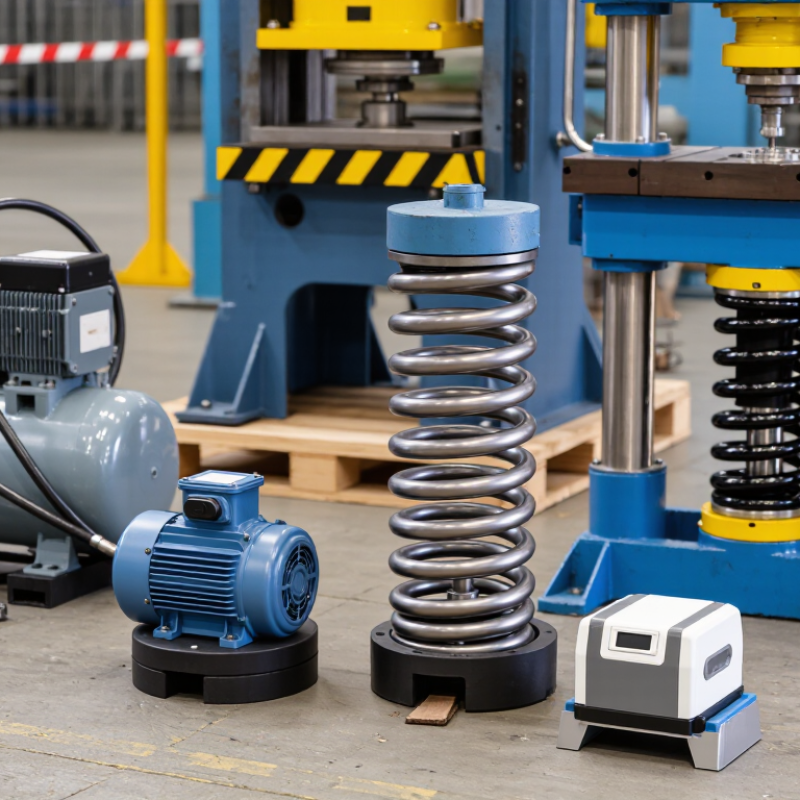
How to Choose the Right Isolation Mounts?

Define the Purpose and Performance Requirements of the Isolation Mounts

How to Choose the Right Isolation Mounts?

Define the Purpose and Performance Requirements of the Isolation Mounts

Start with the disturbance, not the mount. Identify whether the main problem is engine vibration, shock, structure-borne noise, or equipment movement. Record operating speed, forcing frequency, supported mass, and load direction. A machine running at 1,800 rpm produces a primary excitation near 30 Hz. The mount must have a lower natural frequency to isolate it effectively. However, excessive softness may create unsafe movement during startup or braking.

Use measured data whenever possible. ISO 10846 provides methods for testing vibration isolation across supporting elements. Its approach helps engineers compare dynamic stiffness and transfer behavior under controlled conditions. The European Environment Agency’s Environmental Noise in Europe 2020 report estimated that over 113 million people faced harmful road-traffic noise exposure. This does not define a mount specification, but it shows why structure-borne noise deserves attention. Noise control can begin with vibration control.

Check static deflection, damping, temperature range, fatigue life, and installation space. Then verify performance under real loading. A mount rated for vertical weight may perform poorly under lateral forces. Small alignment errors matter. They can overload one mount and reduce system life. I have seen calculations look convincing while field vibration remained unacceptable. That is a useful warning. Design targets should include allowable displacement, isolation efficiency, and resonance behavior, not only load capacity. Test the complete assembly before approval. Calibration errors happen. Fresh measurements are safer than assumptions.

Identify the Main Types of Isolation Mounts and Their Applications

Choosing the right isolation mount starts with identifying the vibration problem, not the mounting hardware. Elastomeric mounts suit small pumps, compressors, and control cabinets. They are compact and cost-effective. However, rubber stiffness changes with temperature, aging, and load. Spring mounts work better for heavy HVAC equipment and low-frequency vibration. They need correct deflection and stable alignment. Wire-rope isolators resist shock, corrosion, and harsh outdoor conditions. They often protect marine equipment, generators, and transport systems. Air springs provide excellent low-frequency isolation, especially beneath precision machinery. They also require reliable air-pressure control.

Industry data supports careful selection. Grand View Research reported that the global vibration control system market was valued at over USD 5 billion in 2023, with continued growth expected through 2030. This expansion reflects wider use in manufacturing, construction, and energy facilities. ISO 20816 also stresses measuring machine vibration under defined operating conditions. That matters. A mount selected from static weight alone may perform poorly during startup or resonance. In field inspections, uneven loading is a common and easily missed issue. I have seen a seemingly oversized mount transmit vibration because its working frequency matched the machine’s rotation.

Tips: Record operating speed, total load, temperature, and disturbing frequency. Compare the excitation frequency with the mount’s natural frequency. Leave safety margin for overload and aging. Check whether the equipment needs lateral restraint. A soft mount may reduce vertical vibration but allow unwanted movement. Recheck performance after installation. Real conditions can differ from design assumptions. (Sources: Grand View Research, Vibration Control System Market Report, 2024; ISO 20816-1:2016.)

How to Choose the Right Isolation Mounts? – Identify the Main Types of Isolation Mounts and Their Applications
Isolation Mount Type Typical Construction Main Isolation Mechanism Typical Frequency Range Best Applications Key Advantages Important Selection Considerations
Elastomeric Mounts Rubber or synthetic-elastomer elements bonded to metal plates, studs, or bushes. Elastic deformation absorbs vibration and limits shock transmission. Generally suitable for medium- to high-frequency vibration; performance depends strongly on compound and preload. Small motors, pumps, fans, compressors, control panels, and general machinery. Compact, cost-effective, corrosion-resistant options are available, and usually maintenance-free. Check static load, dynamic load, compression or shear direction, temperature, oil exposure, and allowable deflection.
Spring Mounts Helical steel springs, often combined with housing, leveling hardware, or resilient pads. Spring deflection lowers the natural frequency and reduces transmitted vibration. Often effective for low-frequency vibration when sufficient static deflection is provided. HVAC equipment, chillers, large fans, pumps, generators, and industrial machinery. Handles high loads and can provide greater vertical movement than solid elastomer mounts. Determine operating load per mount, required static deflection, lateral stability, seismic restraint, and possible spring surge.
Wire-Rope Isolators Stainless-steel cable formed into loops and clamped between metal bars or frames. Three-dimensional flexing of the cable dissipates vibration and absorbs shock. Broad-band performance, including vibration and shock across multiple directions. Outdoor equipment, transport systems, marine equipment, electronics, and applications with shock loads. Resistant to oil, many chemicals, ozone, and temperature extremes; no fluid leakage and low maintenance. Match the isolator to load direction, shock level, stroke limits, environmental exposure, and required preload.
Pneumatic Isolators Pressurized air springs or air chambers supported by flexible diaphragms or bellows. Compressed air provides a low-stiffness support with adjustable operating pressure. Very low-frequency isolation is possible when correctly sized and controlled. Precision measurement systems, optical tables, semiconductor equipment, and sensitive laboratory instruments. Excellent low-frequency isolation and adjustable load capacity; leveling systems can improve stability. Requires a clean, stable air supply or sealed system, height control, leak management, and protection from excessive motion.
Viscoelastic Mounts Elastomer or polymer material designed to combine spring action with internal damping. Material hysteresis converts part of the vibration energy into heat. Effective over a defined frequency and temperature range; performance is material-dependent. Electronic equipment, vehicle components, instrument panels, and structures requiring vibration damping. Provides both support and damping, helping reduce resonance amplification. Account for temperature, aging, frequency, strain amplitude, creep, and compatibility with chemicals or oils.
Neoprene or Rubber Isolation Pads Flat pads, strips, or layered sheets made from resilient rubber or neoprene compounds. Compression and shear deformation reduce structure-borne vibration and impact. Typically used for medium- to high-frequency vibration and minor shock isolation. Equipment bases, rail supports, pipe supports, building services, and low-profile machinery installations. Simple installation, low profile, broad load-bearing area, and easy trimming or stacking. Verify compressive stress, pad thickness, surface flatness, creep, temperature, and resistance to oil or weathering.
Hydraulic or Fluid-Damped Mounts Elastomeric support combined with fluid chambers and calibrated passages. Fluid movement through restricted passages provides frequency-dependent damping. Useful where vibration characteristics vary with operating speed or load. Engines, vehicle powertrains, rotating equipment, and systems requiring controlled resonance behavior. Can reduce vibration across a wider operating range than a simple elastomer mount. Consider fluid temperature, leakage risk, mounting orientation, dynamic load, service life, and maintenance access.
Hanger and Suspended Isolators Spring, elastomer, or combination assemblies installed between suspended equipment and a supporting structure. Separates suspended equipment or services from the structure to reduce transmitted vibration and noise. Commonly selected for low- to medium-frequency building-service vibration. Ductwork, pipework, suspended fans, air-handling units, and ceiling-mounted mechanical equipment. Reduces structure-borne noise while accommodating overhead installation constraints. Check hanger rod loads, vertical travel, lateral restraint, fire and building-code requirements, and installation alignment.

Selection should be based on the equipment mass, load distribution, operating speed, disturbing frequencies, required static deflection, environmental conditions, and the direction of expected vibration or shock.

Match Mount Materials and Load Ratings to Equipment Conditions

How to Choose the Right Isolation Mounts?

Choosing isolation mounts starts with the equipment, not the catalog. Record the machine’s total weight, center of gravity, operating speed, shock loads, and mounting points. Divide the working load unevenly when the center of gravity is offset. Each mount should support its actual share, not an average guess. A practical selection often uses a safety factor between 1.5 and 2.0, depending on shock and fatigue exposure. This is not universal. That is where judgment matters.

Material choice must match the environment. Rubber suits general vibration control and moderate temperatures. Neoprene handles oils and weather better. Silicone performs well across wider temperature ranges, but it may provide less load capacity. Metal-spring mounts suit heavy equipment and low-frequency isolation, but they need careful lateral control. Check static deflection and natural frequency together. ISO 10846-1 provides methods for measuring dynamic transfer stiffness. The UK Health and Safety Executive also identifies 2.5 m/s² as an action value and 5 m/s² as a limit for hand-arm vibration exposure. These figures do not replace equipment testing.

Tips: Measure vibration before and after installation. Confirm the mount’s load rating at the real temperature. Inspect compression after commissioning. If one corner settles noticeably, stop and recalculate. A mount can carry the weight yet still fail under movement, oil exposure, or repeated impact. I have seen specifications look correct on paper, while the machine still walks across the floor. That usually means stiffness, alignment, or operating speed was overlooked.

Evaluate Vibration, Shock, Environmental, and Installation Factors

How to Choose the Right Isolation Mounts?

Choosing isolation mounts starts with understanding the equipment’s real operating conditions. Measure vibration frequency, load, movement, and operating speed. A mount that works well at one frequency may perform poorly at another. Do not rely on static load ratings alone. Dynamic behavior matters.

Shock requires a separate assessment. Identify impact direction, peak force, pulse duration, and how often shocks occur. For example, a control cabinet near a stamping machine may need greater deflection than a lightly vibrating pump. Test the expected load when possible. Calculations can miss sudden changes.

Environment and installation often decide service life. Check temperature, moisture, oils, dust, chemicals, and outdoor exposure. Select materials that remain stable under those conditions. Confirm the mount fits the available height and bolt pattern. Keep the load centered. Misalignment can create unwanted stress. Small errors matter.

Inspect the supporting structure, too. A flexible frame can reduce isolation performance. During installation, avoid over-tightening fasteners unless the design requires it. Record the actual equipment weight, not the catalog estimate. In practice, these details are often incomplete. That is a weakness worth correcting. Field measurements, trial fitting, and follow-up inspection provide more reliable decisions than assumptions alone. Evaluate noise, movement, and fastener condition after commissioning. Adjust the design if performance differs from the prediction.

Verify Selection Through Testing, Maintenance, and Service-Life Review

How to Choose the Right Isolation Mounts?

Verify selection through testing, maintenance, and service-life review. A catalog rating is only a starting point. Measure the equipment’s actual mass, center of gravity, operating speed, and vibration direction. Then test the proposed mount under realistic load and temperature conditions. ISO 10846 provides methods for measuring transfer stiffness, while ASTM D4169 supports repeatable distribution and vibration testing. These methods can expose resonance, excessive deflection, or poor alignment before installation.

Field checks matter more than elegant calculations. Inspect mounts for cracking, compression set, corrosion, oil exposure, and uneven gaps. Record vibration levels during startup, steady operation, and shutdown. Small changes may reveal fatigue earlier than visible damage. The U.S. Department of Energy’s Operations & Maintenance Best Practices Guide reports that predictive maintenance can reduce costs by 8–12% compared with preventive maintenance, and 30–40% compared with reactive maintenance. That evidence supports scheduled measurements, not guesswork.

Service life also needs a written review. Compare measured deflection with the original design value every six or twelve months. Recheck after overloads, temperature excursions, or nearby equipment changes. Rubber may harden. Metal springs may lose alignment. The weak point is often missed: real conditions rarely match laboratory assumptions. Leave room for uncertainty, and document every replacement decision.