How to Choose a Metal Distribution Box?
Choosing a Metal Distribution Box is not simply a matter of selecting a steel cabinet. The correct choice protects circuits, simplifies maintenance, and supports dependable power distribution. It must suit the installation environment, expected load, wiring method, and available space. A box that looks strong may still fail in a damp room, dusty workshop, or crowded control panel.
Mike Holt, a respected electrical-safety educator, offers a useful reminder: “Equipment must match its environment, not merely its load.” That principle deserves attention. Check the enclosure’s material, ingress protection, corrosion resistance, mounting method, and cable-entry design. Galvanized steel may perform well indoors, while coated steel or stainless steel can better resist moisture and chemicals. Always verify ratings against applicable local requirements and project specifications.
Small details matter. Can an electrician reach every terminal without removing unrelated wiring? Are cable glands sealed properly? Does the door open fully beside nearby equipment? These questions often reveal weaknesses before installation begins. I have seen attractive boxes become difficult to service because internal space was underestimated. That mistake is easy to make.
No checklist is perfect. Conditions change. A careful selection process should include load calculations, temperature review, grounding provisions, and future circuit capacity. Compare supplier drawings, test certificates, and enclosure ratings before purchasing. The best Metal Distribution Box is not always the cheapest or largest model. It is the one that fits the real site, protects its components, and remains practical years after installation.
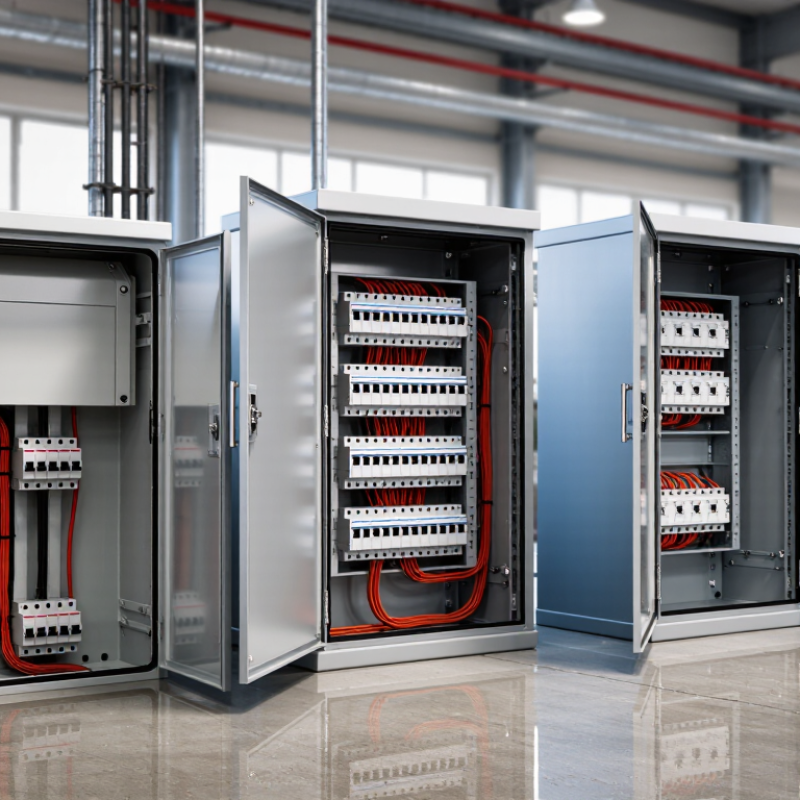
Define Load and Capacity: IEC 61439 Ratings and Current Requirements
How to Choose a Metal Distribution Box?
Define the expected load before choosing a metal distribution box. List every outgoing circuit, its operating current, and its starting demand. Motors, heaters, and power supplies may create short peaks. Do not size the enclosure from today’s average reading alone. Allow practical spare capacity for future circuits, but avoid excessive oversizing.
IEC 61439 uses important ratings for assembly selection. The assembly rated current, InA, describes the maximum current the complete distribution assembly can carry. Each circuit also has a rated current, Inc. Check both values against protective devices, conductor sizes, and expected temperature rise. Short-circuit performance matters too. Review Icw or Icc values against the prospective fault current at the installation point. A higher rating is not automatically safer if the upstream protection is poorly coordinated.
Heat needs attention.
Metal helps with mechanical protection, but it does not remove thermal limits. Examine internal spacing, ventilation, busbar arrangement, cable entry, and the rated diversity factor. Confirm the required IP rating for dust and moisture exposure. In technical reviews, a common mistake is trusting a neat layout without checking its test documentation. I have also seen load estimates copied from old drawings. That deserves a second look. Use manufacturer assembly instructions, verified design calculations, and qualified engineering review before approval. Record the assumptions, especially ambient temperature and future load. Hidden assumptions often become expensive changes.
Choose Steel or Aluminum: Compare Z275 Coating and Corrosion Resistance
Choosing a metal distribution box starts with its enclosure environment, not appearance. Steel with Z275 coating contains 275 grams of zinc per square metre, measured across both surfaces under EN 10346:2015. That equals roughly 38 micrometres of zinc in total, though actual thickness varies. Zinc protects exposed steel sacrificially. Small scratches may remain protected. Deep cuts and poorly sealed edges still deserve attention. In practical installations, condensation often attacks hidden seams before painted faces.
ISO 9223:2012 classifies atmospheric corrosivity using pollutants, humidity, and time of wetness. For zinc, first-year corrosion loss ranges from 0.1–0.7 micrometres in C2 to 4.2–8.4 micrometres in C5. A Z275 box can perform very differently near farmland, coastal spray, or chemical processing. These figures are guidance, not a warranty. Site testing matters.
Aluminum forms a compact oxide film and usually weighs less than galvanized steel. It suits humid locations and frequent handling, but chloride-rich water can cause pitting. Dissimilar-metal contact may also create galvanic corrosion around stainless fasteners. Use compatible washers and drain points. I would inspect hinges, cable entries, and bottom corners first. They fail early. A stronger box is not always the better box. Check the enclosure’s IEC 60529 ingress rating, ventilation needs, and installation exposure before choosing steel or aluminum.
Match Protection Levels: IP54–IP66 and NEMA 3R–4X Enclosure Ratings
How to Choose a Metal Distribution Box?
A metal distribution box must match its environment, not only its circuit load. IP ratings follow IEC 60529. The first digit measures protection against solids. The second measures water resistance.
IP54 limits dust entry and resists water splashes.
IP65 provides dust-tight protection and withstands water jets.
IP66 handles powerful water jets.
These results come from controlled tests, not permanent field conditions. Condensation, chemicals, and damaged gaskets can still create risk.
NEMA 3R protects against falling rain, sleet, and external ice formation. NEMA 4 adds protection against hose-directed water and windblown dust. NEMA 4X includes corrosion resistance.
Do not treat NEMA and IP ratings as exact equivalents. A 2024 Electrical Enclosure Market Assessment valued global demand at approximately 7 billion US dollars and forecast about 6% annual growth through 2030. Outdoor distribution is a major demand driver. The figure is useful, but regional methods may differ.
For dusty washdown areas, IP66 or NEMA 4 is a practical starting point. Near salt spray, fertilizer, or wastewater, NEMA 4X deserves closer review.
Check cable glands, hinges, drains, and mounting seals. A perfect rating cannot repair poor installation.
I have seen boxes pass selection reviews, then fail after one unsealed cable entry. That weakness is easy to miss.
Recheck the test certificate, operating temperature, coating, and corrosion exposure before ordering.
Check Thermal and Short-Circuit Performance Under IEC 61439 Standards
How to Choose a Metal Distribution Box?
When choosing a metal distribution box, check thermal performance under IEC 61439, not just the enclosure thickness. Heat builds around breakers, busbars, and cable terminals. A box rated for a high current may still overheat when packed tightly. Review the assembly’s rated current, ambient temperature, internal layout, and temperature-rise verification. Leave practical space for cable bending and heat movement. Small details matter.
Short-circuit performance needs equal attention. Confirm the assembly’s rated short-time withstand current, peak withstand current, and conditional short-circuit rating. These values should match the prospective fault current at the installation point. Protective devices must coordinate with the assembly rating. Ask for design-verification records, test reports, and clear installation conditions. A vague “heavy-duty” claim is not technical evidence.
Inspect connection points carefully. Loose terminals can create hot spots before a fault occurs. Check busbar supports, conductor clearances, enclosure bonding, and tightening instructions. In real projects, the selected box is sometimes adequate on paper but unsuitable after extra devices are added. Recalculate the heat load when the layout changes. Do not assume ventilation will fix poor spacing; it may also reduce the intended protection level. Reflect on the actual site conditions, especially dust, sunlight, and seasonal temperature changes.
Verify Safety Compliance: UL 50E, IEC 62208, Grounding, and Installation Space
How to Choose a Metal Distribution Box?
Safety compliance should guide the selection of every metal distribution box. UL 50E evaluates enclosure protection against environmental conditions, including water, dust, corrosion, and physical damage. IEC 62208 establishes requirements for empty enclosures used in low-voltage switchgear assemblies. These standards are not interchangeable. Confirm which standard applies to the complete installation.
The enclosure rating must match the location. A dusty workshop, outdoor wall, and washdown area require different protection levels. According to NFPA’s Electrical Fires report, U.S. fire departments responded to an estimated 35,150 home fires involving electrical distribution and lighting equipment annually from 2015 to 2019. Those fires caused about 470 deaths and 1,100 injuries. The figures are domestic, but they show why enclosure choices deserve careful review.
Grounding needs equal attention. Use a verified bonding path between the door, enclosure, gland plates, and protective conductor. Paint or loose hinges can interrupt continuity. Test the connection during commissioning. Do not rely on appearance.
Installation space is easy to underestimate. Leave room for cable bending, terminal access, heat release, and future circuits. A box may satisfy UL 50E or IEC 62208 requirements, yet perform poorly when packed tightly. That is the uncomfortable part. Check the actual cable sizes, entry points, and maintenance reach before ordering. A small enclosure may look efficient, but it can create heat, strain, and unsafe troubleshooting conditions.