How to Choose the Best Shipbuilding Panel Line?
A Shipbuilding Panel Line can shape output quality and delivery across an entire yard. Yet the best choice depends on what your facility builds today and may build later. Plate dimensions, steel grades, panel geometry, and planned shifts all affect the fit. A line that looks fast on paper may struggle with real part variation. Small mismatches become costly. Details matter.
Compare the full process, from plate loading and marking to assembly, welding, handling, and inspection. Check stated capacity against actual panel sizes, changeover time, labor needs, floor space, and maintenance access. Ask suppliers for verified cycle data, reference installations, training plans, spare-parts support, and clear service terms. Where possible, review a trial using representative panels rather than ideal samples. Not every yard can do that. That limitation should be recorded, not ignored.
Automation may reduce repetitive work, but it cannot fix poor process planning or unstable upstream information. Consider integration with existing conveyors, welding systems, digital production records, and the people who will run the equipment. Use this guide to compare options against measurable needs, not brochure claims alone. The best line is not simply the most automated or expensive. It is the one your team can operate reliably, maintain, and improve over time.
Define Panel Types and Production Goals
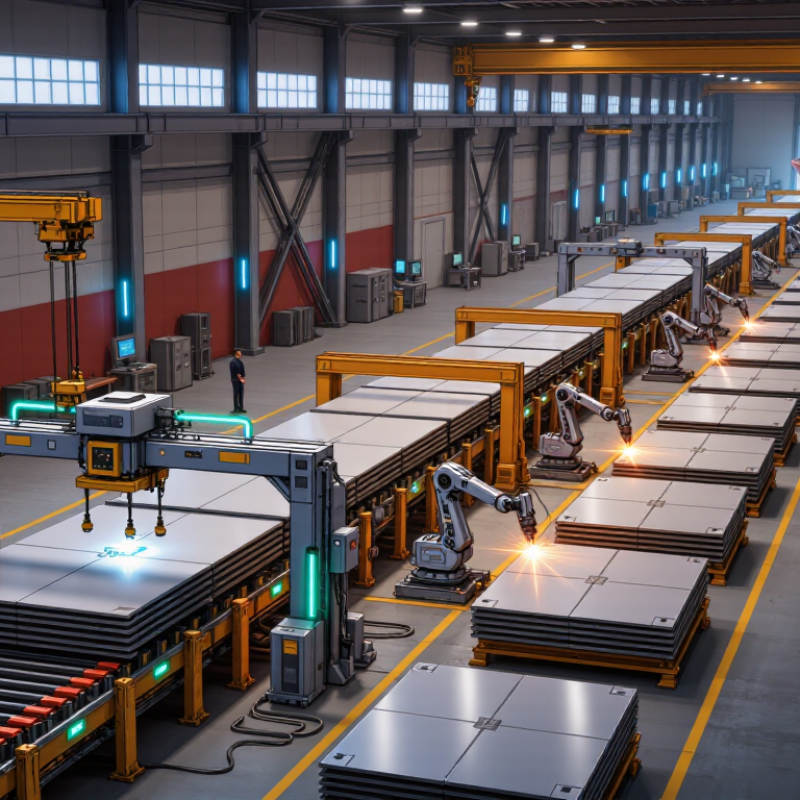
Define the panel mix before comparing line speeds. Flat stiffened panels need reliable plate feeding, tack welding, and long, repeatable welds. Curved or highly cut-up panels may need more flexible handling and fit-up.
Record plate dimensions, thickness, steel grades, stiffener spacing, and the share of each panel type. Measure it. A line rated only in tonnes per hour can hide bottlenecks: a heavy plate may move quickly, while frequent changes in stiffener layout slow the shift.
Set targets around the work the yard actually releases: panels per shift, square metres welded, changeover time, and rework rate. UNCTAD’s Review of Maritime Transport 2024 reports that seaborne trade grew 2.4% in 2023 and projected 2.0% growth for 2024. Those figures describe market demand, not a guaranteed increase in a particular yard’s workload. Use them as context, then test the line against the production schedule.
Include peak weeks and small-batch jobs. One uncomfortable truth: forecasts rarely match the daily mix. A spreadsheet may miss crane delays, awkward panel handling, or time spent correcting fit-up. Use trial data where possible, and revisit assumptions before committing to capacity.
Compare Cutting, Welding, and Automation Technologies
A shipbuilding panel line should be judged by how cutting, welding, and automation work together on real plate sizes—not by a single machine’s headline speed. Cutting systems must handle the steel grades and thicknesses used in your production. Plasma cutting is flexible for heavy plate, while laser cutting can produce narrower kerfs on suitable material. Check edge quality, heat distortion, and how much grinding follows. A fast cut is less useful if it creates extra fit-up work. Small gaps matter.
Welding technology affects both throughput and panel distortion. Submerged arc welding can suit long, repeatable seams; other processes may offer more flexibility for varied joints. Compare weld consistency, access for inspection, and the skill required to correct defects. Automation can coordinate cutting, positioning, and welding, but it depends on reliable part data and careful setup. Ask suppliers to run representative panels, including awkward openings and stiffeners, then record cycle time and rework. Not always. A highly automated line may underperform when product changes are frequent or operators cannot adjust the workflow. The best choice is often less dramatic: a balanced line that fits your panel mix, floor space, and maintenance capacity. Review the trial results with production and quality staff before committing.
Evaluate Factory Layout, System Integration, and Staffing Needs
How to Choose the Best Shipbuilding Panel Line?
Evaluate the factory floor before comparing machine specifications. Map panel flow from plate storage to cutting, welding, and staging. Leave clear routes for cranes, workers, and maintenance access. A line that fits on a drawing may block a real forklift turn. Measure door heights, columns, and floor loading; these details are easy to overlook.
System integration matters just as much. Confirm that design data can move reliably into cutting, welding, and quality-control systems. Check how the line handles rework, machine downtime, and changing panel sizes. OECD shipbuilding market reporting tracks shifts in orders and production capacity, reminding planners that demand can change. Avoid designing for one fixed production mix. A perfectly connected system is not always a practical one.
Tips: Test the layout with a scaled floor plan and a walk-through using actual panel dimensions. Ask operators and maintenance staff to review access points before equipment is ordered. A 2024 Deloitte–Manufacturing Institute workforce study projected 3.8 million manufacturing jobs would be needed in the United States by 2033, with up to 1.9 million potentially unfilled. This is broader than shipbuilding, but it highlights the value of planning training early. List the skills each shift needs, then check whether current staff can safely operate and troubleshoot the integrated line.
Review Lifecycle Costs, Supplier Support, and Upgrade Options
A shipbuilding panel line can look inexpensive until energy use, consumables, calibration, software fees, and unplanned stoppages enter the spreadsheet. Compare costs across the same service life, production volume, and shift pattern. Include the price of replacing a welding head or conveyor drive, not just the purchase price. Small details matter: a delayed sensor can leave several stations waiting.
The U.S. Department of Energy’s Operations & Maintenance Best Practices Guide (2010) reports that predictive maintenance can reduce maintenance costs by 25–30% and downtime by 35–45% across industrial settings. Treat these figures as benchmarks, not promises for a specific shipyard. Ask suppliers for service-response targets, spare-part lead times, technician training, and examples from comparable lines. Get the commitments in writing. A phone number is not a support plan.
Check whether the line can accept upgraded controls, sensors, or welding equipment without replacing major structures. Request a clear retrofit plan, including downtime, software compatibility, and who validates safe operation after changes. A low-cost system may be harder to expand later. I would still question any forecast that assumes perfect uptime; real yards have messy schedules, and estimates can be optimistic.