
Print Logo

China Top Mild Steel Pipe Manufacturers and Suppliers

China’s mild steel pipe industry stands on a massive manufacturing base. The World Steel Association reported 1,019.1 million tonnes of crude steel production in China during 2023. This capacity supports pipe mills, galvanizing lines, and precision cutting facilities across major industrial provinces.

Mild Steel Pipe remains widely used in water systems, construction frames, agricultural equipment, and factory utilities. Its appeal is practical: reliable weldability, accessible pricing, and familiar grades. However, product quality can vary sharply between suppliers. Wall thickness, chemical composition, surface treatment, and dimensional tolerance require careful verification. A bright pipe surface alone proves very little.

The OECD’s Steel Market Developments reports also highlight persistent pressure from global overcapacity and changing construction demand. Buyers should therefore evaluate suppliers beyond catalog prices. Mill certificates, third-party inspections, hydrostatic testing, and traceable batch numbers provide stronger evidence. Small details matter. A poorly documented pipe can create expensive delays at the jobsite.

Lakshmi Mittal, a leading steel industry executive, once described steel as “the backbone of the modern economy.” That statement still fits Mild Steel Pipe, although it can sound too broad. Steel is not automatically the best choice for every environment. Corrosive fluids, coastal exposure, and high-temperature service may require different materials or protective systems.

This guide examines China’s top Mild Steel Pipe manufacturers and suppliers through manufacturing experience, certification practices, export capability, and customer support. It also considers a less comfortable issue: some supplier claims remain difficult to compare. Careful sourcing is necessary. Reliable decisions begin with evidence, not impressive photographs.
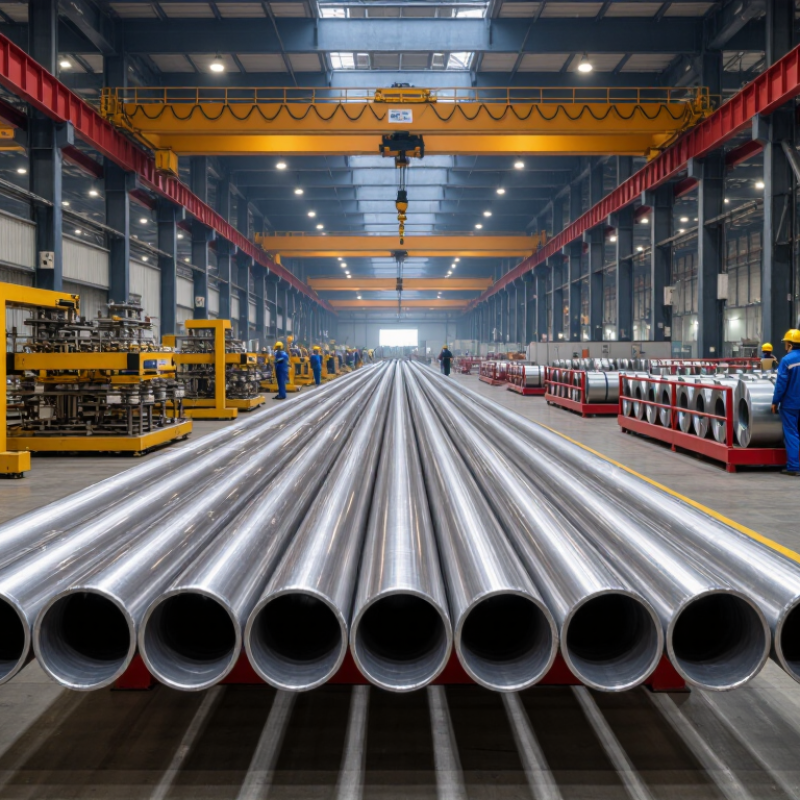
China Top Mild Steel Pipe Manufacturers and Suppliers

Mild Steel Pipe: Definition, Grades, and Common Applications

Mild steel pipe is a carbon steel tube with relatively low carbon content, usually about 0.05% to 0.25%. It is valued for easy cutting, welding, forming, and affordable production. Common grades include ASTM A53 Grade A or B, EN S235, and EN S275, although exact chemistry and strength depend on the standard. Grade names should never be accepted alone. Check the material certificate, wall thickness, outside diameter, and manufacturing method.

Its applications are practical and varied. Mild steel pipe carries water, air, and non-corrosive fluids in buildings and factories. Larger sections support handrails, frames, fences, greenhouses, and structural assemblies. Black steel pipe is common indoors, while galvanized surfaces offer better protection in damp locations. However, galvanizing is not a complete solution for severe chemical or marine exposure. Corrosion planning is still necessary.

Tips: Match the grade to pressure, temperature, and loading conditions. Inspect weld seams and pipe ends before installation. A clean surface can hide internal defects. In practice, many selection errors come from confusing nominal size with actual outside diameter. Also, local standards may differ, so technical data should be checked with a qualified engineer before ordering or fabrication.

China Top Mild Steel Pipe Manufacturers and Suppliers

Mild Steel Pipe: Definition, Grades, and Common Applications

Mild steel pipe is a low-carbon steel pipe valued for its weldability, ductility, machinability, and cost efficiency. The chart compares the minimum specified yield strength and tensile strength of widely used carbon steel pipe grades.

ASTM A53 Grade B is commonly used for pressure, mechanical, and general-purpose piping. API 5L Grade B is widely used for line pipe in oil and gas transportation. ASTM A106 Grade B is primarily specified for seamless piping operating at elevated temperatures. Strength values are minimum specified values in MPa and may vary by product specification, wall thickness, and applicable edition of the standard.

China’s Mild Steel Pipe Manufacturing Standards and Production Methods

China Top Mild Steel Pipe Manufacturers and Suppliers

China’s mild steel pipe production usually begins with low-carbon steel strip or plate. The selected grade depends on pressure, structure, temperature, and service environment. Common standards include GB/T 3091, GB/T 8162, and project-specific international specifications. Buyers should verify the exact edition and acceptance requirements before ordering.

Electric resistance welded pipes are widely produced for water, construction, and general engineering. Steel strips are formed into round shapes, then joined through controlled electrical resistance. Seamless pipes use pierced and rolled billets, which suit demanding applications requiring uniform pressure performance. Production teams monitor wall thickness, outside diameter, weld appearance, and straightness throughout the line.

Quality control should continue beyond visual inspection. Reliable factories normally test chemical composition, tensile strength, elongation, and hydrostatic performance. Flattening or bending tests can reveal weaknesses that surface checks miss. Ultrasonic inspection may examine weld seams and internal discontinuities. Documentation matters too, including mill certificates, heat numbers, inspection records, and traceability data.

In practice, production is not perfectly uniform. Minor dimensional variation can occur between batches. That is why sampling plans and clear tolerances are essential. A supplier may meet a general standard but still miss a project’s coating, length, or testing requirements. Careful technical communication prevents that gap. Field experience shows that detailed drawings often expose problems earlier than price comparisons.

How to Evaluate China’s Leading Mild Steel Pipe Manufacturers

Evaluating China’s leading mild steel pipe manufacturers requires more than comparing quoted prices. I start with the intended service: water, structural support, low-pressure air, or general fabrication. This choice affects grade, outside diameter, wall thickness, coating, and inspection requirements. A capable supplier should explain these links in plain technical language. Ask for current mill test certificates, heat numbers, chemical analysis, tensile results, and dimensional records. Documents matter. Yet paperwork alone is not proof.

During an audit, I look at steel storage, forming equipment, welding controls, and calibration labels. For welded pipe, review seam inspection, hydrostatic testing, and non-destructive testing procedures. For seamless pipe, ask how billets, piercing, heat treatment, and straightening are controlled. Request a traceable sample, not a polished display piece. Measure it independently with calipers and wall-thickness tools. Small deviations can create costly fitting problems. Check whether production capacity matches the proposed monthly volume. A crowded schedule may quietly extend delivery.

Reliability also appears in communication. Technical replies should match drawings, tolerances, packing details, and shipping terms. I prefer suppliers that admit a limitation and offer a correction plan. That honesty is useful, although I once treated fast replies as evidence of quality. It was a poor assumption. Confirm complaint handling, replacement rules, and inspection responsibility before placing an order. Independent pre-shipment inspection adds confidence, especially for large or repeated purchases. Keep every revision, certificate, and approval in one controlled file.

China Top Mild Steel Pipe Manufacturers and Suppliers - How to Evaluate China’s Leading Mild Steel Pipe Manufacturers

Evaluation Dimension Verifiable Data or Benchmark Recommended Evidence Why It Matters
Applicable Product Standards Confirm the required standard, such as GB/T 3091 for welded steel pipes, ASTM A53/A53M for general-purpose steel pipe, or EN 10255 for non-alloy steel tubes suitable for welding and threading. Current standard edition, product specification sheet, and a sample inspection certificate. Standards define dimensions, chemical composition, mechanical properties, testing, and acceptance requirements.
Steel Grade and Chemistry Common low-carbon structural grades include Q195, Q235B, and Q355B under Chinese specifications. Verify carbon, manganese, sulfur, phosphorus, and silicon limits against the selected standard. Mill test certificate, heat number, chemical analysis, and third-party laboratory report when required. Chemical composition affects weldability, strength, corrosion performance, and suitability for forming.
Manufacturing Process Identify whether the pipe is ERW, hot-dip galvanized welded pipe, seamless, or another specified construction. The process must match the application and ordered standard. Process-flow chart, equipment list, welding procedure, and production-batch records. Manufacturing route influences weld quality, dimensional consistency, pressure capability, and cost.
Size Range Assess the supplier’s actual production range for outside diameter, wall thickness, length, and pipe schedule. Typical projects may require sizes from small plumbing diameters to large structural or water-transmission diameters. Published dimensional range, recent production records, tooling list, and approved dimensional drawings. A supplier should demonstrate capability for the exact dimensions rather than only quoting a general product range.
Dimensional Tolerance Check outside diameter, wall thickness, length, straightness, ovality, and end squareness tolerances required by the selected standard. Calibrated inspection reports, gauge records, and sample measurements from the finished batch. Controlled tolerances support reliable installation, threading, welding, and structural fit-up.
Mechanical Properties Verify yield strength, tensile strength, and elongation according to the ordered grade and standard. For example, Q235B is commonly specified with a nominal minimum yield strength of 235 MPa for relevant thinner sections, subject to the applicable standard and thickness. Tensile-test results, heat number traceability, and independent verification for critical orders. Mechanical properties determine load-bearing capacity, ductility, and forming performance.
Weld and Surface Quality Inspect weld continuity, lack of visible cracks, undercut, excessive spatter, laminations, dents, rust, and unacceptable surface damage. Visual inspection procedure, weld inspection records, ultrasonic or eddy-current reports where specified, and approved samples. Surface and weld defects can reduce service life and create leakage or failure risks.
Coating and Corrosion Protection For galvanized pipe, confirm zinc coating requirements, coating uniformity, adhesion, and surface condition. For painted or bare pipe, define the required coating system and corrosion environment. Coating test results, zinc-mass or coating-thickness records, surface-treatment procedure, and photographs of finished pipes. The correct protection system reduces atmospheric corrosion and maintenance costs.
Testing and Inspection Capability Evaluate chemical analysis, tensile testing, hydrostatic testing when required, dimensional inspection, coating inspection, and non-destructive testing capability. Laboratory equipment list, calibration certificates, inspection plan, and test reports linked to the production heat or batch. Documented inspection reduces the risk of receiving nonconforming material.
Quality Management Look for a valid ISO 9001 certificate covering the relevant manufacturing site and scope. Certification should be checked with the issuing certification body. Certificate number, validity dates, certification scope, corrective-action records, and internal quality procedures. A functioning quality system supports repeatability, traceability, and corrective action.
Production Capacity and Lead Time Compare confirmed monthly capacity, minimum order quantity, tooling availability, production lead time, and peak-season scheduling. Capacity statement, recent order schedule, production plan, and written lead-time commitment. Capacity must be sufficient to deliver the required quantity without compromising inspection or schedule.
Packaging and Export Readiness Review pipe bundling, end protection, rust prevention, marking, container loading, and export documentation procedures. Packing specification, loading photographs, commercial invoice, packing list, certificate of origin, and shipping marks. Proper packaging prevents mechanical damage, moisture exposure, and identification errors during transit.
Traceability and Documentation Each bundle should be traceable to the purchase order, specification, heat number, production date, inspection results, and quantity. Bundle tags, heat-number records, material certificates, inspection release note, and document-control procedure. Traceability supports claims handling, project approval, and future maintenance.
Commercial Evaluation Compare total landed cost, including pipe price, coating, testing, packaging, inland transport, freight, insurance, duties, and payment terms. Itemized quotation, Incoterms, payment schedule, freight estimate, and validity period of the offer. The lowest unit price may not provide the lowest total project cost.
Pre-Shipment Verification Use a documented inspection plan covering quantity, dimensions, appearance, marking, coating, test certificates, and packaging before shipment. Approved inspection and test plan, signed inspection report, random sampling records, and corrective-action report if applicable. Final verification confirms that the shipped material matches the purchase specification.

Key Product Types and Services Offered by Chinese Suppliers

China’s mild steel pipe manufacturers and suppliers offer practical options for construction, water systems, machinery, and general fabrication. Common products include seamless pipes, welded pipes, galvanized pipes, square tubes, rectangular tubes, and spiral welded pipes. Each type serves a different purpose. Seamless pipes suit pressure-related applications, while welded pipes often provide a cost-effective choice for structural work. Galvanized surfaces improve resistance to moisture, though coating quality still requires inspection.

Chinese suppliers commonly provide cutting, threading, grooving, bending, beveling, and surface treatment. They may also support custom lengths, wall thicknesses, outer diameters, and packaging methods. Professional suppliers usually share material certificates, dimensional reports, coating records, and inspection photographs. Some arrange third-party testing before shipment. This is useful, but documents should match the actual heat number and batch. Small details matter. I have seen specifications look correct while the requested tolerance was never confirmed.

Tips: Request samples or clear inspection records before placing a large order. Confirm the steel grade, standard, length tolerance, surface finish, and packaging. Ask whether the quoted price includes testing, loading, and export documents. Lead times can change during busy production periods. Build a realistic schedule. It is also wise to clarify replacement procedures for damaged or nonconforming pipes. A reliable supplier answers these questions directly, not vaguely. Personally, I would compare at least three quotations, but the cheapest offer is not always the most dependable.

Quality Control, Pricing, and Export Considerations for Global Buyers

China’s mild steel pipe manufacturers and suppliers serve construction, water, energy, and general fabrication markets worldwide. Global buyers should examine quality control before comparing prices. Ask for material certificates, dimensional reports, and hydrostatic or non-destructive testing records. A reliable supplier should explain its steel grade, wall-thickness tolerance, welding process, and surface treatment in clear language.

Pricing needs a wider view. A cheap offer may exclude cutting, coating, inland transport, export packing, or port charges. Confirm whether the quotation uses metric tons or actual pipe weight. Request a sample invoice with Incoterms, payment stages, production time, and inspection responsibility.

In my experience, small details matter. A 2 mm difference in wall thickness can affect project safety and final cost. Buyers should also check production capacity, inspection access, and previous export experience. Documents can be incomplete. Treat them as evidence, not absolute proof.

Tips:

Compare three detailed quotations, not three headline prices. Keep drawings, tolerances, packing photos, and testing requirements in one purchase file. Use independent inspection before shipment when the order is critical. Check bundles for rust, oval ends, damaged threads, and unreadable markings. Ask how rejected pipes are replaced. This question is often overlooked. Also confirm customs documents and destination-country requirements before production begins.