China Best Portable Water Air Cooler for Global Buyers
For global buyers, choosing a Portable Water Air Cooler is not simply a search for the lowest price. It is a practical decision involving climate, room size, energy supply, water quality, noise, and after-sales support. A unit that performs well in a dry warehouse may disappoint in a humid coastal apartment. That difference matters.
HVAC specialist John Barba offers a useful reminder: “Cooling performance depends on airflow, maintenance, and the conditions around the equipment.” His point is easy to overlook. A powerful fan cannot solve every problem. Buyers should examine airflow volume, water-tank capacity, filter access, cooling-pad quality, and continuous operating time. They should also check voltage compatibility, plug type, warranty terms, and replacement-part availability before placing a large order.
Small details become visible during real use. Dust may collect around the intake grille. A tank may need daily refilling during hot afternoons. Wheels should move smoothly across tile, concrete, or uneven warehouse floors. The control panel must remain clear for workers wearing gloves. Not every supplier explains these issues well.
That is where careful comparison becomes valuable. Reliable manufacturers provide test data, safety documentation, clear manuals, and responsive communication. Independent inspection can reduce unpleasant surprises, although it cannot guarantee perfect performance. No model is perfect.
This guide examines leading Portable Water Air Cooler options for international buyers. It focuses on usable cooling, operating cost, product durability, and supplier credibility. Expectations should stay realistic. A cooler can improve comfort, but it cannot replace properly designed air conditioning in every environment.
What Is a Portable Water Air Cooler?
China Best Portable Water Air Cooler for Global Buyers
What Is a Portable Water Air Cooler?
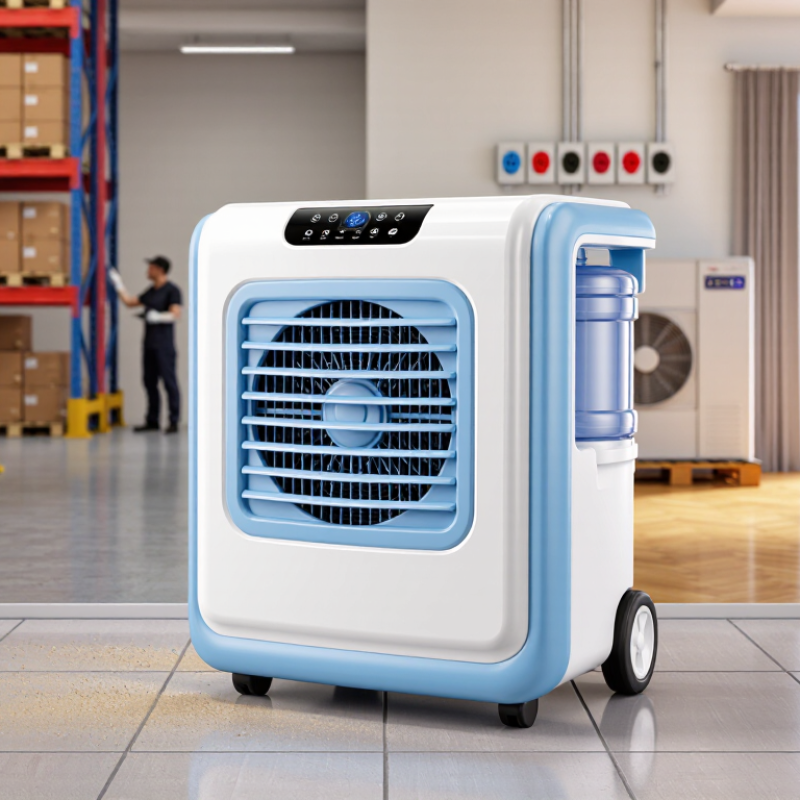
A portable water air cooler is a compact device that cools moving air through water evaporation. A fan draws warm room air through a wet cooling pad. The air then feels cooler as moisture changes into vapor.
It is not a traditional air conditioner. It does not use a compressor or refrigerant. Its cooling effect depends on air dryness, airflow, and water temperature. In a dry bedroom, workshop, shop, or outdoor seating area, the difference can be noticeable. Near the outlet, users may feel a gentle stream of cooler air across the skin.
The design is usually simple. A water tank, pump, fan, cooling pad, and control panel work together. Users should refill clean water and inspect the pad regularly. Dust can reduce airflow and create an unpleasant smell. Ventilation also matters because continuous use may increase indoor humidity.
Choose the unit according to room size, tank capacity, noise level, and local voltage requirements. A larger tank reduces refilling, but it may make the cooler heavier. That trade-off is easy to overlook. Portable does not always mean effortless.
Performance can vary. A water air cooler may disappoint in humid climates or sealed rooms. It is better viewed as a focused personal cooling tool, not a complete replacement for every cooling system.
Key Features Global Buyers Should Compare
China Best Portable Water Air Cooler for Global Buyers
Key Features Global Buyers Should Compare
Choosing a portable water air cooler requires more than checking cooling claims. Compare airflow volume, cooling coverage, and water consumption under similar test conditions. A strong unit should move air evenly across a room, not create one cold corner. Tank capacity matters during hot afternoons. A five to ten liter tank may reduce refilling, but it can increase carrying weight. Look for a visible water level and a drain point that is easy to reach. Small details matter.
Power compatibility is essential for international purchasing. Check voltage, frequency, plug type, and the supplied adapter before ordering. An energy label or test report adds useful evidence, but documents should match the exact model. Noise ratings deserve careful attention. A quiet setting is valuable in bedrooms, shops, and small offices, although measured noise may differ in real rooms. Wheels, a stable handle, washable filters, and corrosion-resistant internal parts improve daily use. Maintenance can be overlooked. Do not overlook it. Ask about replacement filters, cleaning access, packaging strength, and spare-part availability. Buyers should also confirm safety instructions and destination-market requirements. No cooler suits every climate. In humid regions, evaporative performance may disappoint, so compare humidity limits honestly. Testing one sample before a larger order is often wiser than trusting attractive specifications.
How to Choose the Best Cooler for Different Climates
China Best Portable Water Air Cooler for Global Buyers
How to Choose the Best Cooler for Different Climates
Climate should guide your purchase more than appearance or advertised cooling power. Evaporative coolers perform best in hot, dry regions with low humidity. Dry desert air allows water to evaporate quickly, creating a noticeable cooling effect. Choose a larger water tank for workshops or open patios. Check the airflow rating, wheel quality, and cleaning access before ordering.
Humidity changes the decision. In tropical or coastal areas, damp air limits evaporation and reduces cooling performance. A powerful fan function may matter more than extra water capacity. Look for washable filters, corrosion-resistant parts, and a timer for overnight use. Keep the cooler near an open window or doorway. It needs steady air movement.
Moderate climates require balance. A compact unit may be enough for a bedroom, but oversized models can waste water and floor space. Test the cooler with local voltage, plug standards, and water quality requirements. Hard water may leave mineral deposits inside the tank. Regular draining helps, although many buyers neglect it. That is a practical weakness worth considering.
For global shipping, confirm packaging strength and replacement-part availability. A low purchase price can become expensive when a pump or filter is difficult to replace. Noise levels also matter in offices and sleeping areas. Ask for measured specifications, not vague cooling claims. The best choice may look less impressive, but it should match the climate, room size, and daily maintenance habits.
Purchasing, Compliance, and After-Sales Considerations
For global buyers, purchasing a portable water air cooler requires more than comparing prices. Check cooling capacity, water-tank volume, noise level, airflow, and power consumption. Ask for performance data tested under clearly stated conditions. A cooler designed for a dry warehouse may perform poorly in humid coastal weather. Request samples before placing a large order. Test it.
Compliance documents should match the destination market, not merely the factory’s claims. Confirm voltage, plug type, electrical safety reports, electromagnetic compatibility, and material restrictions. Labels, manuals, warnings, and packaging may require local languages. Keep serial numbers and inspection records for traceability. Independent laboratory testing is often more reliable than an unsigned supplier document. I have seen buyers accept attractive certificates without checking model numbers. That mistake becomes expensive.
After-sales support should be written into the purchase agreement. Define warranty length, response times, replacement procedures, and responsibility for shipping defective parts. Ask whether pumps, filters, fans, controllers, and water-level sensors remain available for several years. Clear troubleshooting videos can help distributors solve simple problems locally. However, remote support cannot replace practical training. Leave room for improvement. Cooling results, packaging strength, and user instructions may reveal weaknesses after delivery. A small pilot shipment helps measure returns, spare-part demand, and customer feedback before wider distribution.