
China has become a major sourcing base for industrial equipment, including the Mixing Machine sector. Global buyers now expect stable performance, documented quality, and responsive technical support.
The Business Research Company valued the global industrial mixers market at approximately USD 7.54 billion in 2024. Its report forecasts continued growth through 2028, supported by food processing, chemicals, pharmaceuticals, construction materials, and water treatment. These figures indicate opportunity, but they do not prove every supplier is reliable. Verification remains essential.
Edward L. Paul, a leading authority on industrial mixing, wrote, “Mixing is the reduction or elimination of nonuniformities in the properties of a material.” That definition explains why impeller design, tank geometry, motor selection, and process control matter. A low price cannot compensate for uneven viscosity, dead zones, excessive heat, or difficult cleaning.
This guide examines why Chinese manufacturers attract global buyers. It focuses on measurable criteria, including mixing uniformity, energy consumption, stainless-steel grades, sealing systems, automation, and factory testing. Certifications should be checked against the target market and application. CE marking, ISO 9001 systems, hygienic design, or explosion-protection requirements may apply differently.
Ask for test records.
Request material certificates.
Inspect the welds.
In practical sourcing work, small details often reveal larger weaknesses. A polished catalog can hide limited engineering depth. That is worth remembering. The best China Mixing Machine is not simply the cheapest model. It is the machine that matches the material, production scale, safety expectations, and long-term service plan.
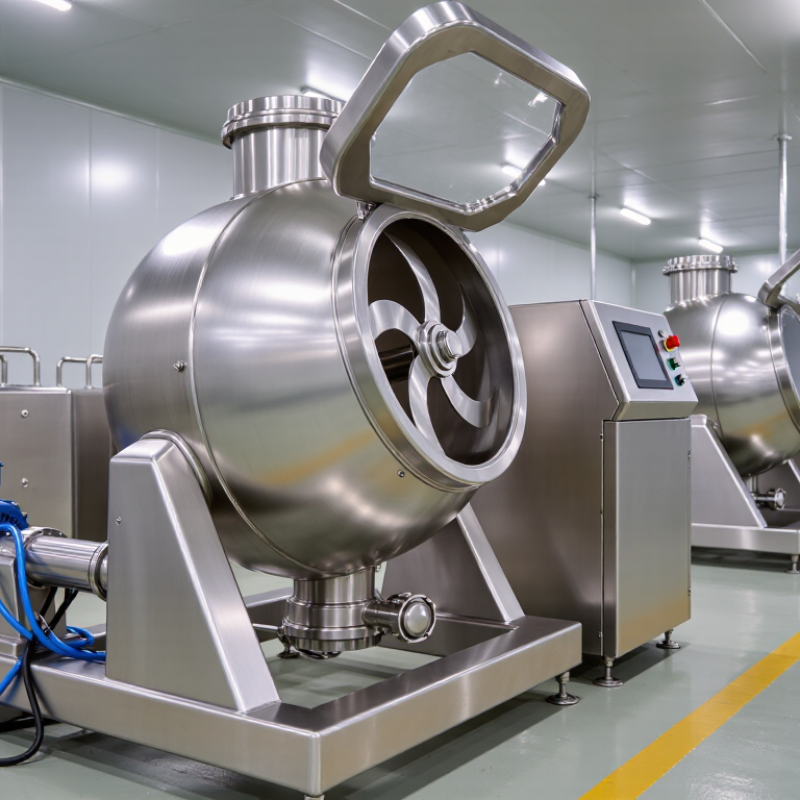
A mixing machine combines two or more materials into a consistent blend. It may handle powders, liquids, pastes, or materials with different viscosities. The machine uses movement, pressure, and controlled speed to distribute ingredients evenly. In a production room, this can mean fewer dry pockets, smoother texture, and more stable quality. Mixing is not simply spinning a blade. The impeller shape, vessel design, batch size, temperature, and mixing time all affect the result.
Global buyers need this equipment because production conditions vary widely. A mixer working well in a cool workshop may struggle in a humid factory or at higher altitude. Power supply, cleaning procedures, spare parts, and operator training also matter. For food, chemical, pharmaceutical, and construction applications, buyers should request material certificates, safety documents, and practical test data. A small sample trial can reveal problems that brochures hide. It may show slow discharge, excessive foam, or dead zones near the vessel wall.
There is no universal mixer. That is easy to forget. Choosing only by capacity can create costly mistakes. A reliable evaluation compares viscosity, moisture, particle size, batch frequency, and cleaning requirements. Manufacturers should explain these limits clearly and provide measurable performance evidence. Some projects still need adjustment after installation. That is not failure, but it should be planned.
| Machine Type | Basic Operating Principle | Typical Working Capacity | Recommended Viscosity Range | Typical Speed Range | Common Applications | Typical Power Range | Key Advantages | Important Selection Factors |
|---|---|---|---|---|---|---|---|---|
| Propeller Mixer | High-speed axial-flow impeller circulates low-viscosity liquids through the tank. | 50–10,000 L per batch | Up to approximately 2,000 mPa·s | 300–1,500 rpm | Water treatment chemicals, solvents, low-viscosity coatings, liquid fertilizers and beverages. | 0.37–30 kW | Fast circulation and efficient blending of low-viscosity materials. | Tank geometry, impeller diameter, liquid level, required circulation rate and motor voltage. |
| Paddle Mixer | Wide blades move material mainly in radial or axial directions at moderate speed. | 100–20,000 L per batch | Up to approximately 10,000 mPa·s | 20–200 rpm | Liquid blends, suspensions, wastewater chemicals, food ingredients and mild slurries. | 0.75–45 kW | Good tank coverage with relatively low shear and moderate energy use. | Solids concentration, settling tendency, blade clearance, tank shape and required mixing time. |
| Anchor Mixer | Anchor-shaped blades sweep close to the vessel wall to move viscous products and improve heat transfer. | 50–10,000 L per batch | Approximately 10,000–100,000 mPa·s | 5–80 rpm | Adhesives, creams, gels, ointments, resins and high-viscosity personal-care products. | 1.5–75 kW | Effective wall sweeping and suitable for jacketed heating or cooling vessels. | Product viscosity, wall clearance, jacket heat-transfer requirements, shaft torque and seal design. |
| High-Shear Rotor-Stator Mixer | A rotating rotor draws material through a close stator gap to create intense local shear. | 10–5,000 L per batch | Up to approximately 20,000 mPa·s, depending on formulation | 1,000–6,000 rpm | Emulsions, dispersions, pigment concentrates, sauces, cosmetics and pharmaceutical suspensions. | 2.2–110 kW | Rapid particle-size reduction, emulsification and deagglomeration. | Shear sensitivity, temperature rise, particle size, air entrainment, seal materials and cleaning method. |
| Planetary Mixer | Mixing tools rotate around their own axes while orbiting the vessel, reaching difficult-to-access areas. | 5–3,000 L per batch | Approximately 50,000–5,000,000 mPa·s | 10–150 rpm; high-speed tools may exceed 1,000 rpm | Silicone compounds, sealants, dental materials, battery pastes, doughs and heavy adhesives. | 1.5–250 kW | Strong mixing performance for very viscous and non-flowing materials. | Torque demand, vacuum capability, tool configuration, vessel discharge method and batch consistency. |
| Double-Planetary Mixer | Two or more blades orbit and rotate simultaneously, often combined with a high-speed disperser. | 20–5,000 L per batch | Approximately 100,000–10,000,000 mPa·s | 5–100 rpm; disperser shafts may reach 3,000 rpm | Electronic pastes, structural adhesives, composite materials, sealants and battery electrode slurries. | 5.5–500 kW | High torque, strong batch uniformity and effective dispersion under vacuum. | Solid loading, vacuum level, temperature control, discharge speed, blade wear and drive capacity. |
| Ribbon Blender | Inner and outer helical ribbons move dry powders in opposite axial directions. | 100–10,000 L per batch | Dry powders and granules; liquid addition is generally limited | 15–80 rpm | Powdered food ingredients, chemicals, animal feed, minerals and pharmaceutical excipients. | 3–90 kW | Efficient horizontal blending with relatively short mixing cycles for dry solids. | Bulk density, particle-size distribution, moisture content, fill ratio, dust control and discharge design. |
| Paddle or Ploughshare Mixer | Specialized blades lift and circulate powders, granules and cohesive solids through the mixing chamber. | 100–20,000 L per batch | Dry solids, damp powders and some cohesive materials | 20–200 rpm | Dry mortar, fertilizers, premixes, construction chemicals and powder additives. | 5.5–160 kW | Suitable for high-solids formulations and optional liquid spraying during blending. | Material abrasiveness, moisture level, residence time, wear protection, dust extraction and cleaning access. |
| Static Mixer | Fixed internal elements divide and recombine flowing streams without a motor-driven shaft. | Continuous flow from a few liters per hour to several hundred cubic meters per hour | From water-like liquids to selected viscous two-component materials | Not applicable; mixing depends on flow rate and pressure drop | Two-component adhesives, polymers, water treatment, chemical dosing and inline blending. | No mixer motor; pump power is determined by system pressure loss | Low maintenance and compact inline operation with no rotating parts. | Flow ratio, pressure drop, residence time, material compatibility, disposable element needs and cleanability. |
| Vacuum Homogenizing Mixer | Combines vacuum processing, agitation and high-shear homogenization to reduce air and improve product uniformity. | 50–10,000 L per batch | Approximately 1,000–500,000 mPa·s | Agitator: 10–100 rpm; homogenizer: 1,000–4,000 rpm | Skincare creams, lotions, pharmaceutical ointments, gels and high-value emulsions. | 5.5–250 kW | Reduced air entrapment, controlled emulsification and improved surface appearance. | Vacuum rating, hygienic design, temperature control, CIP requirements, seal construction and filling integration. |