
Print Logo

2026 Best Vaccine Bags for Global Buyers

Choosing the best Vaccine Bags in 2026 requires more than comparing insulation thickness or advertised cooling hours. Global buyers need evidence, field experience, and transparent validation data.

WHO and UNICEF reported 89% global DTP3 coverage in 2023, while 14.5 million children remained zero-dose. These figures show why reliable transport still matters. A vaccine may leave a modern warehouse, then travel through a hot airport, a crowded clinic, and a rural road. The bag must protect its payload throughout that journey. Gavi’s former CEO, Dr. Seth Berkley, has said, “Vaccines are one of the most successful and cost-effective health investments in history.” Good Vaccine Bags help protect that investment.

WHO guidance and UNICEF cold-chain procurement programs emphasize temperature monitoring, validated transport duration, and correct packing procedures. Buyers should examine 2–8°C performance, phase-change material quality, internal capacity, empty weight, leak resistance, and data-logger compatibility. Reusability also matters, especially where replacement supplies arrive slowly. A sturdy zipper and clear packing layout can prevent avoidable mistakes.

No bag fits every route.

This is where many buying guides oversimplify. A compact carrier may suit outreach teams, but fail during long customs delays. A large container may offer longer autonomy, but increase handling risks and freight costs. The strongest 2026 choices will balance laboratory validation with practical field use. Buyers should request test reports, operating instructions, and service support before ordering. Market claims still deserve scrutiny. Real performance depends on packing discipline, ambient temperature, and the people carrying the bag.
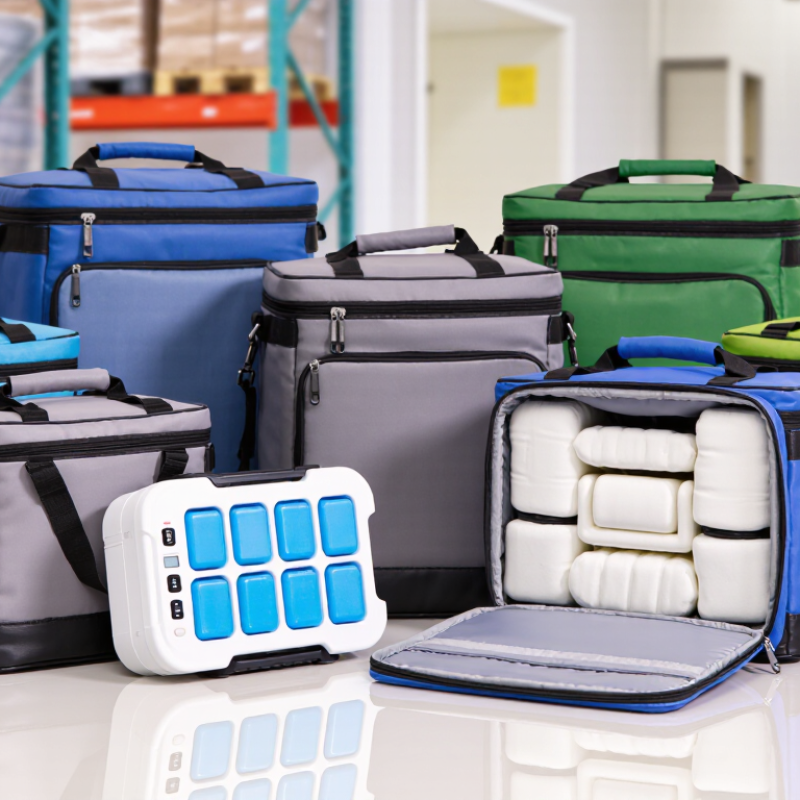
2026 Best Vaccine Bags for Global Buyers

What Are Vaccine Bags and Why Do Global Buyers Need Them?

Vaccine bags are insulated, qualified carriers designed to protect temperature-sensitive vaccines during transport. They help maintain a controlled range from storage rooms to clinics, pharmacies, and mobile health teams. Unlike ordinary cooler bags, they may include insulated walls, validated cooling packs, and temperature indicators. The correct design depends on the vaccine, route length, outside temperature, and handling conditions. One size rarely fits every shipment. Small detail.

Global buyers need vaccine bags because cold-chain risks increase across borders and remote delivery routes. Delays, airport exposure, and repeated opening can affect internal temperatures. A suitable bag should offer clear capacity, secure closures, durable handles, and simple cleaning surfaces. Buyers should request qualification data for the intended temperature range and transport duration. A reliable data logger can record temperature changes during delivery. Packaging records matter. They support quality checks and help identify weak points.

In practice, selection should begin with the full delivery route, not the product photograph. A rural clinic may need lightweight carrying comfort and longer cooling time. A distributor may require stackable bags and consistent packing procedures. Do not judge performance by insulation thickness alone. Cooling-pack placement, preconditioning, and empty space can change results. A practical review should test realistic loads and seasonal conditions. I would not treat a catalogue temperature claim as proof. Even a well-designed bag can fail when staff pack it incorrectly or leave it open.

Key Types of Vaccine Bags and Their Recommended Uses

For global buyers in 2026, vaccine bags should be selected by temperature risk, journey length, and handling conditions. Insulated passive bags use PCM packs to maintain a controlled range without powered equipment. They suit clinics, airport transfers, and short regional deliveries. Reusable medical coolers offer stronger walls, replaceable packs, and better protection during repeated routes. They are useful for distributors with predictable return systems. Some products use dry ice, but that option can damage freeze-sensitive vaccines and requires specialist handling. Check the product data, not only the product photograph.

For longer shipments, validated thermal containers with temperature indicators provide clearer evidence of performance. A data logger records exposure during loading, customs delays, and final delivery. This matters because vaccines may appear normal after a damaging temperature excursion. Choose bag volume carefully. Extra empty space can reduce stability when packs shift. Small shipments often need compact inserts, while larger loads need separated compartments and secure closures. Local climate also matters; a hot loading dock is not the same as a cool warehouse.

Tips: Confirm the required temperature range with a qualified pharmacist or vaccine coordinator. Review validation reports for the intended route and season. Precondition PCM packs exactly as instructed. Keep vaccines away from direct contact with frozen packs. Labels do not replace monitoring. No bag is perfect. Test one route before purchasing in volume, because real handling often differs from the plan.

2026 Best Vaccine Bags for Global Buyers - Key Types of Vaccine Bags and Their Recommended Uses
Vaccine Bag Type Typical Temperature Range Recommended Use Common Transport Scenario Key Design Features Typical Capacity Main Advantages Important Buying Considerations
Insulated Soft-Sided Vaccine Carrier Usually +2°C to +8°C when correctly packed Short-distance transport of routine refrigerated vaccines Health-center replenishment, outreach sessions, mobile vaccination teams and last-mile delivery Insulated walls, cold-pack compartments, shoulder straps or handles, leak-resistant inner lining and external temperature-monitoring pocket Small to medium payload; commonly suitable for several vaccine boxes or vials, depending on internal dimensions Lightweight, portable and convenient for frequent hand-carry operations Check validated holdover time, internal usable volume, pack configuration and compatibility with conditioned ice packs
Rigid Insulated Vaccine Carrier Usually +2°C to +8°C when validated for the selected pack-out Protection-sensitive shipments requiring stronger physical protection Regional distribution, vehicle transport, repeated field use and shipments exposed to handling impacts Rigid outer shell, molded insulation, secure lid, defined cold-pack placement and stronger protection against compression Medium to large payload, depending on the carrier model and payload configuration Better structural protection and more consistent pack-out arrangements than many soft bags Consider empty weight, internal space lost to insulation, cleaning method, locking features and transport ergonomics
Passive Cold-Chain Shipping Bag Product-specific; commonly configured for +2°C to +8°C Parcel and courier shipments where active refrigeration is unavailable Domestic or international distribution from a warehouse to a clinic, pharmacy or vaccination site Insulated liner, thermal barrier, coolant compartment, tamper-evident closure and space for a temperature logger Small to medium parcel payloads Easy to deploy and suitable for standard logistics networks Require documented thermal validation for route duration, ambient profile, payload mass and seasonal conditions
Phase-Change Material (PCM) Vaccine Bag Often designed around a controlled +2°C to +8°C profile Temperature-sensitive vaccines that must be protected from freezing Longer last-mile routes, hot climates and operations where conventional frozen gel packs may create freeze risk PCM panels or packs with a defined phase-transition temperature, insulated chamber and validated loading instructions Small to medium payloads, depending on PCM mass and required holdover time Can provide a more stable temperature profile than improperly conditioned ice packs Verify PCM transition temperature, conditioning procedure, reusable-cycle life and validation under local climate conditions
Freeze-Sensitive Vaccine Carrier Designed to maintain +2°C to +8°C without accidental freezing Vaccines and diluents identified by the manufacturer as freeze-sensitive Routine immunization supply, outreach sessions and transport in cold environments Freeze-protection barrier, separated coolant compartment, temperature indicator or logger and clear pack-out instructions Small to medium payloads Reduces the risk of direct contact with frozen coolant packs Do not place products directly against frozen packs unless the validated design specifically permits it; always follow the product label and packing protocol
Frozen Vaccine Transport Bag Product-specific frozen range; some products require approximately -50°C to -15°C Vaccines authorized for frozen storage and transport Specialized frozen distribution between qualified storage facilities High-performance insulation, dry-ice or frozen-coolant compatibility where permitted, pressure-management provisions and temperature monitoring Usually small to medium payloads because frozen payloads require substantial thermal mass Supports frozen distribution when a validated passive system is available Storage range differs by vaccine; confirm dry-ice restrictions, ventilation requirements, transport regulations and maximum holdover time
Dry-Ice-Compatible Thermal Shipper Typically below 0°C; exact range depends on the vaccine and shipper design Products specifically approved for dry-ice shipment and ultra-cold or frozen logistics International air freight, pharmaceutical hub transfers and long-distance shipments High-performance insulation, dry-ice loading space, venting to release carbon dioxide gas and a validated shipper configuration Small to large payloads, depending on shipper size and dry-ice allowance Can support long routes without powered refrigeration when properly qualified Dry ice is a dangerous good for transport; comply with carrier, customs, packaging, labeling and occupational-safety requirements
Multi-Compartment Vaccine and Diluent Bag Usually +2°C to +8°C for refrigerated contents; diluent requirements vary Organizing vaccines, diluents, syringes and accessories during vaccination sessions Outreach clinics, emergency response, school vaccination and temporary vaccination points Separate compartments, removable inner pouches, wipe-clean surfaces, supply organizers and dedicated temperature-controlled space Small to medium operational payload Improves organization and reduces handling time at the point of vaccination Keep only items permitted by the validated temperature arrangement inside the cold compartment; protect diluents from inappropriate temperatures
Reusable Vaccine Delivery Backpack Usually +2°C to +8°C when used with the specified coolant system Hands-free transport in remote, urban or difficult-to-access locations Walking routes, motorcycle delivery, mountainous areas and community vaccination visits Ergonomic shoulder harness, balanced load design, insulated chamber, sealed liner and reflective or high-visibility exterior Small payloads suitable for field teams Leaves both hands free and improves mobility over uneven terrain Assess wearer comfort, waterproofing, cleanability, load distribution and validated holdover time under local ambient temperatures
Temperature-Monitored Vaccine Bag Configured for the product’s labeled storage range, commonly +2°C to +8°C Shipments requiring documented temperature evidence and excursion review Cross-border shipments, clinical programs, high-value products and regulated distribution Integrated or compatible data logger, temperature indicator, tamper evidence and clearly defined pack-out procedure Available in small, medium and large payload formats Provides traceability and helps identify temperature excursions Check logger accuracy, calibration status, alarm limits, data export method, battery life and GDP-compliant records
Temperature ranges and capacities are typical selection guidelines rather than universal specifications. The final choice must be based on the vaccine manufacturer’s labeled storage conditions, route-specific thermal validation, local ambient temperatures, payload arrangement, transport regulations and applicable national or WHO requirements.

Essential Performance Features for Safe Vaccine Transport

For global buyers in 2026, the best vaccine bags must protect temperature before appearance. A strong design uses validated insulation and suitable phase-change packs. The target range depends on the vaccine. It must never be assumed.

Temperature stability is the core performance measure. Look for test data from realistic conditions, including heat, cold, delays, and repeated opening. A reliable bag should maintain internal temperatures during loading, transport, and temporary storage. A calibrated data logger provides evidence instead of guesswork. Continuous monitoring matters.

Good bags also need clear packing instructions. Packs should be preconditioned correctly and separated from sensitive containers when required. Direct contact can freeze some vaccines. That risk is easy to overlook. Durable outer fabric, sealed seams, and water-resistant surfaces help protect contents from rain, dust, and rough handling. Wide openings make inspection easier, while secure closures reduce accidental exposure.

Capacity should match the shipment, not simply look impressive. Extra empty space can weaken thermal performance. Excessive weight can slow field teams and increase handling strain. A practical design includes comfortable handles, stable insulation, and labels for temperature-sensitive contents. In field assessments, small packing errors often cause larger problems than weak materials. Buyers should test the complete packing method, not only the empty bag. There is no universal best model. Routes, climate, storage time, and staff training can change the result. Testing should be repeated when any of these conditions change.

Global Standards and Compliance Requirements for Vaccine Bags

Global vaccine distribution depends on more than insulation. Every bag must protect potency during customs delays, airport transfers, and last-mile delivery. WHO and UNICEF reported 14.5 million zero-dose children in 2023. That figure makes reliable cold-chain packaging a public-health requirement. Most routine vaccines require storage between 2°C and 8°C, while freezing can cause irreversible damage. Buyers should request documented thermal qualification, not attractive temperature claims. Evidence matters more.

WHO Performance, Quality and Safety specifications provide a useful benchmark for vaccine carriers and cold-chain equipment. Global buyers should also review Good Distribution Practice principles and ISO 23416 guidance for temperature-sensitive pharmaceutical packaging. A compliant vaccine bag should show validated hold-over time, leak resistance, insulation consistency, and secure closure performance. It should support calibrated data loggers and clear handling labels. Packaging tests should reflect real routes, including hot warehouses and repeated opening. Laboratory results alone may not represent field conditions.

WHO logistics guidance has reported that temperature-control failures contribute significantly to vaccine wastage. This remains a warning, not merely a statistic. A bag can pass one test and fail after rough handling, condensation, or repeated reuse. Buyers should inspect qualification records, cleaning instructions, material declarations, and supplier traceability. They should also confirm whether testing covered the intended vaccine load and climate zone. Compliance files sometimes look complete. They are not always complete. Supplier claims need independent review.

2026 Best Vaccine Bags for Global Buyers

Global temperature standards and compliance requirements for vaccine bags

The chart shows representative temperature bands used in vaccine logistics: refrigerated products at +2°C to +8°C, frozen products at −25°C to −15°C, and ultra-cold products at −90°C to −60°C. Vaccine bags should be selected and validated according to the product label, WHO PQS requirements, applicable Good Distribution Practice rules, and qualified temperature-monitoring procedures.

Reference framework: WHO PQS E003 for cold boxes and vaccine carriers, EU Good Distribution Practice guidance for medicinal products, and EN 12830 for temperature data recorders used during transport and storage.

How to Select the Best Vaccine Bag for 2026 Procurement

How to Select the Best Vaccine Bag for 2026 Procurement

Selecting the best vaccine bag starts with the vaccine, route, and operating climate. Most refrigerated vaccines require storage between 2°C and 8°C, according to WHO guidance. A procurement team should request validated holdover data, not attractive insulation claims. Check performance at 35°C, direct sunlight, and repeated opening. These conditions expose weak designs.

WHO and UNICEF reported that 14.5 million children received no routine vaccinations in 2023. That figure increases pressure on mobile immunization programs and reliable cold-chain equipment. A suitable bag needs enough payload for one session, while remaining light enough for uneven roads. Measure usable internal space carefully. Our first volume estimate is often wrong. Ice packs, separators, and vials consume more room than expected.

Review WHO PQS requirements where applicable, including temperature control, durability, and cleaning procedures. Add a calibrated data logger with an independent alarm. The bag should protect vials from direct contact with frozen packs, especially for freeze-sensitive products. Inspect zippers, handles, seams, and hinges after practical field trials. A 2024 UNICEF Supply Division procurement approach also emphasizes total cost, serviceability, and delivery reliability. The cheapest bag may create replacement costs. Ask for test reports, calibration records, and clear instructions. Then test one loaded bag on the actual route. Testing changes decisions.