
Print Logo

What Is the Best Single Line Single Hose LNG Dispenser in 2026?

Choosing the best Single-Line and Single-Hose LNG Dispenser in 2026 is not just a price comparison. It means assessing how reliably the unit meters fuel, manages cryogenic temperatures, and performs through repeated vehicle fills. GIIGNL’s Annual Report 2024 recorded 401.4 million tonnes of global LNG trade in 2023. That figure shows the scale of the wider LNG industry, not demand for any particular dispenser. The distinction matters.

IEA Executive Director Fatih Birol warned, “The world is facing a global energy crisis of unprecedented depth and complexity.” His comment concerns energy security broadly, rather than dispenser design. Still, it helps explain why operators scrutinize fueling uptime and equipment support. At a busy depot, small details count: a clear meter display, manageable hose handling, stable flow, and accessible service points. They are easy to overlook in a product brochure.

This guide compares dispensers by measurable performance, safety features, installation needs, and after-sales support. It also considers the limits of published specifications: advertised flow rates alone cannot predict performance at every site. A careful buyer should request test documentation and verify that the configuration suits local operating conditions. No single model is best for every fleet. And one caveat: a low purchase price can look attractive until maintenance access or spare-parts delays disrupt daily fueling.
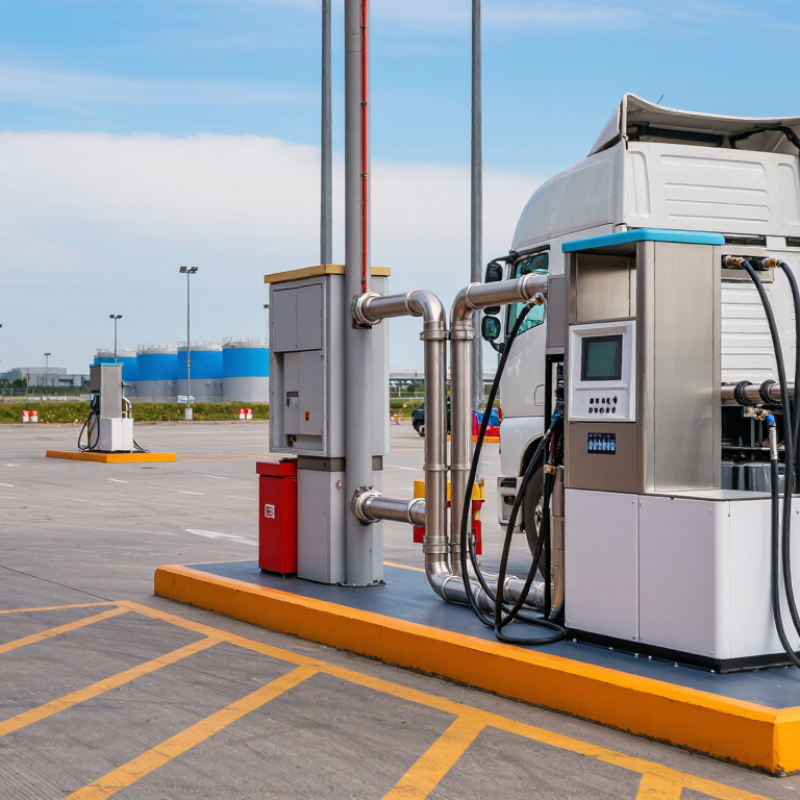
What Is the Best Single Line Single Hose LNG Dispenser in 2026?

What a Single-Line, Single-Hose LNG Dispenser Is

A single-line, single-hose LNG dispenser transfers liquefied natural gas from a storage system into a vehicle through one dispensing hose. The “single line” describes the product path, while “single hose” means the driver uses one hose connection for fueling. Inside the cabinet, cryogenic-rated piping, valves, a meter, and control components manage the flow. The LNG remains extremely cold, so materials and seals must be suitable for low-temperature service. Simple on paper.

During fueling, the nozzle connects to the vehicle’s receptacle, and the dispenser measures the amount delivered. The operator follows the equipment’s procedure, checks the connection, and watches for abnormal frost, leakage, or pressure changes. Some installations handle vapor or pressure management through separate equipment; the exact arrangement varies by system. A single hose does not mean every dispenser has identical internals. That detail is easy to miss.

For fleet managers, the format can mean fewer hose connections to handle and a straightforward fueling routine. But simplicity can hide trade-offs: a single dispensing point may not suit every site’s traffic or throughput needs. Review the rated flow, metering method, emergency shutoff, hose reach, and maintenance access before selecting equipment. Also consider how staff will inspect and maintain it. The layout may look tidy, yet small access issues can become daily frustrations.

How Its Main Components and Fueling Process Work

A single-line, single-hose LNG dispenser moves cryogenic fuel through a controlled path from the supply system to a vehicle tank. Its main components typically include insulated piping, a cryogenic pump, a flow meter, control valves, an emergency shutoff, and a specially designed hose and nozzle. A mass-flow meter may measure the delivered fuel, while the control unit checks operating conditions and records the transaction.

Small details count. Insulation limits heat entering the line, but it cannot eliminate warming; equipment must manage pressure and cooldown according to its design.

During fueling, the operator checks compatibility and secures the nozzle to the vehicle’s receptacle. The dispenser may perform system checks and cool the flow path before fuel delivery begins. LNG then travels through the single hose, with valves and interlocks controlling flow.

The hose carries fuel, while vapor management depends on the station and vehicle design. When the target fill or a safety limit is reached, the system stops delivery. The operator follows the specified procedure for isolating and disconnecting the nozzle.

Not always obvious. A “best” dispenser is not defined by hose count alone: maintainability, accurate metering, clear controls, and dependable safety functions matter.

Site conditions and equipment designs vary, so qualified personnel should follow the manufacturer’s instructions and approved operating procedures.

Which Performance and Safety Factors Matter in 2026

In 2026, the best single-line, single-hose LNG dispenser is not simply the fastest one. Performance depends on steady flow, dependable metering, and reliable operation across repeated fueling cycles. A single hose can simplify the bay, but it also becomes a shared point of wear. Check its reach, handling weight, insulation, and connection design in the actual installation. Small details matter.

Safety features deserve equal scrutiny. Ask how the dispenser manages cryogenic temperatures, thermal contraction, pressure changes, and potential leaks. Emergency shutoff controls should be easy to reach, while interlocks should prevent fueling when connections are incomplete. A suitable breakaway device can limit damage if a vehicle moves unexpectedly. Confirm that hose materials, seals, and fittings are specified for LNG service, not merely for ordinary fuel transfer. Verify the documentation.

Real-world evidence is more useful than a headline flow rate. Review metering accuracy under expected operating conditions, inspection intervals, maintenance access, and test records from qualified technicians. Ask how the equipment behaves during cooldown and after repeated use in local weather. These checks take time. They can also expose gaps between a neat specification sheet and a busy fueling site. No single configuration fits every station, so compare performance and safety against the site’s operating pattern and risk assessment.

How to Compare Dispenser Models and Suppliers

A single-line, single-hose LNG dispenser should be compared by verified performance, not appearance or headline flow rate. GIIGNL’s Annual Report 2024 puts global LNG trade at 401.4 million tonnes in 2023, underscoring the scale of an expanding supply chain. That figure does not prove one dispenser design is better; it does make reliable, repeatable fueling worth examining closely. Ask suppliers for witnessed flow-test results across the pressure and temperature range your site expects.

Compare the complete operating routine. Check meter accuracy, cooldown time, hose reach, connection effort, emergency shutoff behavior, and access to routine service parts. Request maintenance intervals and documented response times, not verbal assurances. Small details matter. A long cooldown or awkward hose can slow a busy bay, even when the rated flow looks impressive. Compare total ownership costs over a defined period, including calibration, inspections, spare parts, and downtime.

I would also ask each supplier to demonstrate a representative fueling cycle using your vehicle connection and site conditions. Ask for proof. Confirm how the model handles alarms and whether operators can read pressure and temperature clearly from the working position. GIIGNL’s report is useful market context, not a dispenser scorecard. A neat comparison table can still hide assumptions; state them, and revisit them after commissioning.

What Is the Best Single Line Single Hose LNG Dispenser in 2026?

A practical framework for comparing dispenser models and suppliers

These suggested evaluation weights total 100 points; they are a buyer’s comparison framework, not measured supplier performance. Score each candidate against the same project requirements, including LNG flow and operating conditions, metering requirements, safety provisions, maintainability, and supplier support. The best choice depends on the site and application.

How to Select a Dispenser for a Specific LNG Station

The best single-line, single-hose LNG dispenser in 2026 fits the station’s duty, not a long feature list. Estimate daily vehicle count, peak-hour arrivals, tank pressure range, and typical fill volume. A small fleet may prioritize steady cycle times, while a busy route station needs fast recovery between fills. Measure the truck’s stopping position, too. A hose that reaches on a drawing may be awkward beside a real vehicle.

Check that the dispenser’s rated flow and operating range suit the station’s supply system and the vehicles it will serve. Confirm meter accuracy, clear display readings, emergency shutoff access, and hose handling. Operators should be able to connect and disconnect without strain. Small details matter. Ask how calibration checks and routine inspections are performed, and whether service access is practical in the available space.

Climate and layout can change the choice. Cold weather, wind exposure, and limited shelter may affect equipment placement and maintenance intervals. Request operating data under conditions close to the site’s, not only ideal test conditions. A neat specification sheet can still miss daily realities. I would also review the planned maintenance routine with station staff; it may reveal a gap in the original design. A short on-site fit check can catch hose reach or clearance problems before installation.

What Is the Best Single Line Single Hose LNG Dispenser in 2026? — How to Select a Dispenser for a Specific LNG Station

Selection guide by station duty, supply arrangement, metering needs, and site conditions

Station Profile Typical Operating Need Dispenser Configuration to Consider Metering and Controls Safety and Site Checks What to Confirm Before Selection
Small private fleet
One vehicle fueled at a time
Predictable daily use and limited fueling positions; minimizing unnecessary equipment complexity is often a priority. A single LNG line and single hose can suit a site that does not require simultaneous LNG dispensing. Confirm the hose reach, nozzle compatibility, and intended vehicle connection. Choose a system that records the required transaction data and provides clear operator instructions. Confirm that the meter and measurement method meet applicable local trade-measurement requirements. Check vehicle access, hose routing, emergency-stop locations, ventilation, and the site’s LNG hazard controls against applicable codes and the installation design. Compare the station’s peak fueling schedule—not just average daily consumption—with the supplier’s stated dispensing performance and vehicle fueling procedure.
Depot with scheduled return-to-base fueling
Several vehicles use one fueling position in sequence
Reliable turnaround during a defined fueling window, with repeatable procedures for drivers or attendants. Consider a single-hose unit only if one-at-a-time fueling will not create a queue that disrupts dispatch. Review hose length, parking layout, and ease of positioning vehicles. Check whether the control system supports the required user authorization, transaction records, and connection to the station’s monitoring or payment system. Review access control, operator training, emergency shutdown arrangements, and the planned response to leaks or abnormal pressure conditions. Model the busiest operating period and expected fueling duration. If one position cannot meet the schedule, compare adding a fueling position with changing the operating plan.
Public or mixed-user station
Multiple vehicle types or operators
Clear instructions, consistent transactions, and compatibility with a wider range of approved vehicles and users. Verify that the hose, nozzle, breakaway arrangement, and operating sequence are suitable for the vehicles the station will serve. A single hose still serves one connection at a time. Confirm display readability, units, transaction records, user authorization, and local requirements for commercial measurement and data retention. Assess vehicle segregation, pedestrian routes, signage, emergency-stop accessibility, and whether staffing or access restrictions are needed. Document the supported vehicle interfaces and fueling procedures. Do not assume that one nozzle or procedure is suitable for every LNG vehicle.
Station supplied by an LNG storage tank and pump
Dispenser integrated with on-site equipment
Coordinated operation with the tank, pump, piping, controls, and the station’s required pressure and flow conditions. Select a dispenser designed for the specified LNG service and compatible with the project’s piping and supply arrangement. Check the required operating envelope with the system designer. Verify that the meter, temperature or pressure compensation approach where applicable, control logic, and instrument ranges match the full installation design. Review cryogenic materials, pressure protection, isolation, emergency shutdown interfaces, and applicable hazardous-area and electrical requirements. Obtain written confirmation of design pressures, temperatures, flow range, connections, and control signals for the complete system—not the dispenser alone.
Station using a pressure-driven or other non-pump supply arrangement
Operating conditions vary with the supply system
Dispenser performance depends on the upstream system and the actual pressure and temperature conditions available during fueling. Use a configuration specifically validated for the proposed supply method. Confirm that the supplier’s performance data covers the station’s expected operating conditions. Check measurement performance across the expected operating range and confirm how faults, interrupted transactions, and abnormal readings are handled. Review the complete pressure-control and shutdown design, including the interface between the dispenser and upstream equipment. Request a system-level operating assessment. Do not compare stated flow figures unless the test conditions and measurement basis are equivalent.

Selection note: There is no single best dispenser for every station. LNG is a cryogenic fuel (about −162°C at atmospheric pressure), so equipment, materials, operating procedures, and safeguards must be suitable for the actual installation. Confirm applicable local codes, vehicle compatibility, site-specific hazard controls, and independently documented performance with the project designer and equipment supplier before purchase.