
Print Logo

7 Best Fire Resistant Fans for Industrial Use?

Choosing among the 7 Best Fire Resistant Fans for Industrial Use requires more than comparing airflow ratings. A fan may appear powerful, yet fail when heat, dust, vibration, or corrosive fumes combine. The right Fire-Resistant Fan must match the facility’s hazards, operating temperature, duty cycle, and required airflow. Small details matter. Think sealed bearings, spark-resistant construction, motor protection, and accessible inspection points.

Industrial safety scientist James Reason wrote, “We cannot change the human condition, but we can change the conditions under which people work.” That principle applies directly to ventilation design. A reliable fan should reduce ignition risks and support safer working conditions, not simply move air. It must also work within a professionally engineered system.

Performance is only part of the decision.

This guide examines seven industrial fan options through practical criteria, including materials, airflow stability, thermal resistance, maintenance needs, and installation suitability. It also considers real workplace conditions, such as a dusty workshop, a paint-processing area, or a high-temperature plant room. Product claims can sound impressive. They still require careful verification.

No single model is best for every facility. That is worth admitting. Specifications may change, and installation quality can affect results dramatically. Readers should confirm current manufacturer data and consult qualified fire-protection or ventilation professionals before purchasing. A fan alone cannot remove every hazard. However, the right Fire-Resistant Fan can become an important layer of protection when selected, installed, and maintained responsibly.
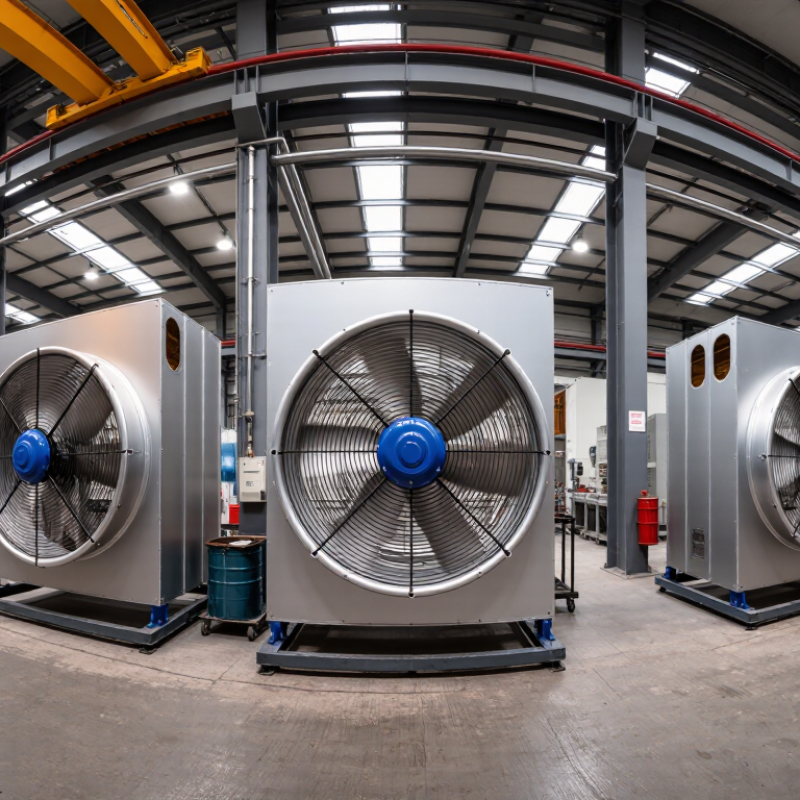
7 Best Fire Resistant Fans for Industrial Use?

What Makes an Industrial Fan Fire Resistant?

7 Best Fire Resistant Fans for Industrial Use?

What Makes an Industrial Fan Fire Resistant?

A fire-resistant industrial fan is not simply a stronger version of a standard fan. It must limit ignition risks near dust, vapors, heat, or combustible particles. Its housing often uses non-sparking materials, while the impeller needs careful clearance from internal surfaces. Even a small metal contact can create dangerous friction or sparks.

The motor matters just as much. A suitable design may include protected bearings, sealed electrical connections, thermal overload protection, and a temperature rating matched to the work area. Grounding also helps control static electricity during continuous operation. However, “fire resistant” does not mean fireproof. That distinction is easy to overlook.

In practical inspections, engineers check airflow, vibration, surface temperature, and dust buildup. A fan that runs quietly in a clean workshop may behave differently beside a cutting line. Regular cleaning is essential. Poor maintenance can defeat careful construction. Certification for the intended hazardous location should be verified, not assumed.

Material choice also affects reliability. Stainless steel can resist corrosion, while coated steel may suit less aggressive environments. Flexible connections must withstand heat without weakening. The correct fan depends on the hazard assessment, not only on airflow volume. This part is often underestimated. Specifications can look impressive, yet installation errors still create risk. Engineers should review ventilation paths, emergency controls, inspection records, and replacement schedules before approving a unit.

Key Selection Criteria for Hazardous Industrial Environments

7 Best Fire Resistant Fans for Industrial Use?

Key Selection Criteria for Hazardous Industrial Environments

Choosing the seven best fire-resistant fans starts with the hazard, not airflow alone. The U.S. Chemical Safety Board recorded 281 combustible-dust incidents, 119 deaths, and 718 injuries from 1980 to 2005. That history makes risk classification essential. Identify dust, vapor, gas, temperature, and ignition sources before comparing fan designs.

Look for certified equipment suitable for the specific hazardous zone. ATEX or IECEx documentation should match the installation area, gas or dust group, and temperature class. A spark-resistant impeller helps, but it is not a complete safety system. Check motor protection, grounding, sealed bearings, inspection access, and emergency shutdown compatibility. Stainless or coated housings may resist corrosion in chemical plants, but material choice must fit the process.

Airflow should remain stable under filters, ducts, and pressure losses. Request tested performance curves, not optimistic catalogue figures. The fan should also tolerate the site’s ambient temperature and cleaning methods. In field reviews, I would inspect loose fasteners, dust buildup, and vibration marks before trusting any rating. Small oversights matter. Certification can be misunderstood. It does not automatically approve every installation, maintenance method, or operating condition. Have a qualified engineer verify the complete ventilation system against applicable standards and the documented hazard assessment.

7 Best Fire Resistant Fans for Industrial Use: Hazardous-Area Temperature Classes

Maximum permitted equipment surface temperatures for gas and vapor hazardous environments. Select a fan whose certified temperature class meets or exceeds the process and ambient-temperature requirements of the installation.

T1 allows the highest maximum surface temperature, while T6 is the most restrictive. Final fan selection must also verify hazardous-area certification, gas or dust group, enclosure protection, motor temperature rise, airflow performance, and installation requirements.

Seven Leading Fire Resistant Fan Types for Industrial Use

Seven Leading Fire Resistant Fan Types for Industrial Use

Industrial facilities need more than strong airflow. They need controlled ignition risk, stable performance, and documented testing. Seven leading types include spark-resistant axial fans, explosion-protected axial fans, spark-resistant centrifugal fans, high-temperature centrifugal fans, roof-mounted smoke exhaust fans, pneumatic portable fans, and corrosion-resistant process exhaust fans.

Spark-resistant axial fans suit tunnels, workshops, and large storage areas. Explosion-protected axial models serve classified zones with combustible vapors or dust. Centrifugal designs handle higher pressure through ducts and filtration systems. High-temperature centrifugal fans move heated air during furnace operations or emergency extraction. Roof-mounted smoke exhaust fans remove hot smoke through dedicated vertical discharge paths. Pneumatic portable fans reduce electrical ignition concerns during temporary ventilation. Corrosion-resistant process fans support chemical or abrasive environments, especially when paired with non-sparking impellers.

No fan is completely fireproof. That distinction matters. Housing material, impeller clearance, motor temperature, grounding, and bearing condition all affect safety. Select equipment according to the actual hazardous-area classification, airflow demand, temperature rating, and pressure loss. Applicable local regulations and recognized testing standards should guide approval decisions.

In practice, maintenance often decides the outcome. Inspect guards, belts, seals, wiring, and vibration regularly. Dust buildup can change clearances and raise operating temperatures. I would still recheck the risk assessment after every process change. A fan suitable for one room may fail in another. Performance certificates help, but installation quality matters just as much.

Comparing Fan Performance, Safety Features, and Applications

Choosing the seven best fire-resistant fans for industrial use requires more than checking airflow ratings. A suitable fan must match heat levels, dust conditions, pressure demands, and operating hours. Axial fans move large air volumes efficiently, while centrifugal fans handle higher resistance through ducts and filters. Mixed-flow designs can balance both needs. Performance changes sharply when filters become clogged. That detail is easy to overlook.

Safety features deserve equal attention. Look for flame-resistant housings, protected motor assemblies, thermal overload protection, grounded components, and certified equipment for the intended hazardous area. Sealed bearings can reduce contamination, but they still require scheduled inspection. Spark-resistant construction may lower ignition risk; it does not make careless maintenance acceptable. Temperature sensors and automatic shutdown controls add useful protection. They are not magical.

Applications determine the practical choice. Ventilation fans suit workshops and processing areas, while high-pressure centrifugal units work better with long duct runs or extraction systems. Corrosive rooms may require coated metal or suitable nonmetallic components. In dusty facilities, inspect guards, impellers, and electrical connections frequently. Measure airflow at the grille, not only from the catalog. Real conditions often reduce performance. One uncomfortable finding is common: a powerful fan can worsen safety if it spreads combustible dust. Selection should follow a documented risk assessment, local electrical requirements, and the manufacturer’s verified operating limits. A qualified technician should confirm installation details before operation.

Installation, Maintenance, and Compliance Considerations

Installing a fire-resistant fan begins with hazard classification, not horsepower. Confirm whether the area contains flammable vapors, combustible dust, or only elevated temperatures. The U.S. Chemical Safety Board recorded 281 combustible-dust incidents from 1980 to 2005, causing 119 deaths and 718 injuries. That history makes location assessment essential.

Use equipment certified for the classified zone and temperature rating. OSHA 29 CFR 1910.307 requires electrical equipment in hazardous locations to match the relevant classification. NFPA 70, Article 500, also separates Class I vapor hazards from Class II dust hazards. Mount the fan on a rigid, level base. Keep guards, belts, and clearances accessible. Verify airflow direction before commissioning. A fan can be correctly wired yet installed incorrectly.

Maintenance should include vibration checks, bearing temperature readings, guard inspections, and dust removal. Record actual readings, not just “acceptable.” NFPA 70B recommends documented electrical maintenance practices, while AMCA testing standards support consistent airflow and pressure verification. Inspect more frequently where dust accumulates or corrosive vapors exist. Do not assume a sealed motor solves every risk. It may not. Certification documents, grounding continuity, interlocks, and emergency isolation should remain available to auditors. Standards differ by jurisdiction, and local authorities may require additional testing. Real installations are rarely perfect; a missed access panel or unclear inspection interval deserves correction before production begins.