Print Logo

10 Best Bathroom Basin Taps for Global Buyers

Choosing the right Bathroom Basin Tap involves more than matching a finish to your bathroom tiles. Global buyers must consider water pressure, basin depth, connection sizes, maintenance access, and local installation requirements. A tap that performs well in London may behave differently in Dubai, Toronto, or Singapore.

This guide examines ten strong options for different bathrooms and budgets. Each selection is considered through practical details, including cartridge quality, body materials, handle movement, spout reach, and water efficiency. Chrome can suit busy family bathrooms, while brushed finishes may hide fingerprints better. Ceramic cartridges often provide smoother control, but performance still depends on manufacturing quality and correct installation.

There is no perfect tap for every home. Product photos can make finishes appear warmer or darker than they look in person. Some specifications may also change between markets or production batches. That limitation deserves attention. Buyers should verify dimensions, warranty terms, certifications, and replacement-part availability before ordering. A professional plumber can also confirm whether the existing basin and pipework are compatible.

The best choice should feel stable, open smoothly, and direct water into the basin without unnecessary splashing. Small details matter. A carefully selected Bathroom Basin Tap can improve daily comfort, reduce maintenance concerns, and support a cleaner bathroom design.

10 Best Bathroom Basin Taps for Global Buyers

What Makes a Bathroom Basin Tap the Best Choice for Global Buyers

For global buyers, the best bathroom basin tap is not simply the most attractive model. It should deliver stable flow, safe materials, and reliable control in different water systems. EPA WaterSense data shows that certified bathroom faucets use no more than 1.5 gallons per minute, about 30% less than the older 2.2-gallon standard. That matters in dry regions and busy family bathrooms. It should feel controlled, not weak.

Material choice deserves close attention. A solid brass body, corrosion-resistant finish, and ceramic cartridge can handle frequent use better than poorly plated alternatives. Look for compliance with recognized standards, such as EN 817 for mechanical tapware requirements. Thread sizes and inlet connections also vary between markets, so an adapter should not become an afterthought. Small installation errors can cause leaks behind a cabinet.

User experience remains practical. A single-lever handle is easier for children and people with limited mobility, while a low-flow aerator can maintain a comfortable stream with less water. The WHO and UNICEF Joint Monitoring Programme reported that 2.2 billion people lacked safely managed drinking water in 2022. Bathroom fixtures cannot solve that crisis, but responsible water use still has value. I would also check spare cartridge availability before buying. A beautiful tap becomes inconvenient when one small component needs international shipping. Even expert selection has limits: local water hardness, pressure, and maintenance habits may change performance more than the product page suggests.

10 Best Bathroom Basin Taps for Global Buyers

What Makes a Bathroom Basin Tap the Best Choice for Global Buyers?

The editorial benchmark scores ten practical buying factors on a 0–100 scale. The evaluation emphasizes water efficiency, installation flexibility, durability, ease of cleaning, temperature control, and long-term maintenance for buyers in different markets.

Key Tap Types and Features to Compare Before Buying

Choosing among the 10 best bathroom basin taps starts with matching the tap type to your basin and plumbing. A single-hole mixer combines hot and cold water through one spout, saving space on compact countertops. Two-handle taps offer separate temperature control, but they need more cleaning around each base. Wall-mounted models create a clear basin area and suit modern renovations. They require accurate pipe positioning, so late installation changes can become expensive. Check the basin’s tap-hole layout before comparing finishes or prices.

Function matters more than appearance during daily use. Compare ceramic cartridges, because they usually provide smoother control and resist dripping when properly installed. A water-saving aerator can reduce flow while keeping the stream comfortable for handwashing. Test its performance with local water pressure; low pressure may make some models feel weak. Look for a spout that reaches the basin center without splashing.

I once underestimated this measurement. The tap looked elegant, yet water struck the rear slope and left small pools.

Material and maintenance also deserve close attention. Solid brass bodies can offer dependable durability, while certified stainless steel may suit humid bathrooms and frequent cleaning. Confirm that the finish tolerates mild cleaners, since harsh chemicals can damage protective coatings. Flexible connectors simplify fitting, but they should remain accessible for inspection. Check warranty terms, replacement cartridge availability, and installation instructions in your market. A cheap tap is not always economical. Still, premium weight alone does not prove quality; internal components and tested performance matter more.

Ten Leading Bathroom Basin Taps for Different Buyer Needs

Choosing among the ten leading bathroom basin taps depends on the buyer’s daily routine, basin shape, and water pressure. A strong choice should work quietly, resist dripping, and match local plumbing requirements.

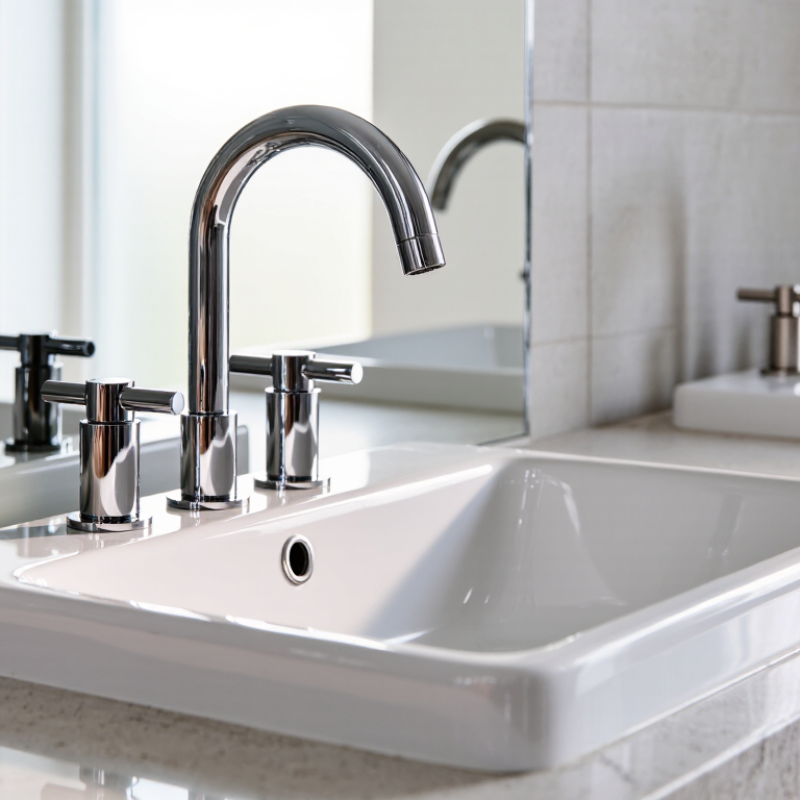
A single-lever mixer suits busy households and allows quick temperature control. A two-handle tap offers familiar operation and a classic appearance. Widespread three-hole taps fit larger counters with separate handles.

Wall-mounted taps save counter space but require accurate pipe positioning. Tall taps work well with countertop vessel basins. Low-flow aerated taps reduce water use without making hand washing uncomfortable.

Sensor-operated taps support touch-free hygiene in family bathrooms. Thermostatic basin taps help households seeking steadier temperature control. Long-lever taps assist older users or people with limited hand movement. Cold-start taps can reduce unnecessary hot-water use.

Details matter.

Check the spout reach before buying. It should direct water near the basin drain, not onto the rim. Measure the mounting-hole diameter and counter thickness, then compare them with the tap’s installation range. Local pressure limits, connection sizes, material rules, and certification requirements also deserve attention.

Ask for clear maintenance instructions and evidence of durability testing. A replaceable ceramic cartridge is usually practical for long-term repairs.

I once focused too heavily on surface finish and missed spout height; water splashed against the bowl edge. That mistake changed my checklist. Finishes can look impressive, but installation fit and dependable control matter more.

How to Assess Materials, Water Efficiency, and Installation Fit

10 Best Bathroom Basin Taps for Global Buyers

Choosing a basin tap begins with materials, not appearance. Solid brass and stainless steel usually provide strong corrosion resistance. However, surface plating can fail when cleaning chemicals are too aggressive. Look for a ceramic cartridge, tested seals, and documented compliance with NSF/ANSI/CAN 61 or equivalent local standards. These standards assess materials that contact drinking water. Certification names differ across markets, so buyers should verify approval locally. I have seen attractive taps fail because their internal parts were never clearly documented.

Water efficiency also deserves measurement. The U.S. EPA WaterSense Specification Version 1.2 limits bathroom faucets to 1.5 gallons per minute, compared with the older 2.2 gallons-per-minute benchmark. That can reduce flow by about 32 percent without making handwashing uncomfortable. Actual savings depend on pressure, aerator condition, and user habits. A very low-flow aerator may feel weak in a large basin. This is where product testing matters.

Tips: Measure twice. Check once. Confirm the basin’s tap-hole count, hole diameter, and deck thickness before ordering. A one-hole tap will not replace a three-hole layout without an escutcheon or plumbing changes. Record the distance from the spout outlet to the basin drain. It helps prevent splashing. Also check the supply hose length, thread standard, shut-off valve position, and available clearance beneath the counter. Installation drawings are useful, but they can simplify real bathrooms. Leave room for tools and future cartridge replacement.

10 Best Bathroom Basin Taps for Global Buyers - How to Assess Materials, Water Efficiency, and Installation Fit

A practical comparison of common basin-tap configurations and specification ranges. Final suitability should be confirmed against the product data sheet, local plumbing code, water pressure, and basin dimensions.

Rank Tap Type Recommended Use Typical Main Materials Corrosion & Durability Assessment Typical Flow Rate Water-Efficiency Potential Installation Configuration Common Mounting Hole Requirement Pressure Compatibility Key Fit Checks Relevant Buyer Standards Overall Suitability
1 Single-Lever Ceramic-Disc Mixer Most residential bathrooms; easy one-hand temperature and flow control. Brass or stainless-steel body; ceramic cartridge; silicone aerator. Excellent when the body is lead-compliant brass or 304 stainless steel and the finish is tested for salt spray. 4–6 L/min at 3 bar High
Flow limiter and aerator can reduce water use without changing the basic operation.
Single-hole deck mounted; usually supplied with flexible connectors. One hole, commonly 32–35 mm; verify manufacturer drilling template. Usually suitable for approximately 0.5–5 bar; low-pressure performance varies by cartridge. Check spout reach, basin overflow position, connector thread, and clearance for the lever. Look for EN 817, ASME A112.18.1/CSA B125.1, WRAS, or equivalent local approval. ★★★★★
2 Water-Efficient Eco Mixer Homes, hotels, and projects targeting lower water consumption. Brass or stainless-steel body; ceramic cartridge; calibrated flow regulator. Very good if the regulator is removable for cleaning and internal parts are corrosion resistant. 3–5 L/min at 3 bar Very High
Often includes a 50% opening stop, flow limiter, or pressure-compensating aerator.
Single-hole deck mounted; installation is similar to a standard mixer. One hole, commonly 32–35 mm. Best performance generally occurs around 1–5 bar; very low pressure may reduce comfort. Confirm that the reduced flow still provides adequate rinse performance and that the aerator matches local water quality. WaterSense, EU water-label schemes, local low-flow rules, or equivalent certification where applicable. ★★★★★
3 Touchless Sensor Basin Tap Public, hospitality, healthcare, and hygiene-focused bathrooms. Brass or 304 stainless-steel body; infrared sensor; solenoid valve; battery or mains power. Excellent for frequent use when electronics are sealed and the finish resists cleaning chemicals. 2–5 L/min at 3 bar Very High
Automatic shut-off limits running time and reduces cross-contact.
Single-hole deck mounted; may require a control box, transformer, or battery compartment. One hole, commonly 28–35 mm; allow space beneath the basin for components. Commonly 0.5–5 bar, but sensor valves can require a minimum operating pressure. Check sensor range, power access, battery life, basin depth, reflective surfaces, and maintenance access. Verify electrical safety certification and plumbing approval for the destination market. ★★★★☆
4 Thermostatic Basin Tap Family bathrooms and installations where stable outlet temperature is important. Brass body; thermostatic cartridge; temperature limiter; stainless-steel or coated trim. Very good, provided filters are accessible and the thermostatic cartridge is protected from scale. 4–6 L/min at 3 bar High
Stable temperature reduces adjustment time and unnecessary water discharge.
Deck mounted or wall mounted, depending on model; hot and cold supplies must be correctly connected. One hole for deck models; wall models require accurately spaced supply outlets. Often needs balanced hot and cold pressures; check the specified minimum differential pressure. Confirm temperature limit, non-return valves, service filters, supply orientation, and scale resistance. Look for thermostatic performance testing and applicable anti-scald requirements. ★★★★☆
5 Wall-Mounted Basin Tap Countertop basins, minimalist bathrooms, and installations with a clear deck surface. Brass or stainless-steel body; ceramic cartridge; metal wall escutcheon. Excellent when the in-wall connections are securely supported and the finish is suitable for humid environments. 4–6 L/min at 3 bar High
Usually compatible with low-flow aerators and precise cartridge control.
Concealed wall installation; requires a suitable in-wall carrier or reinforced plumbing connections. Typically two supply connections; spacing is model-specific, often around 150 mm for two-handle layouts. Generally 0.5–5 bar; concealed pipework must be pressure tested before closing the wall. Measure spout projection, outlet height above the basin, wall finish thickness, and service accessibility. Check local concealed-installation, backflow-prevention, and service-access requirements. ★★★★☆
6 Tall Vessel-Basin Mixer Raised countertop basins and above-counter vessel bowls. Brass or stainless-steel body; ceramic cartridge; plated, brushed, or powder-coated exterior. Very good when the mounting shank is rigid and the finish is rated for wet-room exposure. 4–6 L/min at 3 bar High
Efficient performance depends mainly on the installed aerator and cartridge.
Single-hole deck mounted; taller body than a standard basin mixer. One hole, commonly 32–35 mm; countertop thickness must remain within the fixing range. Usually suitable for 0.5–5 bar; tall spouts may splash at excessive pressure. Check total height, spout reach, outlet angle, basin rim height, countertop thickness, and splash zone. Confirm the tap is tested for the intended pressure range and certified for potable-water contact. ★★★★☆
7 Two-Handle Basin Tap Traditional bathrooms, renovation projects, and users who prefer separate controls. Brass body; ceramic or compression valves; metal handles; silicone or metal aerator. Good to very good; ceramic valves generally offer longer service life than basic rubber-washer valves. 5–8 L/min at 3 bar Medium–High
Can be efficient with ceramic valves and flow regulators, but adjustment may take longer.
Three-hole deck mounted or two separate tap holes, depending on design. Commonly three holes with 100–200 mm center spacing; verify the exact template. Usually 0.5–5 bar; equal pressure is helpful for balanced temperature control. Check hole spacing, basin ledge width, handle clearance, hot/cold orientation, and flexible connector length. Look for EN 200, EN 817, ASME/CSA, or equivalent national plumbing approval. ★★★☆☆
8 Stainless-Steel Basin Tap Coastal locations, modern bathrooms, and projects prioritizing material transparency. 304 stainless steel for general use; 316 stainless steel for higher chloride exposure; ceramic cartridge. Excellent when the alloy is verified; avoid contact with harsh chlorine cleaners and dissimilar metals. 4–6 L/min at 3 bar High
Normally compatible with low-flow aerators and ceramic cartridges.
Usually single-hole deck mounted; wall-mounted versions are also available. Commonly 32–35 mm for deck models. Typically 0.5–5 bar; check the cartridge manufacturer's operating range. Confirm the stated stainless-steel grade, weld quality, surface finish, and resistance to local water chemistry. Check potable-water contact approval and test evidence for corrosion resistance. ★★★★☆
9 Lead-Compliant Brass Mixer Broad global use where brass remains the most widely supported plumbing material. Low-lead or lead-free brass body; ceramic cartridge; chrome, brushed, or coated finish. Very good when the alloy and surface finish are documented; quality varies between casting grades. 4–8 L/min at 3 bar Medium–High
Performance depends on the supplied aerator, cartridge, and flow-control insert.
Single-hole or three-hole deck mounted; broadest range of replacement parts. One hole commonly 32–35 mm; three-hole models use manufacturer-specific spacing. Often compatible with 0.5–5 bar; verify low-pressure suitability before purchase. Request lead-content declaration, coating specification, cartridge replacement availability, and connector standard. NSF/ANSI/CAN 61, NSF/ANSI 372, EN 817, WRAS, or an equivalent approval may be relevant by market. ★★★★☆
10 Low-Pressure Basin Mixer Gravity-fed systems, storage-tank supplies, and homes with limited mains pressure. Brass or stainless-steel body; low-pressure ceramic cartridge; aerator designed for gentle flow. Good when filters are easy to clean and the cartridge is designed for low-pressure operation. 2–5 L/min at low pressure High
Low flow can reduce consumption, although fill and rinse times may be longer.
Most commonly single-hole deck mounted; special low-pressure models may require separate hot-water connections. One hole, commonly 32–35 mm. Designed for approximately 0.1–1 bar, depending on the model; standard mains-pressure taps may not operate correctly. Check static pressure, vertical head, hot-water system type, minimum flow requirement, and non-return valves. Use a product specifically certified for the local low-pressure system and plumbing configuration. ★★★★☆

Buyer note: Flow rates are commonly published at 3 bar unless otherwise stated. Actual flow depends on pressure, aerator condition, pipework, water hardness, and local regulations. Before ordering, verify dimensions, thread sizes, inlet connections, certification, spare-part support, and compatibility with the basin and water-heating system.

Global Buying Factors: Standards, Pricing, Warranty, and After-Sales Support

For global buyers, the best bathroom basin taps must match local standards, not only attractive photographs. Check certification against the destination market: EN 817 is widely used in Europe, while ASME A112.18.1/CSA B125.1 applies across much of North America. Water efficiency also matters. The U.S. EPA WaterSense program reports that certified bathroom faucets use no more than 1.5 gallons per minute, about 30% less than standard models. That difference becomes meaningful in hotels, apartments, and family bathrooms.

Pricing should include the full landed cost. Compare the tap, cartridge, aerator, packaging, freight, import charges, and replacement parts. The 2024 World Bank Commodity Markets Outlook shows how transport and material costs can shift quickly, so a cheap quotation may age badly. Ask for test reports, flow-rate data, spare-cartridge prices, and delivery terms before placing an order. A polished finish cannot compensate for unclear documentation.

Warranty wording deserves close reading. Confirm coverage periods, exclusions, proof-of-installation rules, and who pays return freight. Practical after-sales support means local stock, multilingual instructions, and a reachable service contact. The 2023 WHO/UNICEF Joint Monitoring Programme reported that 2.2 billion people lacked safely managed drinking water; water-saving hardware therefore carries wider importance. Still, I would not assume every certified tap performs equally. Test samples under local water pressure, especially where mineral deposits are common. Five years sounds strong. The fine print may disagree.