Discover the Best Ball Valve Types for Your Needs?
When it comes to industrial applications, choosing the right ball valve is essential. According to a recent report by MarketsandMarkets, the global ball valve market is expected to reach $14.8 billion by 2026, growing at a CAGR of 6.3%. This growth reflects the increasing demand for efficiency and reliability in fluid control systems.
Industry expert John Smith, a leading engineer at ValveTech Solutions, states, "Selecting the appropriate ball valve type can significantly enhance system performance." This underscores the need for a careful evaluation of different valve types based on their materials, sizes, and operational functions.
Not all ball valves provide the same benefits. Some excel in high-pressure environments, while others are better suited for corrosive substances. This variability can complicate decision-making. Therefore, understanding specific requirements is vital. An informed choice can lead to both cost savings and operational effectiveness.

Understanding Ball Valve Basics and Their Functionality
Ball valves are essential components in many industrial applications. Understanding their basics can help you make informed decisions. A ball valve uses a spherical disc to control the flow of liquid or gas. This simple design allows for quick opening and closing. When the valve is turned, the ball either blocks or allows flow. This functionality can reduce leakage and improve efficiency.
Different types of ball valves exist, each serving unique purposes. Floating ball valves rely on the fluid pressure to seal against the seat. This design is common in low-pressure systems. Trunnion ball valves, on the other hand, are used in high-pressure environments. They have a robust support system that ensures stability. Each type has its pros and cons. It's crucial to evaluate your requirements carefully.
Quality materials also impact performance and longevity. Stainless steel is popular for its corrosion resistance. However, it can be costly. Plastic options are lighter but may not withstand high temperatures. These choices require reflection and a clear understanding of your needs. Balancing performance with budget constraints can be challenging but necessary for optimal function.
Different Types of Ball Valves and Their Applications
Ball valves play a crucial role in various industries due to their durability and efficiency. There are several types of ball valves, each suited for specific applications. Trunnion-mounted ball valves are perfect for high-pressure scenarios. They provide stability and dependability in critical systems, often found in oil and gas industries. According to a recent market report, the global ball valve market is projected to reach $8.4 billion by 2027, emphasizing their importance.
Floating ball valves are another popular type. They are commonly used in low to moderate pressure applications. Their design allows the ball to float, ensuring a tight seal when closed. This makes them ideal for water supply systems, wastewater treatment, and cooling applications. The demand for these valves is growing, with estimates indicating a CAGR of 5.5% between 2020 and 2027.
It’s worth noting that each type of valve has limitations. Floating ball valves might not perform as well under high pressure. They can also face challenges in applications dealing with viscous fluids. Understanding these nuances is essential for selecting the right valve type based on operational needs. Awareness of these operational challenges can help engineers make informed decisions.
Discover the Best Ball Valve Types for Your Needs
| Ball Valve Type |
Application |
Temperature Range |
Advantages |
| Floating Ball Valve |
Water, oil, and gas services |
-20°C to 150°C |
Simple design, cost-effective |
| Trunnion Ball Valve |
High-pressure and high-temperature applications |
-50°C to 300°C |
Reduced operating torque, suitable for large pipe sizes |
| V-Port Ball Valve |
Flow regulation in HVAC and industrial applications |
-20°C to 150°C |
Good flow control, versatile |
| Electric Ball Valve |
Automated control systems |
-20°C to 80°C |
Remote operation, precise control |
| Cryogenic Ball Valve |
Cryogenic applications like LNG |
-196°C to -60°C |
Specialized for very low temperatures |
Key Features to Consider When Choosing a Ball Valve
When selecting a ball valve, consider the key features that will suit your specific applications. The material composition plays a crucial role in performance. For example, stainless steel is favored for its corrosion resistance, while PVC is a cost-effective alternative for lower pressure systems. According to a report by the Flow Control Industry, approximately 40% of companies prioritize material durability when making purchasing decisions.
Another vital feature is the valve size and connection type. It's essential to assess your piping layout and flow rates. A mismatch can lead to inefficiencies or leaks. Industry studies indicate that improper sizing accounts for up to 25% of valve failures. Evaluating connection types—like flanged, threaded, or welded—ensures compatibility with existing systems.
Pressure ratings are equally important. Different applications require varying pressure tolerances. A valve rated for high pressure can prevent failures in critical systems. However, over-specifying can lead to increased costs. Research suggests that nearly 30% of users overlook this aspect, risking operational stability. Consider these key features carefully to select the most suitable ball valve type.
Comparative Analysis of Ball Valve Materials and Durability
When it comes to selecting the right ball valve for your needs, understanding materials and durability is crucial. Ball valves are commonly made from materials like stainless steel, brass, and PVC. Each material has its own strengths and weaknesses, influencing its durability and suitability for different applications. For instance, stainless steel provides excellent corrosion resistance and can handle high-pressure environments. However, it may be more expensive than other options.
On the other hand, brass valves are more cost-effective and offer good performance in moderate conditions. They are not as resistant to corrosion as stainless steel, but they perform well in various applications. PVC valves are lightweight and ideal for lower-pressure systems. They are resistant to chemicals but may not hold up in extreme temperatures. Knowing these details helps you choose wisely.
Sometimes, people overlook the need for regular maintenance. Durable materials can still fail without proper care. Even a stainless steel valve can corrode if not regularly inspected. It’s essential to reflect on the environment where the valve will be used. This awareness can prevent costly replacements in the long run.
Maintenance Tips for Prolonging the Life of Your Ball Valve
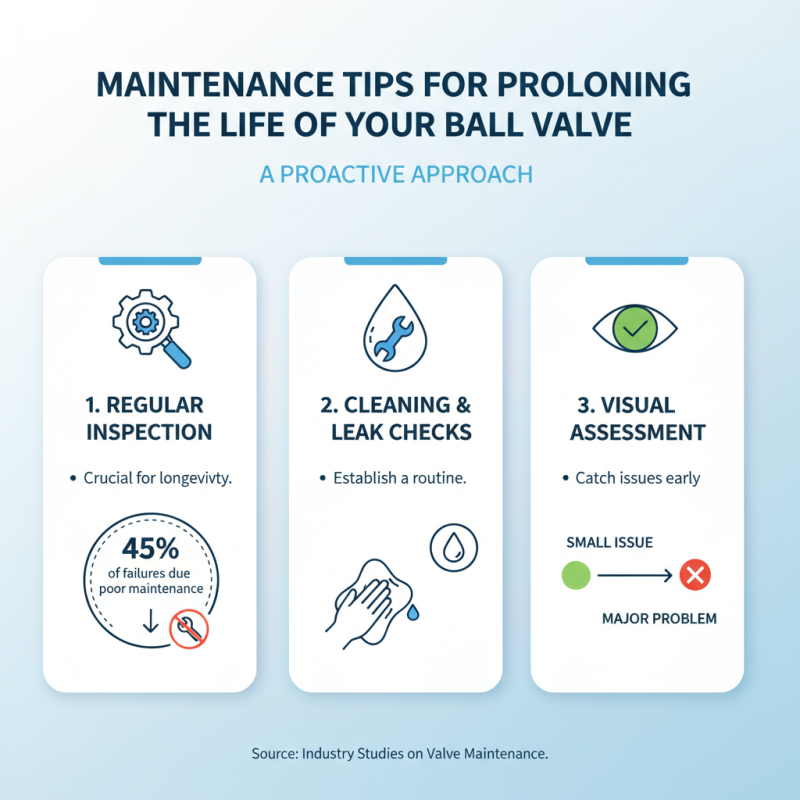
When it comes to maintaining ball valves, a proactive approach can significantly enhance their lifespan. Regular inspection is crucial. According to industry studies, nearly 45% of valve failure is linked to inadequate maintenance. This highlights the importance of establishing a routine that includes cleaning and checking for leaks. A simple visual inspection can catch small issues before they become major problems.
Tips for maintenance: Always keep the valve body free from debris. Dust and sediment can cause operational issues. Use a soft cloth to wipe the exterior regularly. Additionally, lubricate moving parts every six months. This helps reduce wear and tear. Remember, a well-lubricated valve functions better and has a longer service life.
Monitoring pressure and temperature is also vital. Ensure the valve operates within its specified limits. Overworking a valve can lead to premature failure. According to engineering data, staying within operational parameters can extend the life of valves by up to 30%. Staying vigilant with these practices ensures a smoother operation and reduces unexpected downtime.